

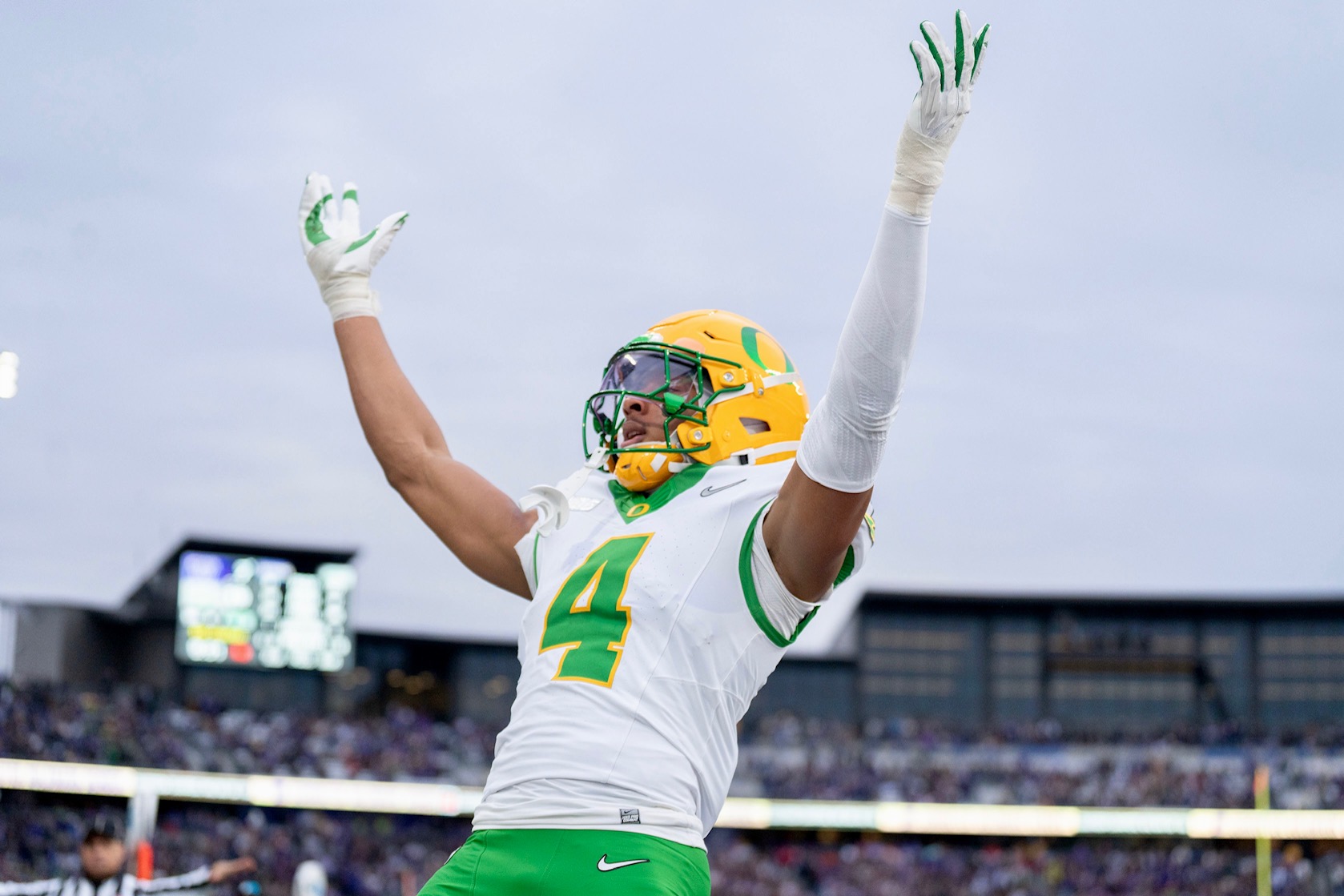


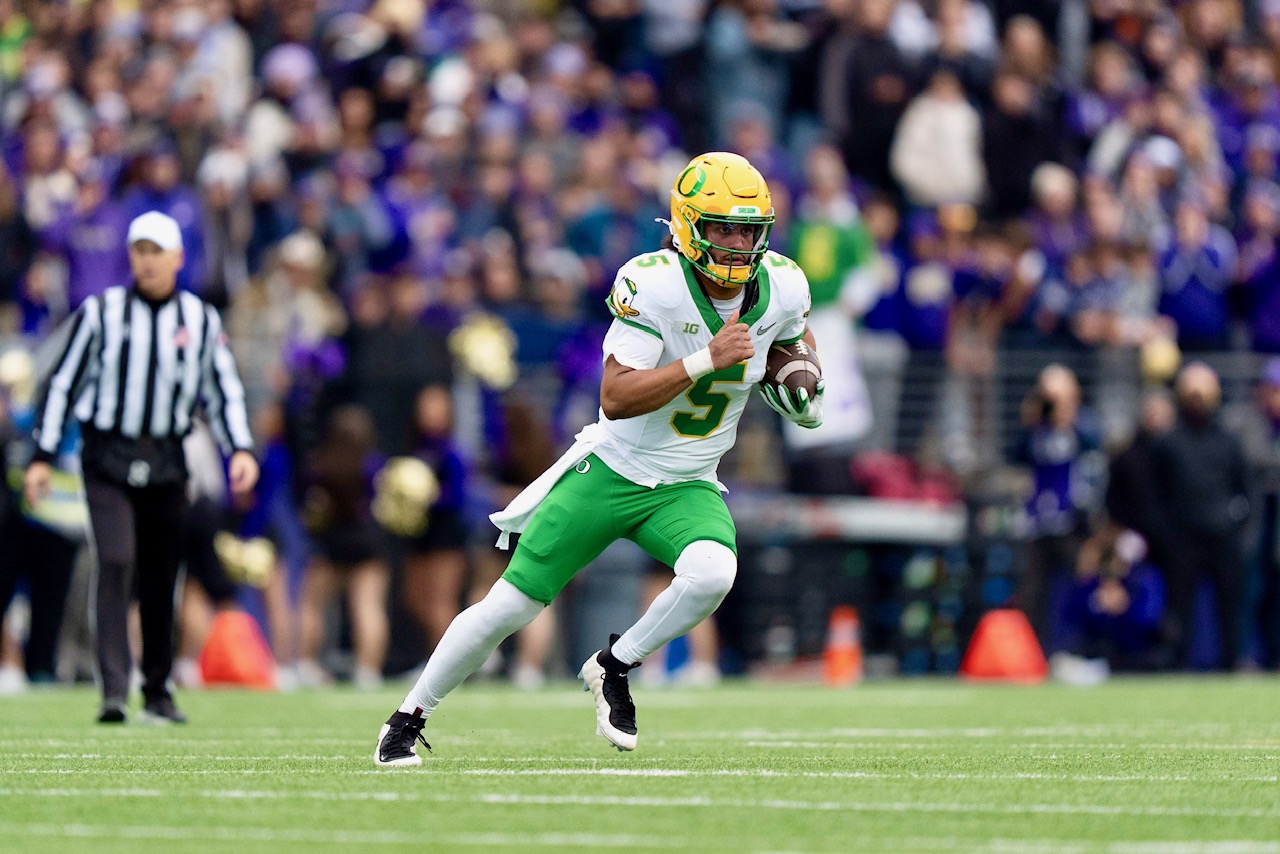
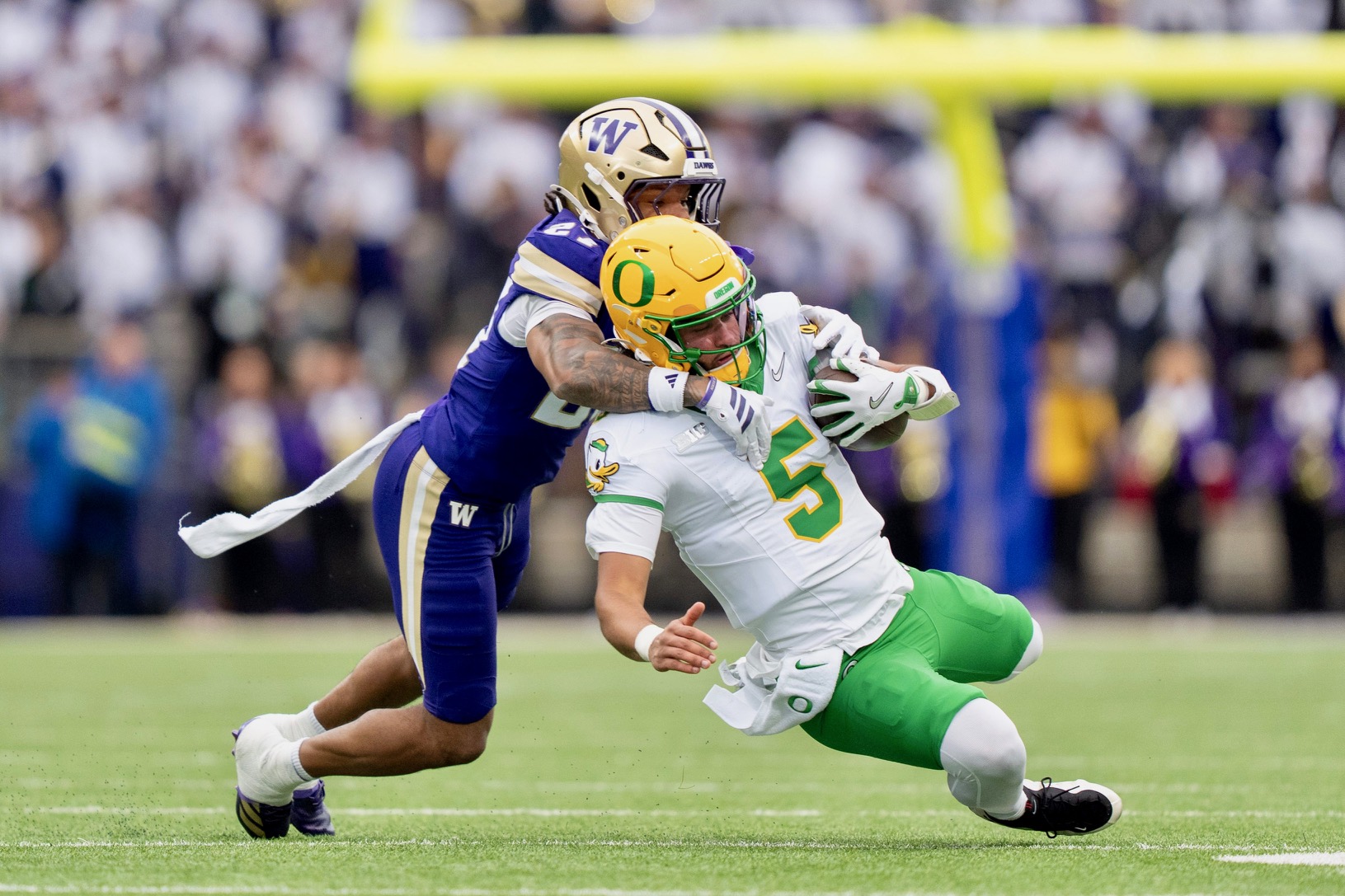


Rivalry games rarely need additional stakes, but on November 29, 2025, the meeting between the Oregon Ducks and the Washington Huskies carried weight that extended well beyond tradition. Under gray skies at Husky Stadium in Seattle, Oregon delivered one of its most composed performances of the season, defeating Washington 26–14 and reasserting control in one of college football’s most emotionally charged series.
The score reflected separation, but the significance ran deeper. Winning in Seattle has never been routine, and doing so late in the season against a Washington team eager to defend its home turf served as both a statement and a checkpoint for an Oregon program with larger ambitions.
The Oregon–Washington rivalry has always been defined by tension, geography, and timing. Often played midway through or late in the regular season, it often functions as a referendum on momentum and identity. In 2025, both teams entered the game with something to prove.
Washington, playing at home, sought to protect Husky Stadium’s reputation as one of the sport’s most difficult venues and to close its season with a defining victory. Oregon arrived with urgency of its own, knowing that late-November games shape postseason narratives perhaps more than any matchup on the calendar.
From the opening kickoff, the environment matched the moment. Husky Stadium pulsed with energy, and the tone suggested a game that would demand discipline as much as talent.
Oregon wasted little time establishing control. Rather than being drawn into the emotion of the rivalry, the Ducks played with restraint, emphasizing field position and efficiency. Early offensive possessions prioritized balance, mixing short passes with deliberate runs to test Washington’s defensive structure.
The Ducks struck first, capitalizing on a sustained drive that demonstrated patience and execution. That opening score mattered not just on the scoreboard, but psychologically as well. It signaled that Oregon intended to dictate tempo rather than react.
Washington responded with intensity, attempting to generate momentum through tempo and crowd energy. The Huskies found success in flashes, but Oregon’s defense absorbed the early surge and limited damage, preventing Washington from fully capitalizing on its home-field advantage.
As the game settled into rhythm, Oregon’s defense emerged as the defining unit. The Ducks applied consistent pressure, forcing Washington into difficult third-down situations and disrupting timing in the passing game. Tackling in space, a critical factor against Washington’s skill players, was crisp and decisive.
The Ducks’ defensive discipline translated into field position, giving the offense shorter fields and additional opportunities to extend the lead. By halftime, Oregon had built a cushion that reflected not dominance, but control. The Huskies remained within reach, but the game was being played on Oregon’s terms.
The third quarter brought Washington’s best stretch of the night. The Huskies opened the half with renewed urgency, stringing together a scoring drive that narrowed the gap and reenergized the crowd. For a moment, the rivalry’s volatility threatened to swing momentum.
Oregon’s response defined the game. Rather than pressing, the Ducks returned to structure. A composed offensive series reclaimed breathing room, while the defense answered Washington’s score with renewed focus. The back-and-forth underscored the thin margin that often defines rivalry games, but Oregon consistently made the more disciplined choice.
Each Washington surge was met with resistance. The Ducks did not allow the game to unravel into chaos, a testament to preparation and maturity.
Entering the final quarter with a 26–14 lead, Oregon shifted into management mode. The offense emphasized clock control, sustaining drives and limiting Washington’s opportunities. While the Ducks did not add to their total, they denied the Huskies the possessions needed to mount a comeback.
Defensively, Oregon closed gaps and refused to yield explosive plays. Washington pressed, but the urgency led to inefficiency rather than breakthroughs. Each incomplete pass and stopped run drained both time and belief.
When the final whistle sounded, the Ducks had secured a 12-point victory that felt definitive, if not overwhelming.
Winning at Husky Stadium is never just another result. For Oregon, the 26–14 victory represented validation of a team capable of handling rivalry intensity without sacrificing identity. The Ducks demonstrated balance, discipline, and the ability to respond under pressure, traits that resonate far beyond one game.
The performance reinforced Oregon’s late-season momentum and strengthened its postseason positioning. More importantly, it showed a team comfortable winning in hostile environments, a prerequisite for success in December and beyond.
For Washington, the loss was a frustrating conclusion to a game that offered moments of promise. The Huskies competed with effort and emotion, but they struggled to sustain success against a disciplined opponent. Missed opportunities and stalled drives proved costly in a rivalry where margins are unforgiving. Still, the game reflected a program capable of challenging elite teams, even if the result fell short.
As the calendar turned toward postseason play, Oregon’s win in Seattle stood as one of the Ducks’ most complete efforts of the season. It was not defined by explosive highlights or dramatic swings, but by control. Oregon had control of tempo, of emotion, and of outcome. Oregon claimed the rivalry with authority. The Ducks left Husky Stadium not just with a victory, but with momentum that carried meaning well beyond Seattle.
Ahsan Awan has been covering sports for over two decades, and has been covering NCAA football, including various Big Ten, Big 12, ACC, SEC, Mountain West, Pacific-12, and Big Sky conference member institutions, since 2007. Images taken by Ahsan Awan are ©2025 Ahsan Awan. Images taken by Davonn Abaga are ©2025 Davonn Abaga and have been made available to American Presswire subject to unlimited use under license unless otherwise noted. Editorial use by American Presswire is unrestricted. Ahsan Awan can be found on X as @quackarazzi and on Instagram as @quackarazzi. Davonn Abaga can be found on Instagram as @devos.media. American Presswire can be found on X as @ampresswire and on Instagram as @ampresswire.