




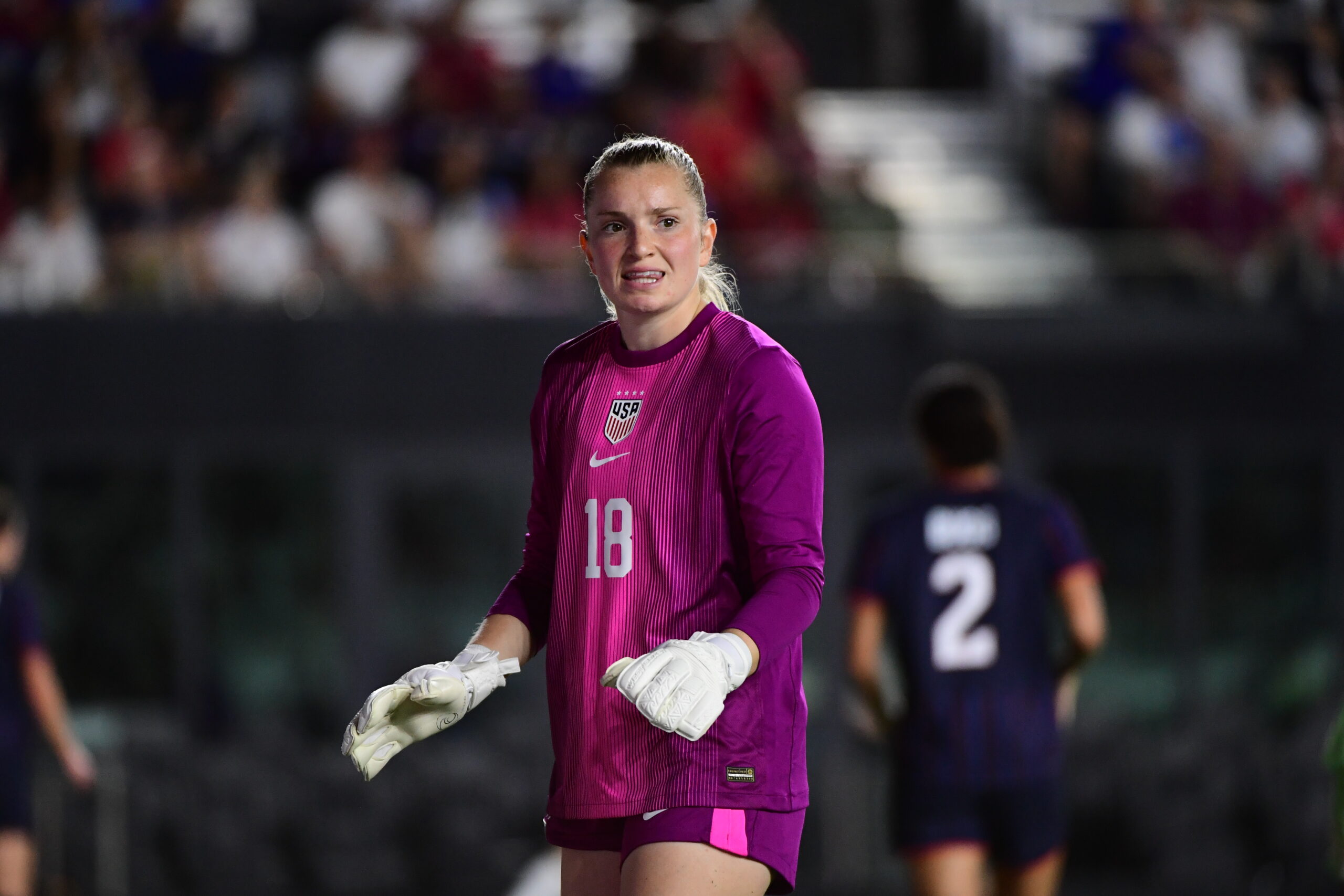
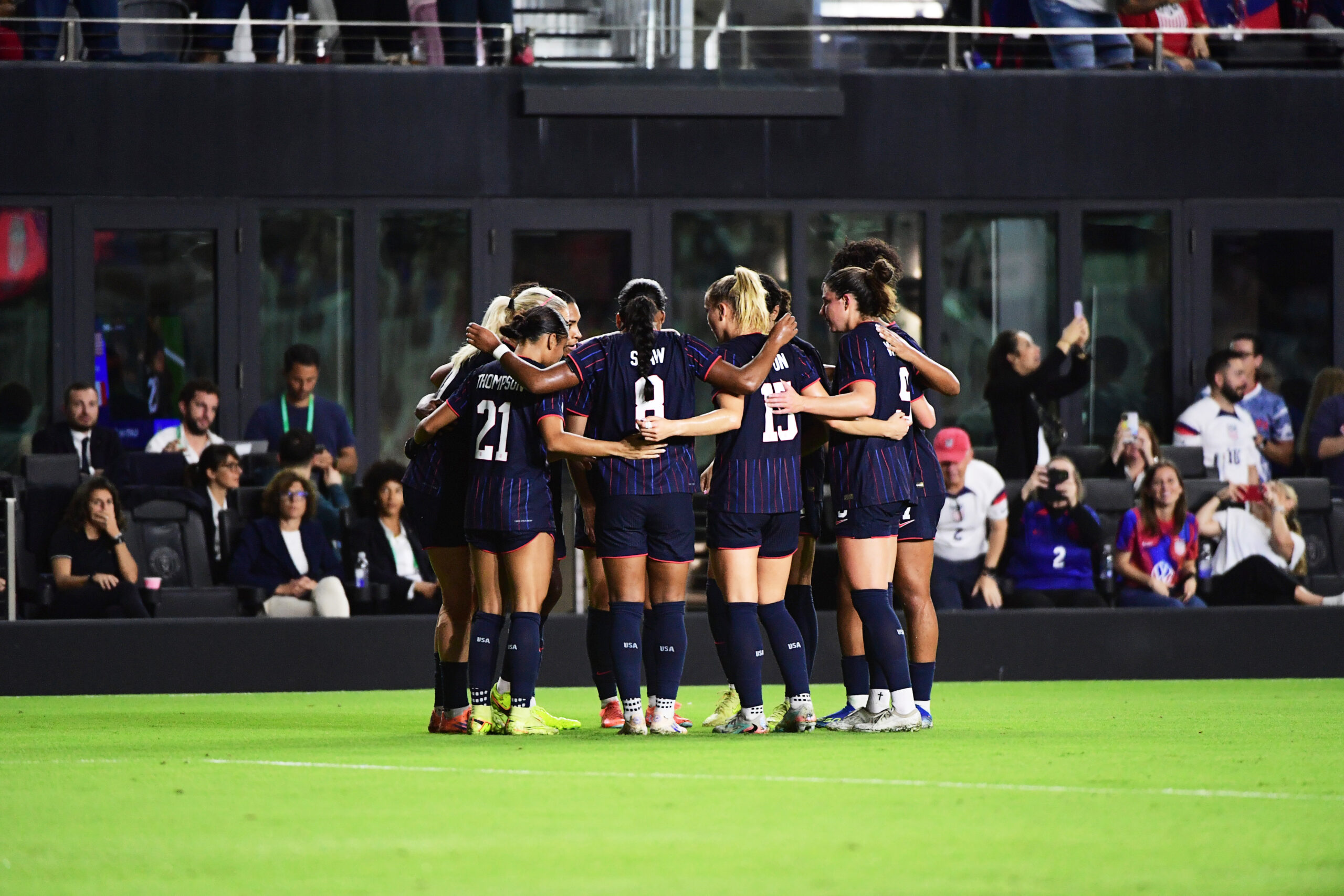
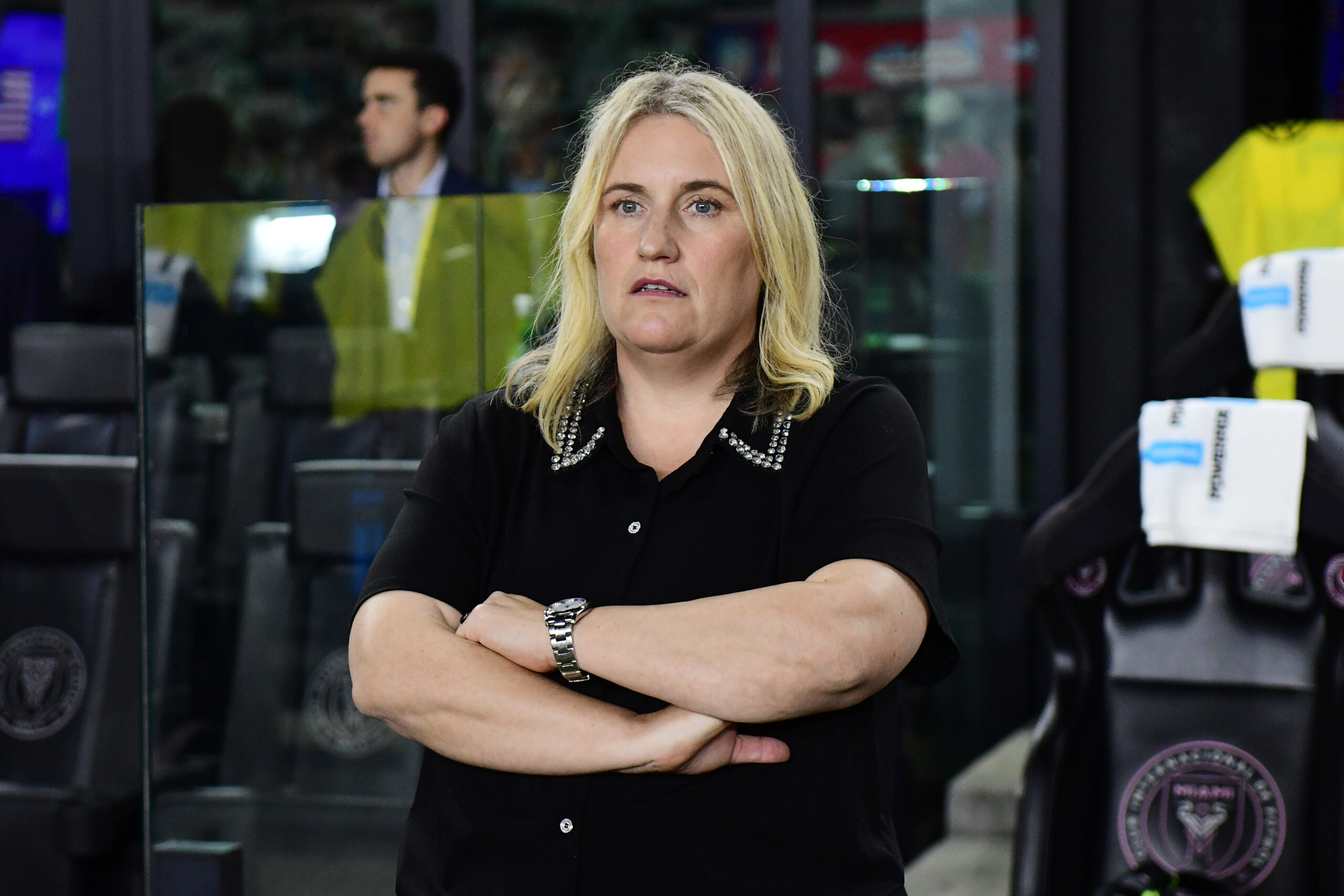
The United States Women’s National Team enters 2026 standing at a familiar yet challenging crossroads. Long regarded as the gold standard of women’s international soccer, the USWNT is simultaneously defending its legacy and redefining itself in a global game that has never been deeper, faster, or more tactically complex. The past year has been one of transition, evaluation, and recalibration, and the opening months of 2026, beginning with matches in Los Angeles and Santa Barbara, will provide early clues as to how successfully the team is shaping its next era.
Under Head Coach Emma Hayes, the program continues to move deliberately away from reliance on historic dominance and toward a more adaptable, modern identity. That evolution has been visible in the team’s most recent matches played on U.S. soil, where promising performances have been paired with moments that underscore how narrow the margin for error has become at the international level.
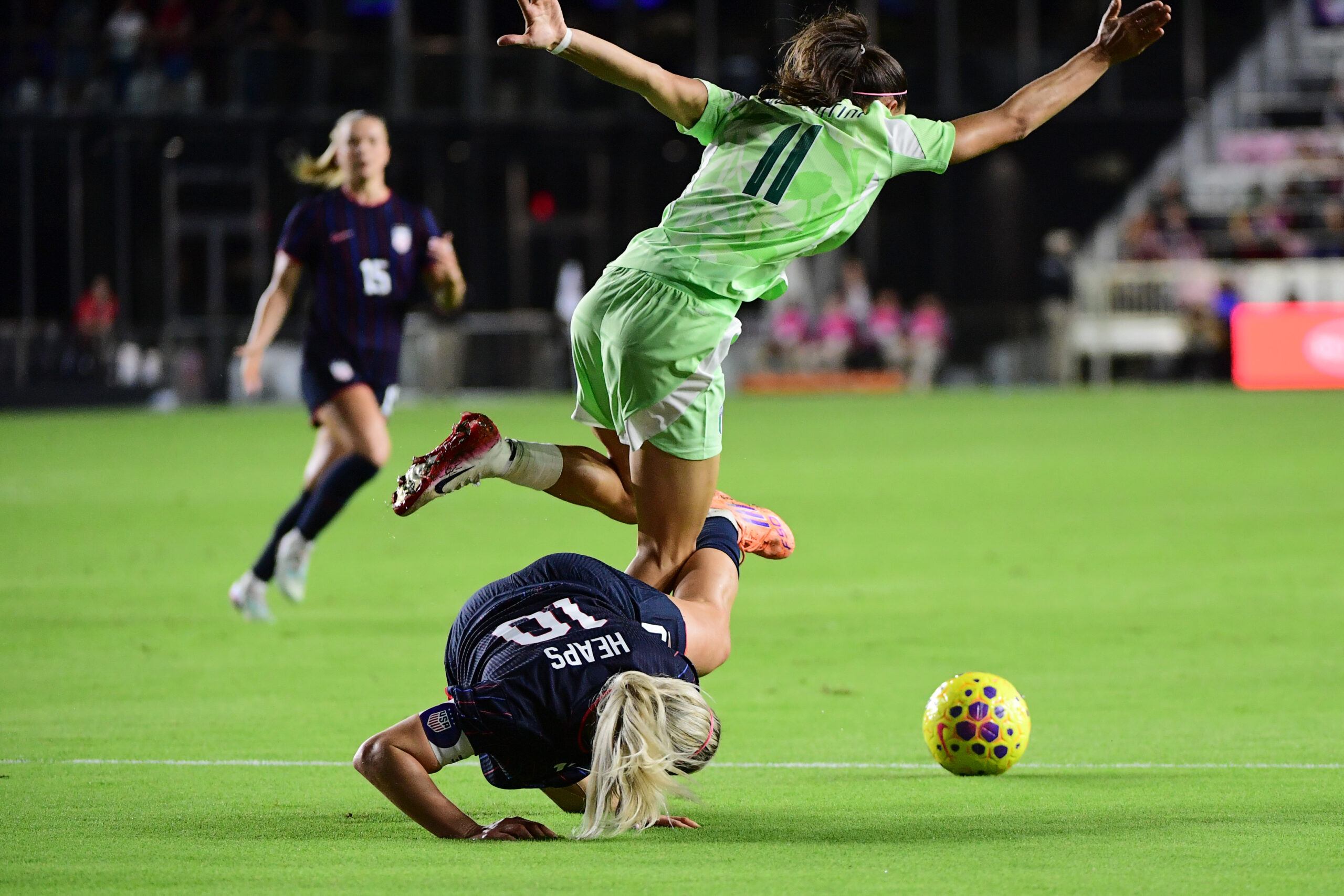
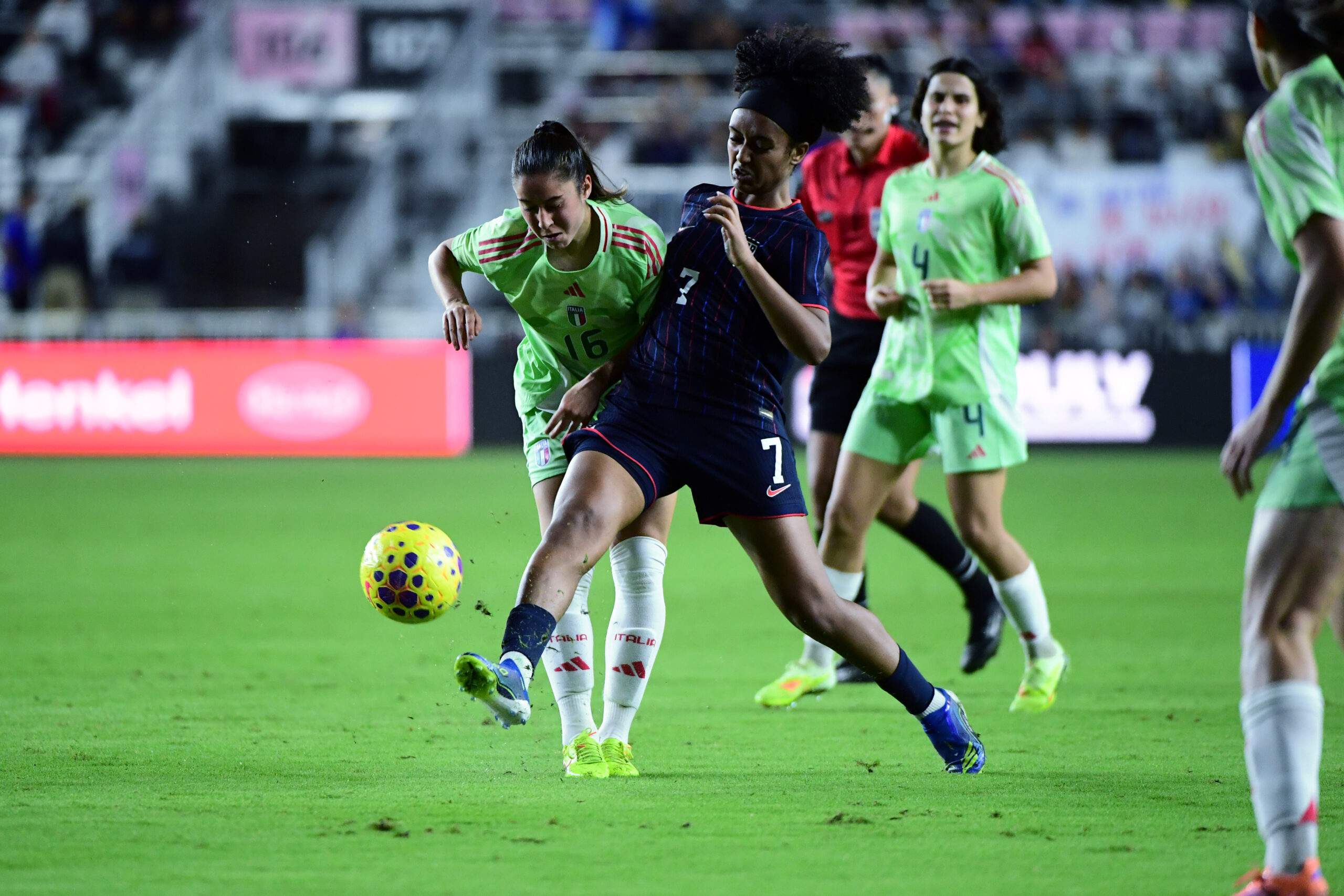
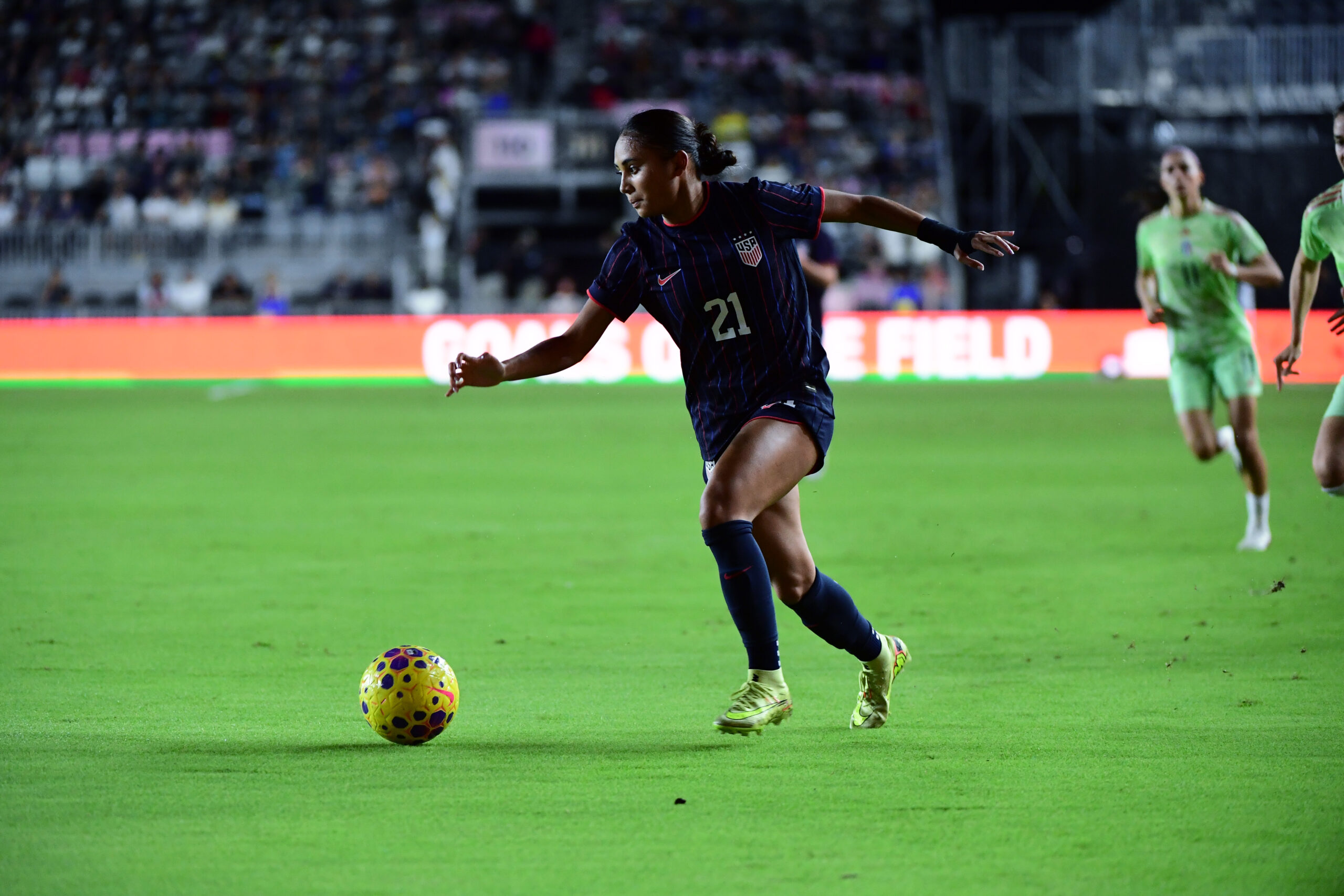
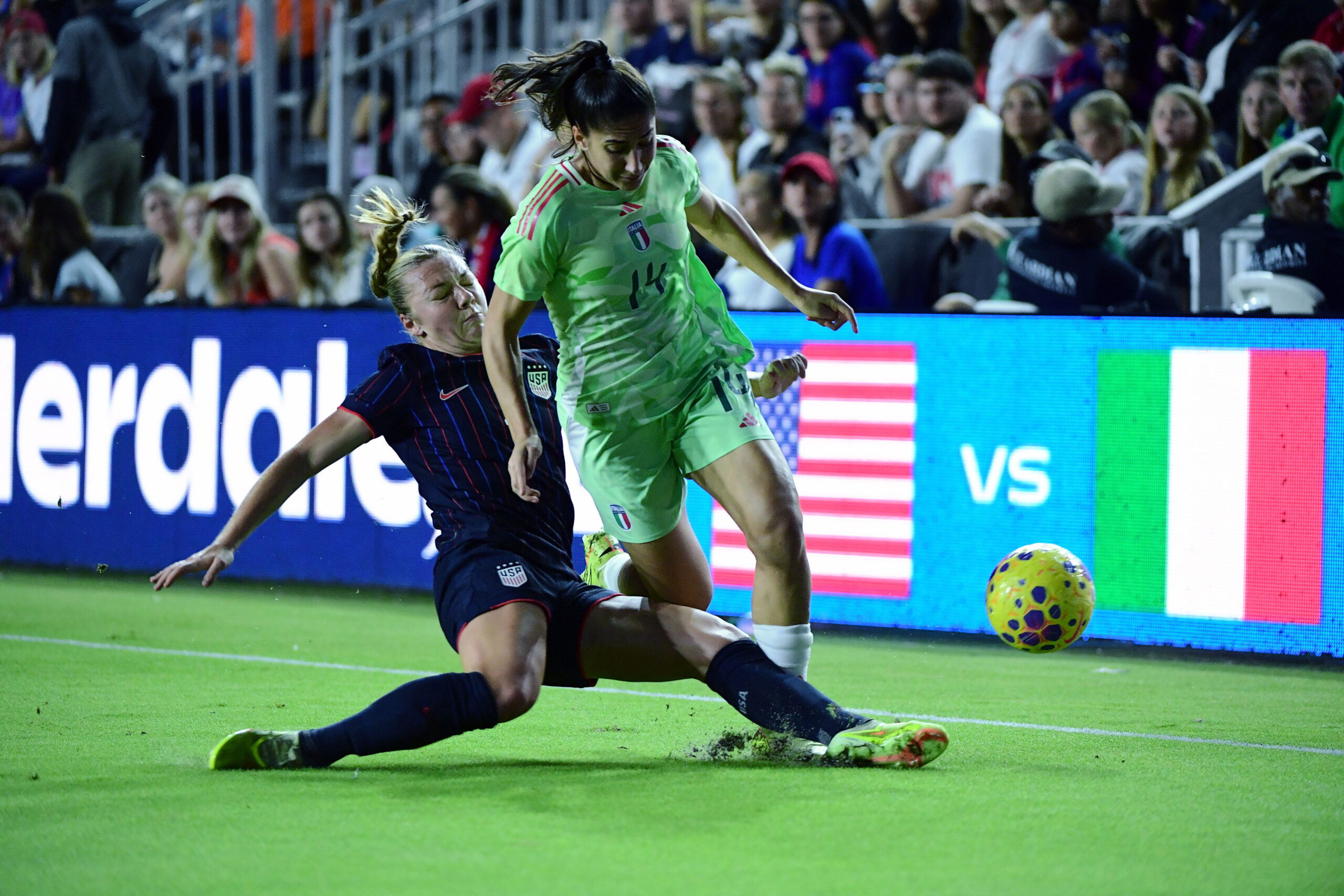
The USWNT closed its most recent domestic run with a pair of international friendlies against Italy, a European side opponent that exemplifies the growing tactical sophistication across the women’s game. These matches, played in Florida, served both as competitive tests and as laboratories for Hayes to assess player combinations and strategic balance.
In the first match, held in Orlando, the United States delivered one of its most complete performances of 2025, earning a 3-0 victory. The USA controlled possession, dictated tempo, and converted chances with confidence. Catarina Macario led the way with two goals, showcasing her clinical finishing and playmaking ability, while Olivia Moultrie’s early strike set the tone. Beyond the score line, the match demonstrated the USWNT’s ability to break down a disciplined European defense through patience rather than sheer physicality.
The second match of the series, played in Fort Lauderdale, ended in a 2-0 win and reinforced the sense of progress. While less explosive, the performance highlighted improved defensive organization and composure in midfield. The team’s ability to manage the game, rather than chase it, reflected a growing maturity that Hayes has emphasized since taking the helm.
Those wins followed a more mixed October window, during which the USWNT experienced both frustration and resurgence. A 2-1 loss to Portugal served as a reminder that even historically dominant programs can be punished for lapses in concentration. The USA responded emphatically in subsequent matches, including a commanding win over New Zealand, reasserting their attacking potential and depth.
Taken together, the recent home matches painted a clear picture: the USWNT remains a formidable force, but one that is learning to win in new ways. The days of overwhelming opponents through athletic superiority alone are fading, replaced by an emphasis on tactical flexibility, technical precision, and collective intelligence.
As 2026 begins, the state of the USWNT can best be described as transitional rather than rebuilding. Unlike past cycles that required wholesale changes following retirements, this phase has focused on integrating new contributors alongside established leaders.
Veteran players such as Rose Lavelle and Catarina Macario continue to anchor the squad, providing creativity, composure, and experience. At the same time, younger players have been entrusted with meaningful roles, signaling confidence in the next generation. Hayes has been unapologetic about experimentation, rotating lineups and formations even in high-profile matches, with the long-term goal of building a roster capable of adapting to varied opponents and tournament conditions.
Tactically, the team has moved toward a more possession-oriented approach while retaining its trademark intensity in pressing and transition moments. The emphasis is on balance, knowing when to dominate the ball, and knowing when to exploit space quickly. Defensively, there has been a renewed focus on structure and discipline, particularly against opponents who thrive on quick counters and technical buildup.
Perhaps most importantly, the program has embraced a cultural shift. Leadership is no longer concentrated in a handful of iconic figures; instead, responsibility is being shared across the roster. This evolution reflects both necessity and opportunity as the team prepares for the next major cycle of international competitions.
The USWNT’s first matches of 2026 will take place in Southern California. These games are more than preseason warm-ups; they represent the opening chapter of a year that will shape the program’s immediate future.
On January 24, the USWNT will face Paraguay at Dignity Health Sports Park in Carson. The venue is synonymous with the USWNT, having hosted more matches than any other stadium in the world. Paraguay offers a contrasting style rooted in South American technical play and defensive compactness, providing an early test of the USA’s ability to unlock organized opponents.
The match will also carry emotional significance, as it includes a celebration honoring Christen Press, a Los Angeles native and longtime USWNT standout. Her recognition serves as a bridge between eras, acknowledging the legacy that built the program while underscoring its continued evolution.
Three days later, on January 27, the USWNT travels north to Harder Stadium in Santa Barbara to face Chile. This match marks the first time the women’s national team will play an international fixture on California’s Central Coast, expanding the team’s geographic footprint and bringing elite women’s soccer to a new community. Chile presents another competitive challenge, one that will likely demand patience and tactical discipline from the Americans as they seek to build on lessons learned earlier in the camp.
The significance of these January matches extends beyond their immediate results. They provide critical opportunities for players to establish roles, for coaching staff to refine strategies, and for the team as a whole to build cohesion ahead of more consequential competitions later in the year, including regional championships and qualification campaigns.
In a global environment where parity continues to increase, every international window matters. Friendlies are no longer mere exhibitions; they are essential steps in preparation and identity formation. For the USWNT, the challenge in 2026 is not simply to win, but to demonstrate that the program’s evolution is producing a team capable of thriving against the best in the world.
As the USA takes the field in Los Angeles and Santa Barbara, the message is clear: the next chapter of the USWNT is underway. Rooted in a storied past but focused firmly on the future, the team enters 2026 determined to prove that adaptation, not nostalgia, will define its continued success.
Ahsan Awan has been covering sports for over two decades and has been covering US Soccer and the US national team squads since 2014. Images taken by Juan Carlos Ruiz for American Presswire and ©2025 American Presswire. Editorial use by American Presswire is unrestricted. Ahsan Awan can be found on X as @quackarazzi and on Instagram as @quackarazzi. American Presswire can be found on X as @ampresswire and on Instagram as @ampresswire.