

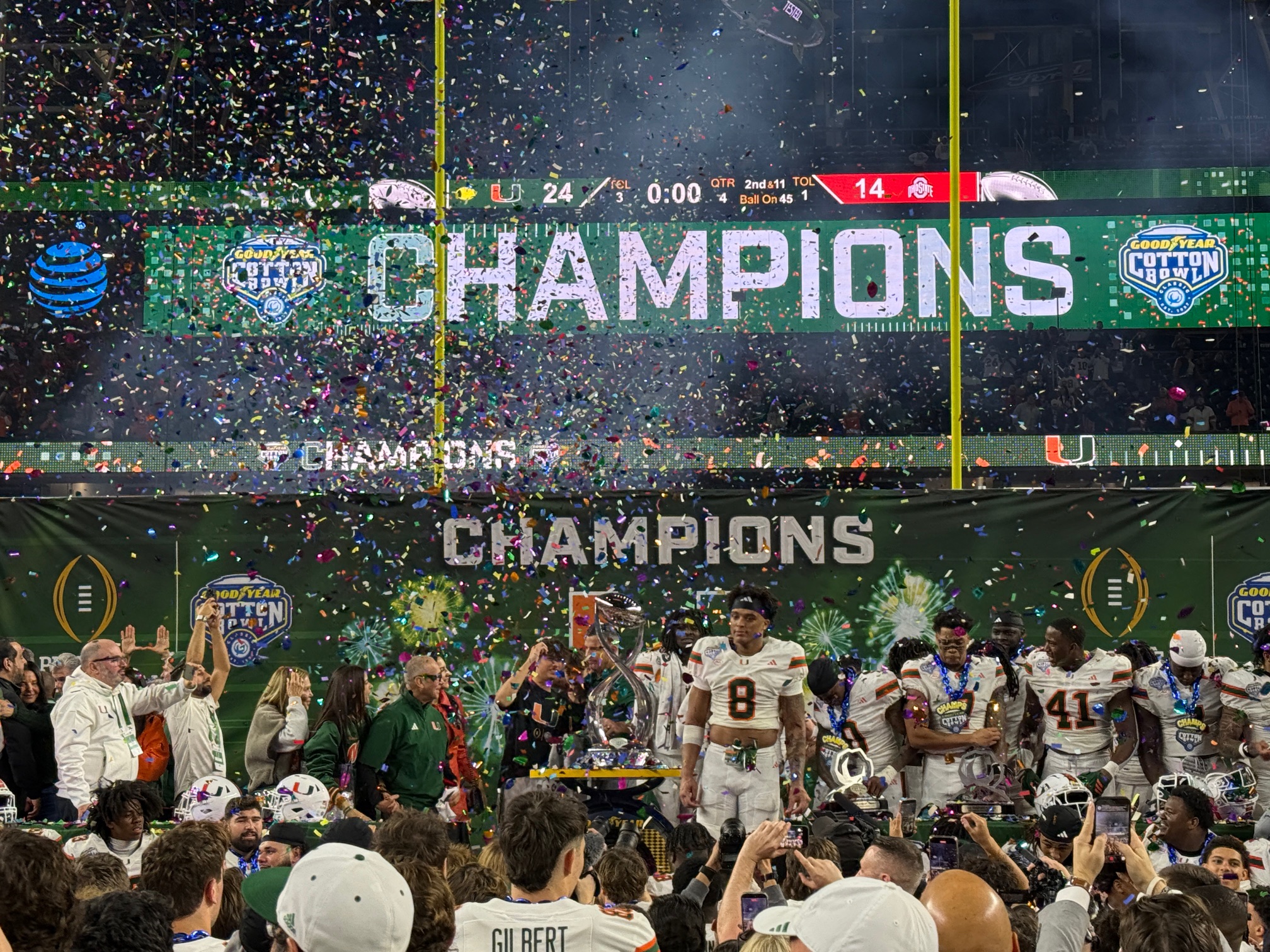
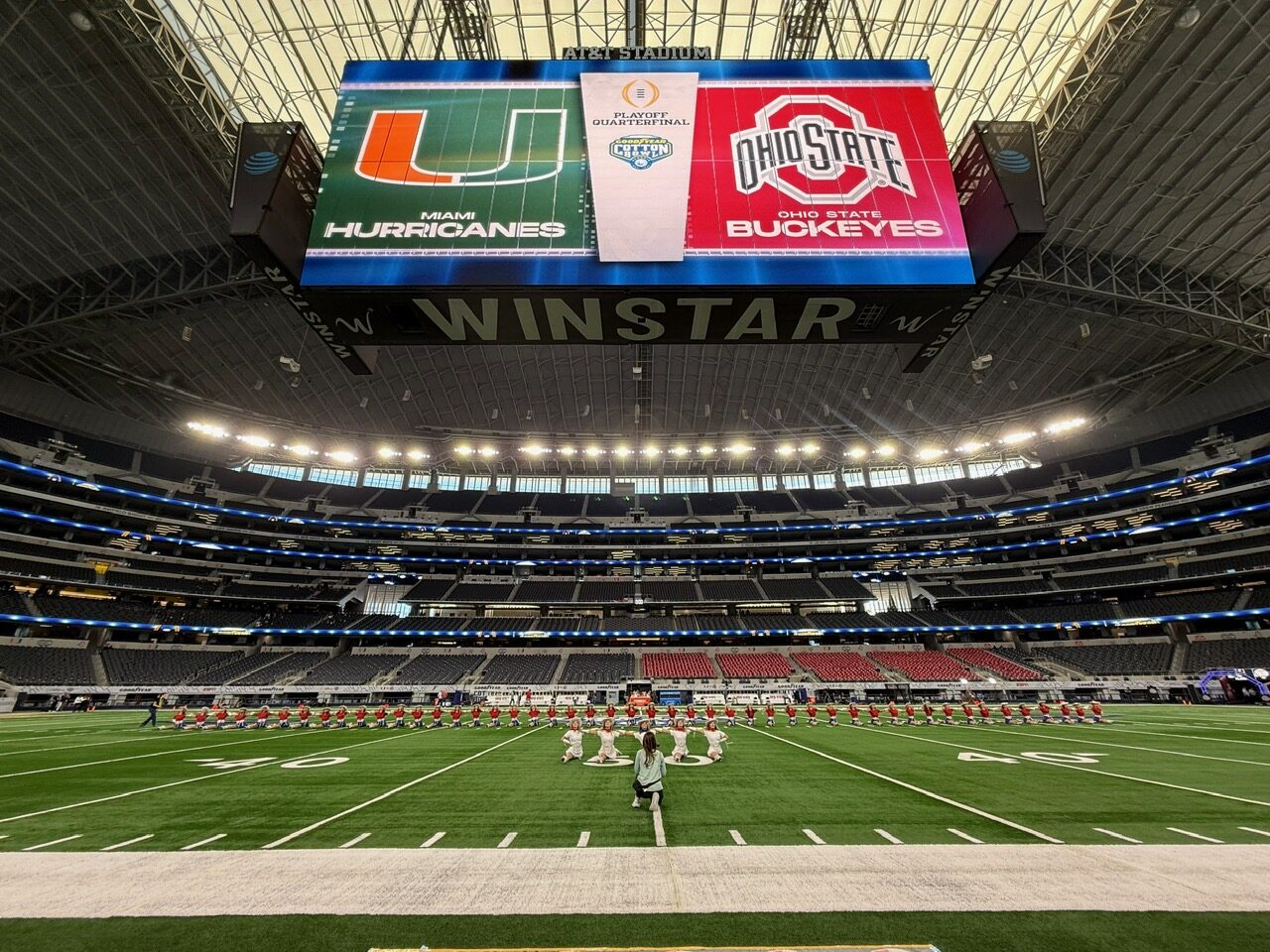
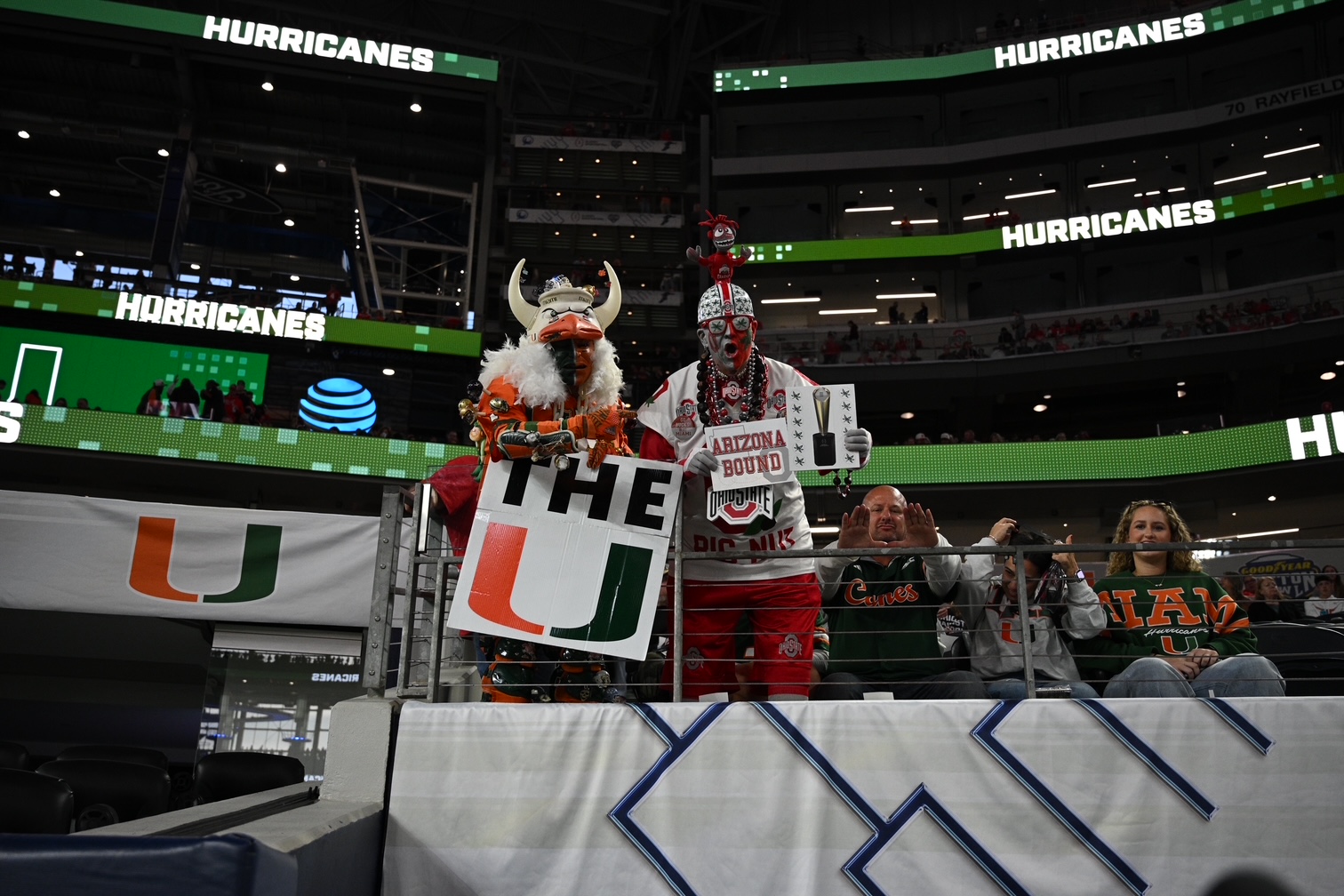
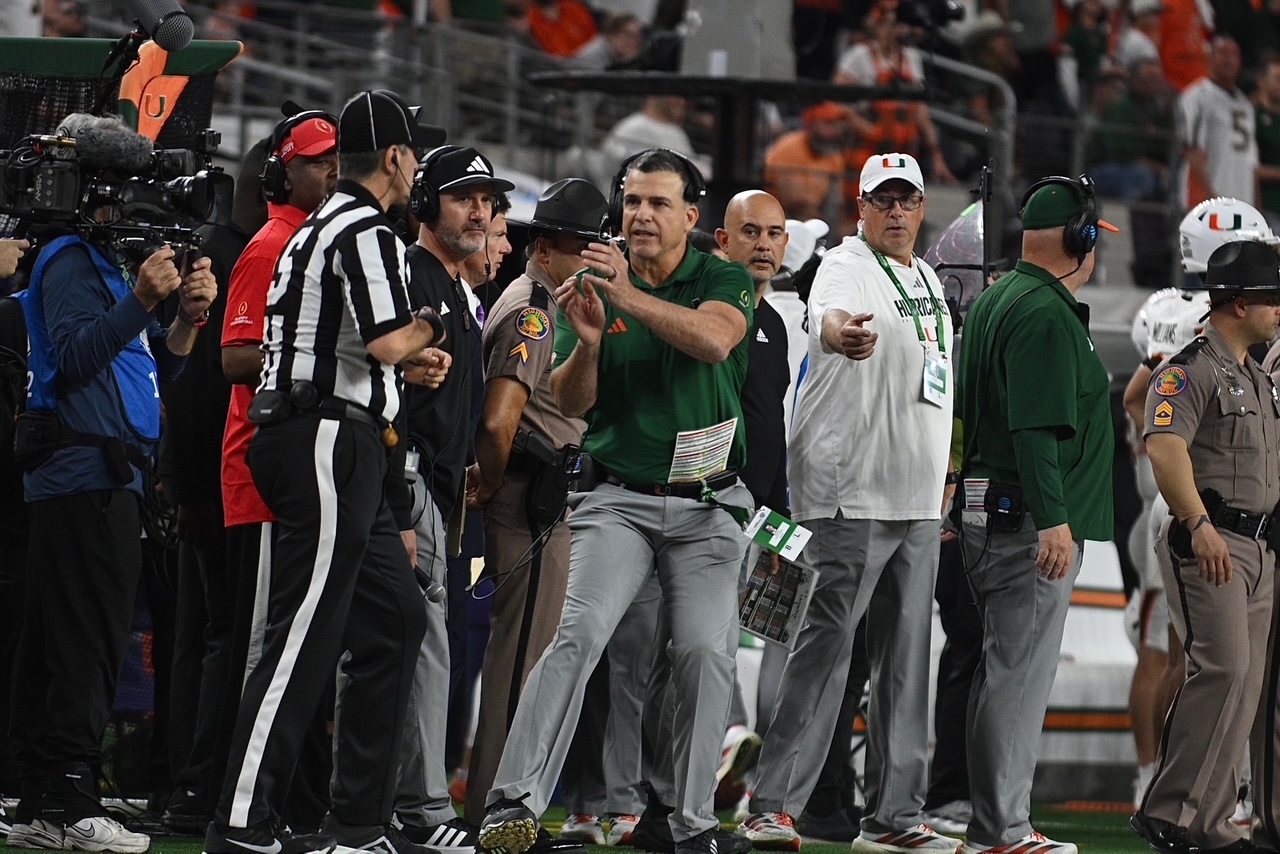

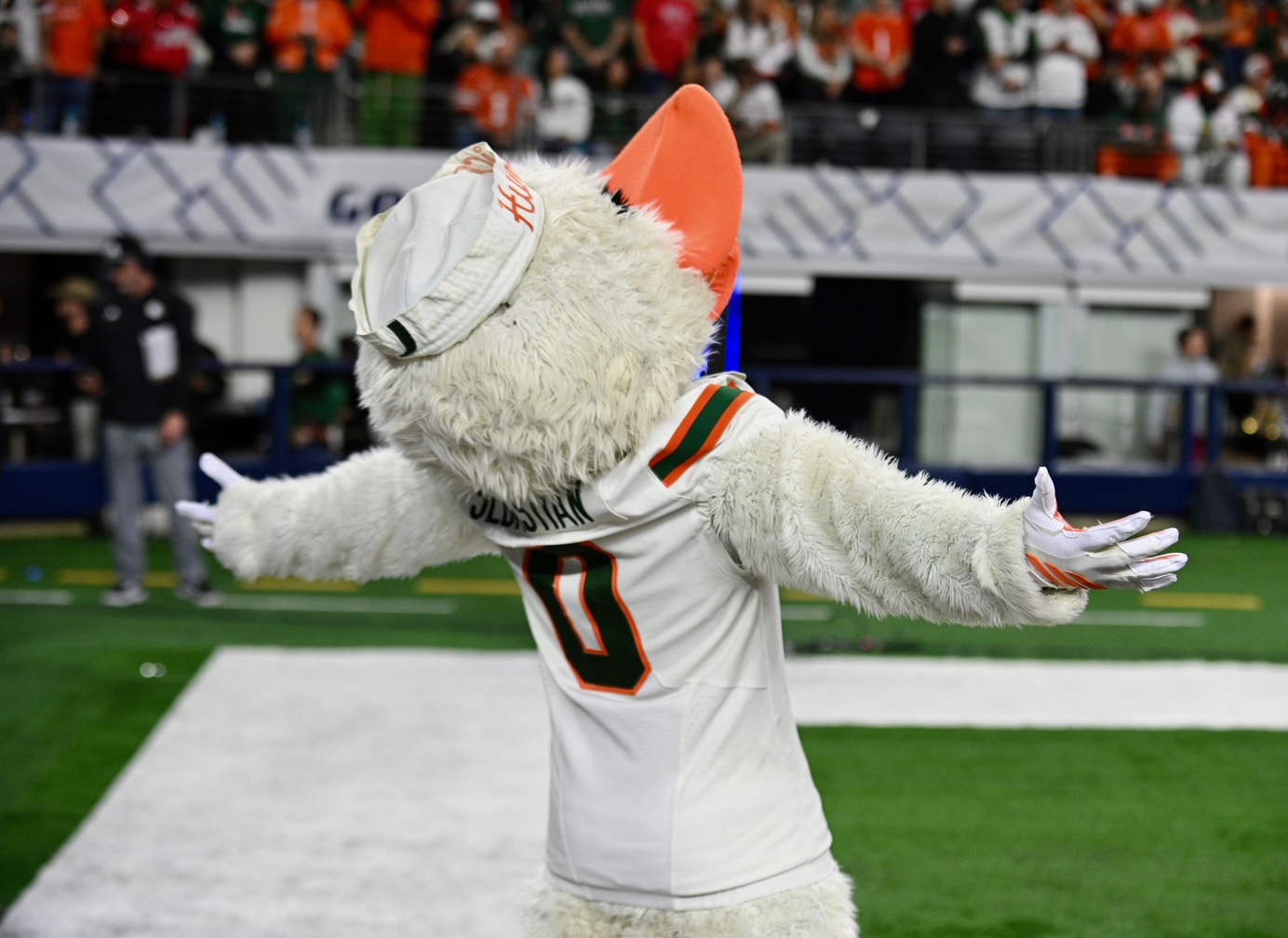
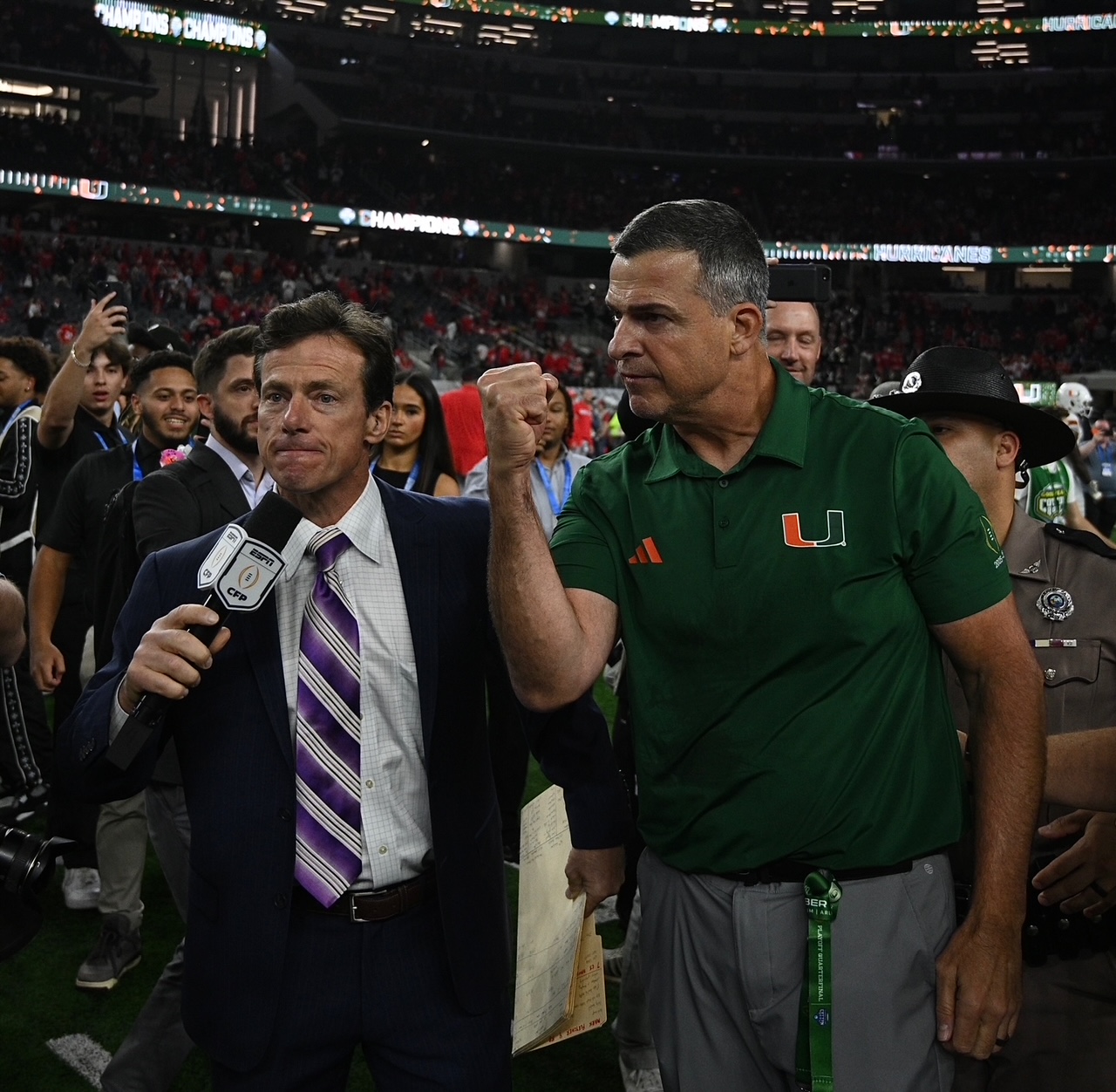
The College Football Playoff has always thrived on moments that recalibrate expectations, but on December 31, 2025, the Goodyear Cotton Bowl Classic delivered something more profound: a reminder that momentum, belief, and timing can outweigh seeding and reputation. Under the closed roof of AT&T Stadium in Arlington, Texas, the #10 Miami Hurricanes continued their improbable postseason run, upsetting the #2 Ohio State Buckeyes 24–14 and punching their ticket to the playoff semifinals.
On a night designed for celebration and spectacle, Miami authored one of the defining results of the 2025–2026 postseason. What began as a Cinderella narrative in the first round had now hardened into something unmistakably real. This was no longer a fluke. This was a team imposing its will on the sport’s elite.
The Cotton Bowl has long been synonymous with prestige, but its role as a College Football Playoff quarterfinal elevated the stakes dramatically. For Ohio State, the game represented expectation. The Buckeyes arrived as the #2 seed, armed with depth, star power, and the quiet confidence of a program accustomed to deep postseason runs.
Miami arrived carrying something different: momentum and freedom. After silencing Kyle Field and eliminating Texas A&M in the first round, the Hurricanes entered the Cotton Bowl with nothing to lose and everything to prove. The narrative framed them as underdogs again, but within the Miami locker room, belief had replaced novelty.
AT&T Stadium, cavernous and neutral, stripped away the advantages of home crowd and familiarity. What remained was execution, and the Hurricanes were prepared to test Ohio State at every level.
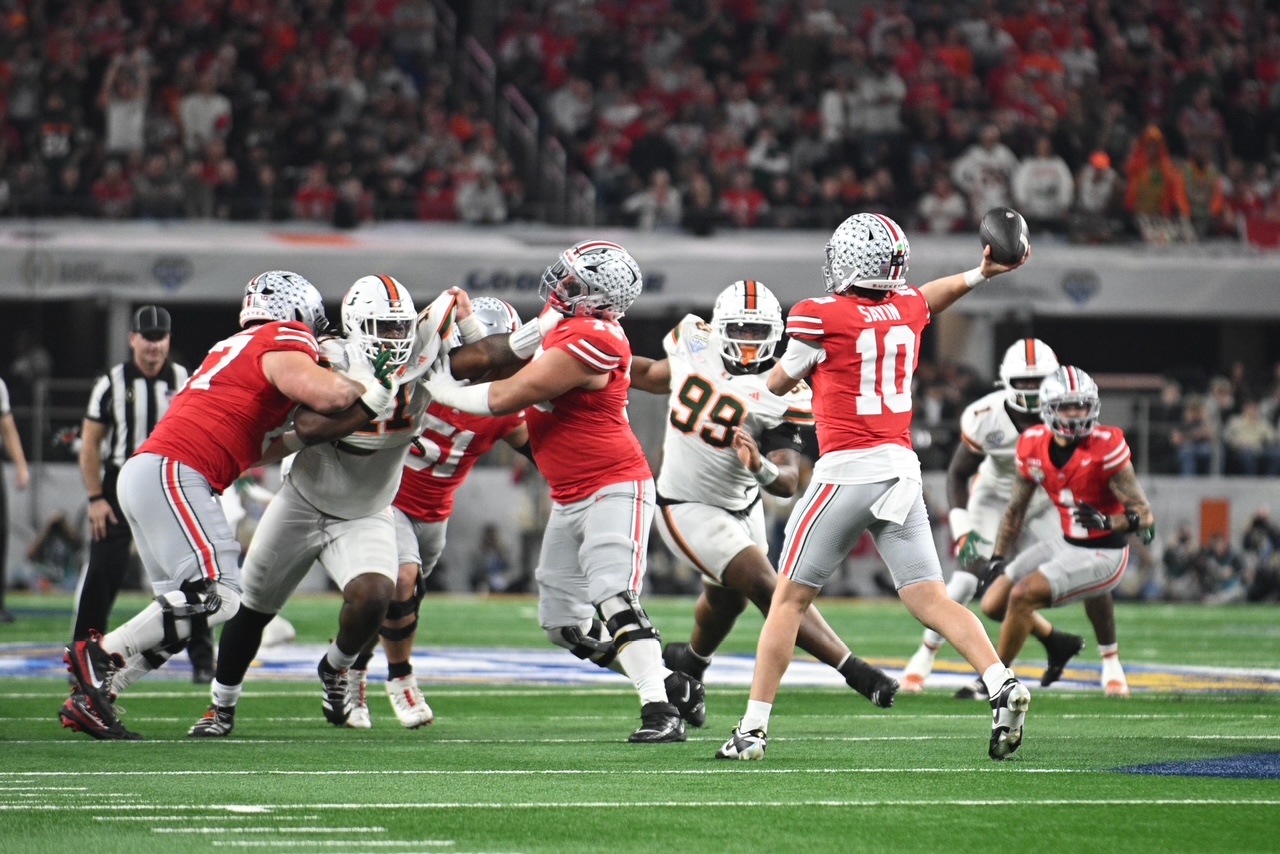
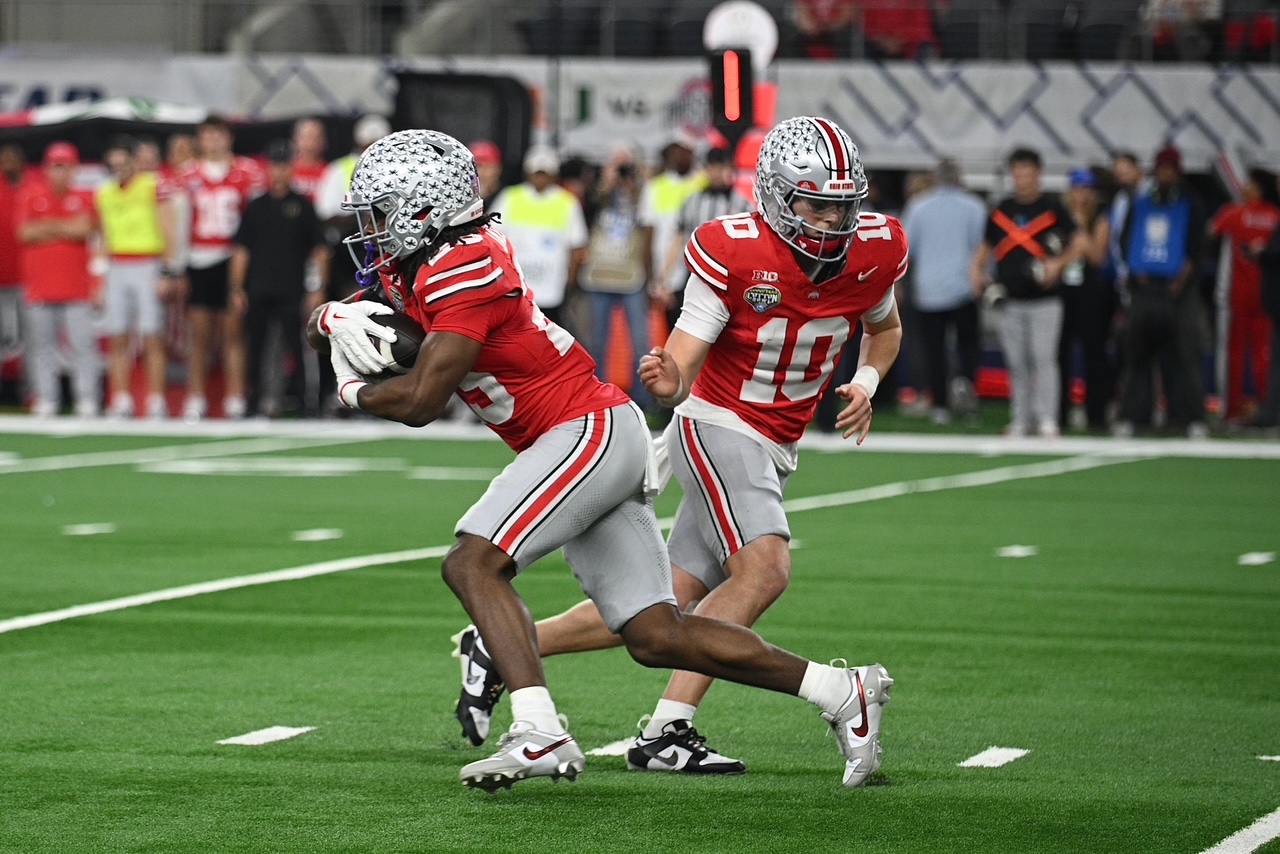
The opening quarter reflected a clash of styles. Ohio State attempted to establish its trademark physicality, leaning on its offensive line and seeking balance between run and pass. Miami countered with speed and discipline, flying to the ball and closing space quickly.
Neither team struck immediately. Possessions were contested, punts carried weight, and field position became a subtle battleground. The Buckeyes moved the ball in flashes but struggled to sustain drives as Miami’s defense disrupted timing and limited explosive plays.
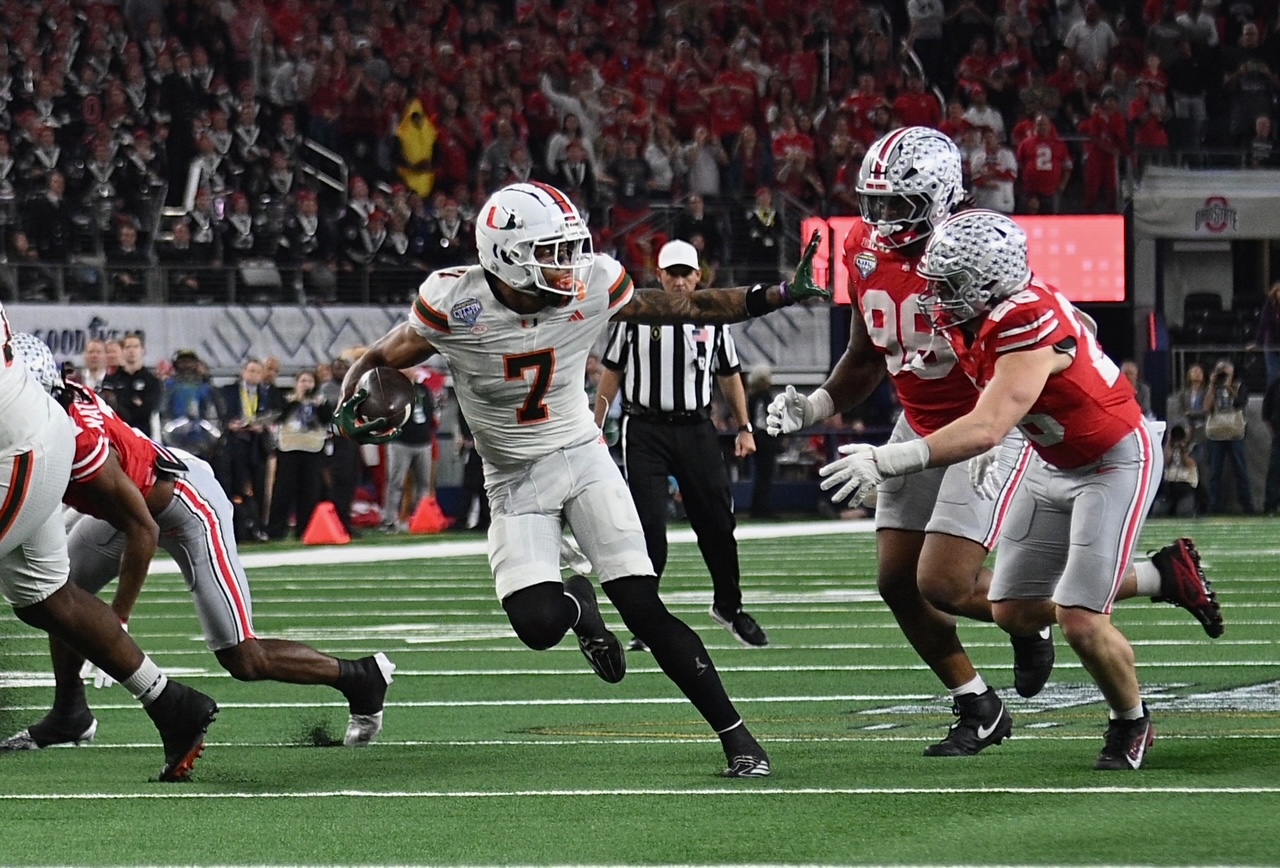
When Miami finally broke through with the game’s first points, the effect was immediate. The Hurricanes’ scoring drive was composed and deliberate, mixing short passes with timely runs. In a playoff setting, that kind of efficiency resonates. It signaled that Miami was not overwhelmed and that Ohio State would not simply roll forward on reputation.
To their credit, the Buckeyes answered. Ohio State’s response drive showcased its talent, converting pressure moments into points and briefly restoring balance to the contest. At that stage, the game felt poised on a knife’s edge, exactly where playoff football so often lives.
What followed, however, defined the night.
Miami adjusted. Defensively, the Hurricanes began disguising coverages more aggressively, baiting Ohio State into contested throws and compressing running lanes. The Buckeyes’ margin for error shrank with every series, and frustration became visible as drives stalled.
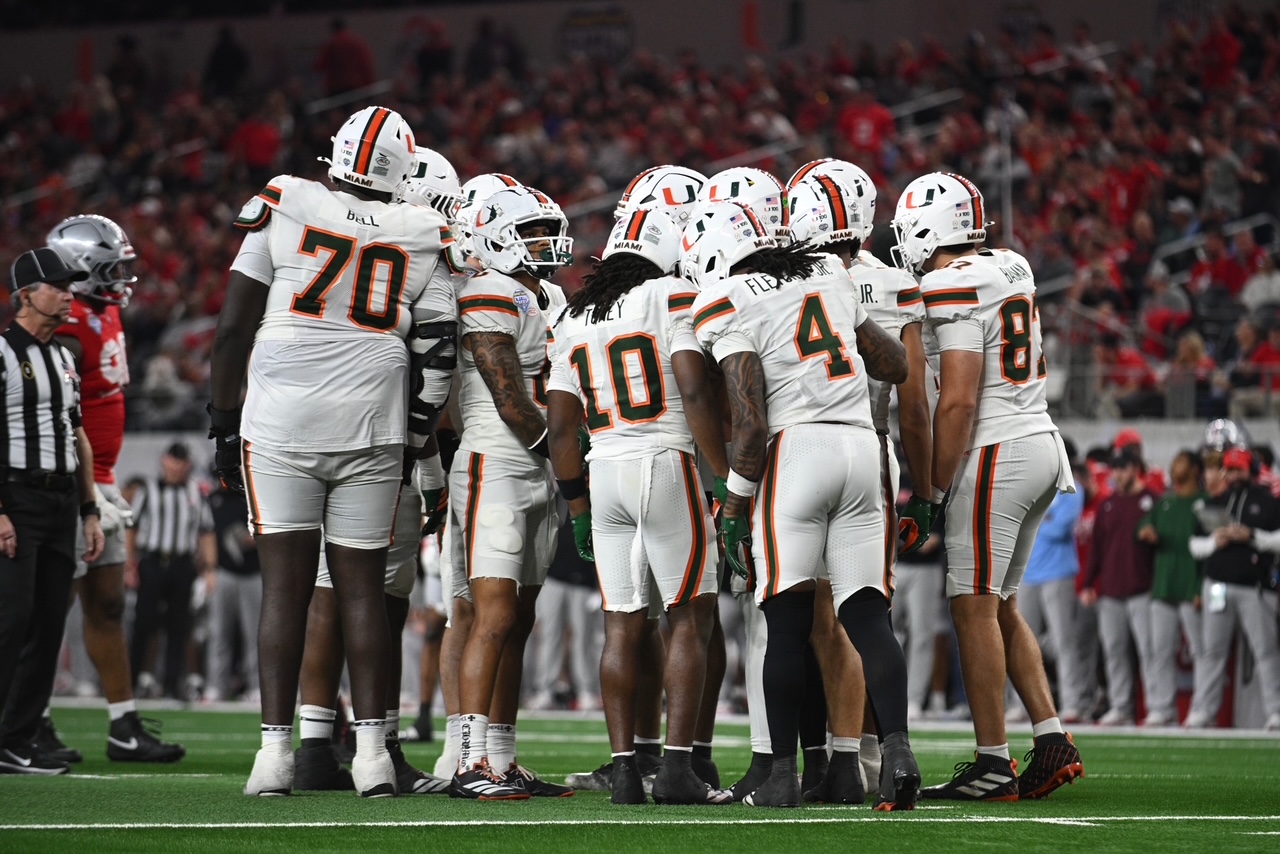
Offensively, Miami showed patience. Rather than chasing explosive plays, the Hurricanes trusted their system. They took what Ohio State conceded, extended drives, and gradually tilted time of possession. Each completed pass and each first down carried psychological weight.
By halftime, Miami had seized control, not decisively, but meaningfully.
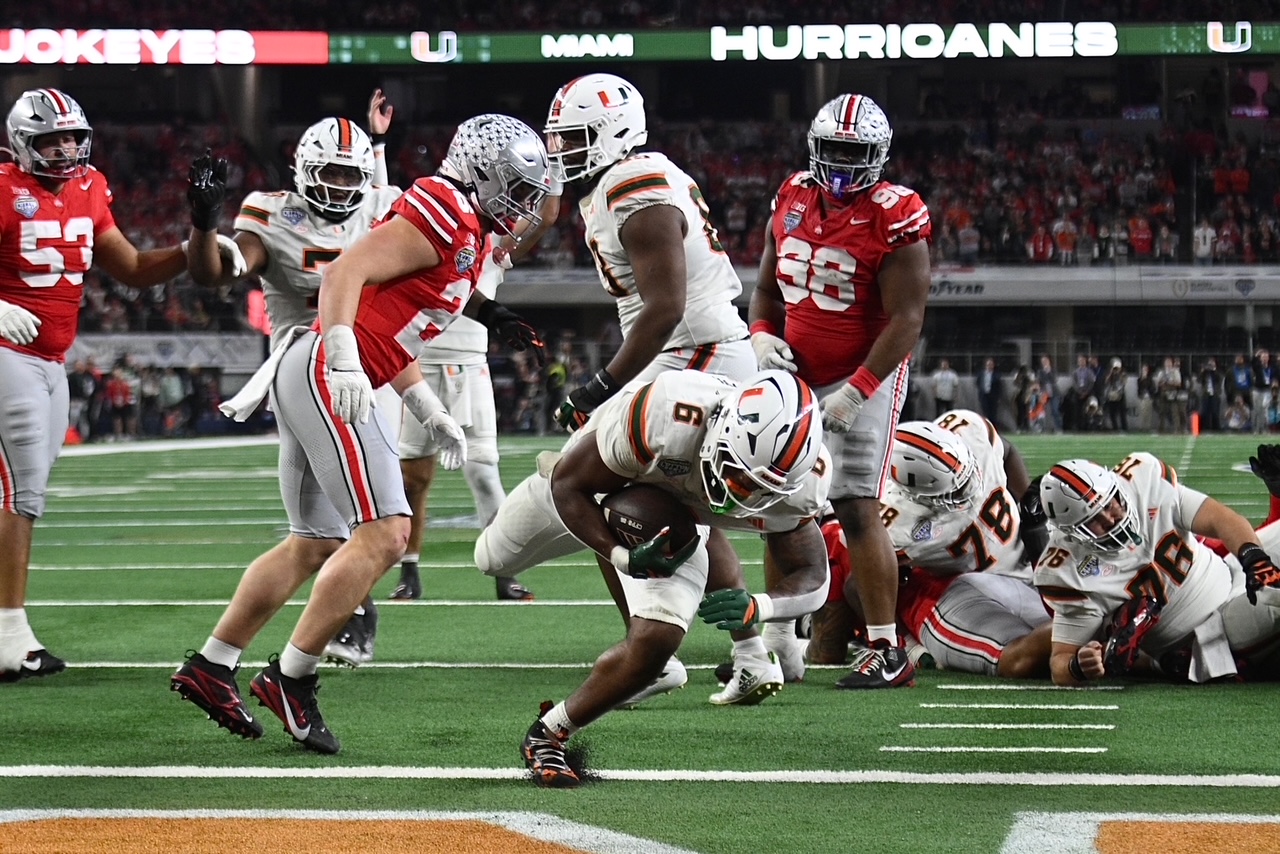
If there was a moment when the upset crystallized, it came in the third quarter. Miami emerged from the break sharper, faster, and more assertive. A sustained scoring drive resulted in a touchdown that pushed the Hurricanes ahead and shifted the burden squarely onto Ohio State.
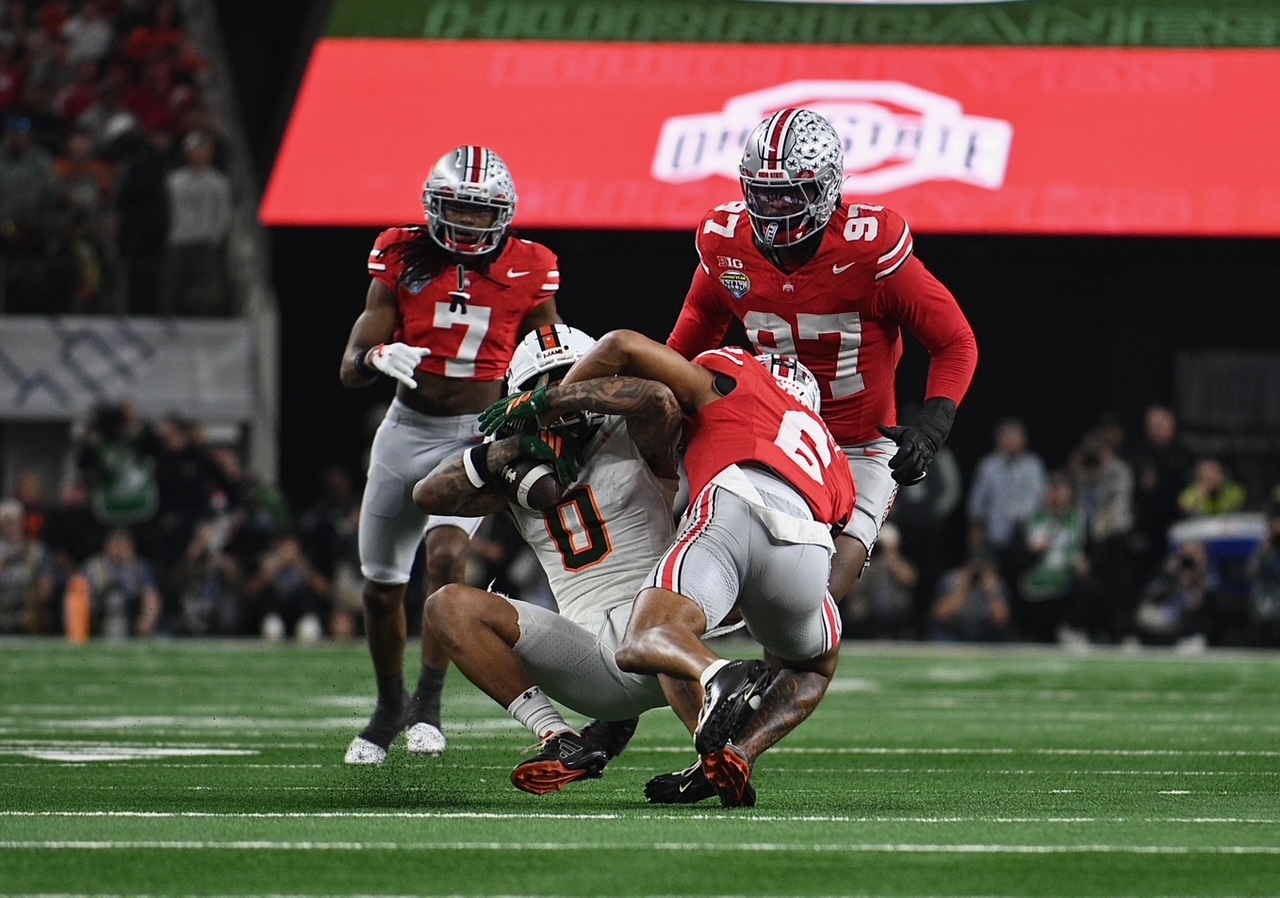
The Buckeyes attempted to respond with urgency, but Miami’s defense held firm. Tackles were made in space. Passing lanes closed quickly. Third downs became increasingly difficult. What had once looked like a manageable deficit for Ohio State began to feel heavier.
Miami’s second touchdown of the half extended the lead and altered the game’s emotional geometry. For the first time, Ohio State appeared to be chasing not just points, but answers.
Entering the fourth quarter, Miami led 24–14, and the question was no longer whether the Hurricanes could score again, but whether they could finish. The answer came through composure rather than fireworks.
Miami’s offense focused on clock management and ball security, forcing Ohio State to expend energy and time on each possession. Defensively, the Hurricanes tightened further, refusing to allow a momentum-shifting play.
Ohio State had opportunities, but Miami’s discipline prevailed. When the Buckeyes needed precision, they encountered pressure. When they needed rhythm, they found disruption. As the final minutes expired, the outcome settled in. The Hurricanes had done it again.
The 24–14 victory over Ohio State transformed Miami’s postseason from surprise to statement. Two playoff games, two upsets, both earned through defense, patience, and belief.
This was not the high-octane Miami of highlight reels past. This was a modern, pragmatic Hurricanes team built for December football. They tackled well. They avoided mistakes. They trusted their plan.
Beating Ohio State in a New Year’s Eve quarterfinal elevated the program’s credibility and reintroduced Miami as a national force capable of winning on the biggest stages, against the deepest rosters, under the brightest lights.
For Ohio State, the loss was sobering. The Buckeyes were not overwhelmed, but they were out-executed in critical moments. In a playoff environment where possessions are precious, missed opportunities proved costly.
The defeat underscored the unforgiving nature of the expanded playoff. High seeding provides opportunity, not immunity. Against a disciplined opponent playing with clarity, even the most talented teams can be undone.
As the calendar turned toward 2026, the Cotton Bowl left an indelible mark on the playoff story. Miami’s win did more than advance a team, it reshaped expectations. The Hurricanes were no longer guests in the playoff conversation; they were authors of it.
On New Year’s Eve in Arlington, amid fireworks and anticipation, Miami delivered a result that will be remembered not for spectacle, but for substance. The Hurricanes didn’t just upset Ohio State, they announced themselves as contenders.
And with that, the College Football Playoff became something far more unpredictable and far more compelling.
Ahsan Awan has been covering sports for over two decades, and has been covering NCAA football, including various Big Ten, Big 12, ACC, SEC, Mountain West, Pacific-12, and Big Sky conference member institutions, since 2007. Images taken by Andrew Giesemann are ©2025 Andrew Giesemann and have been made available to American Presswire subject to unlimited use under license unless otherwise noted. Editorial use by American Presswire is unrestricted. Andrew Giesemann can be found on X as @DrewGiesemann and on Instagram as @useedrew. Ahsan Awan can be found on X as @quackarazzi and on Instagram as @quackarazzi. American Presswire can be found on X as @ampresswire and on Instagram as @ampresswire.