

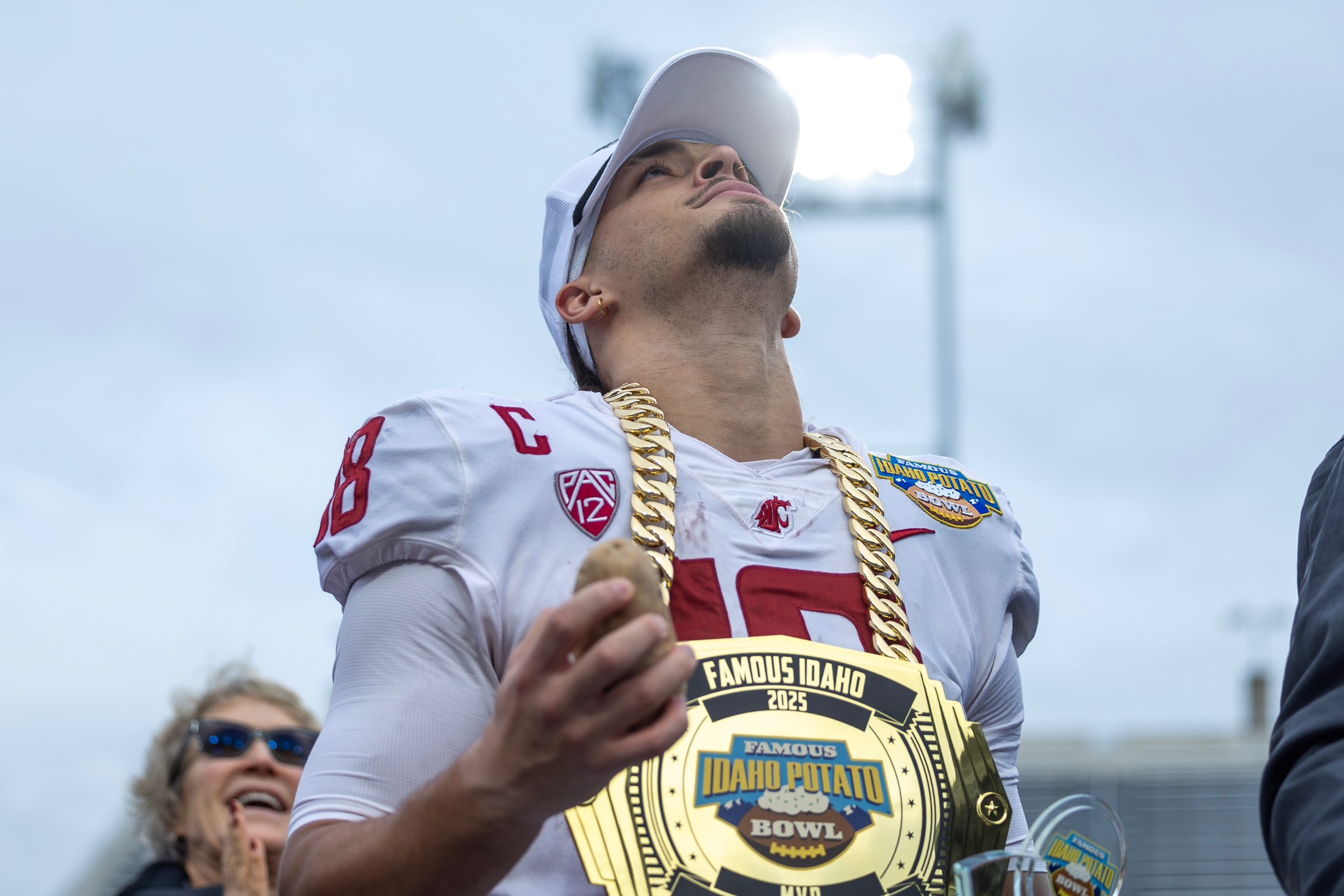
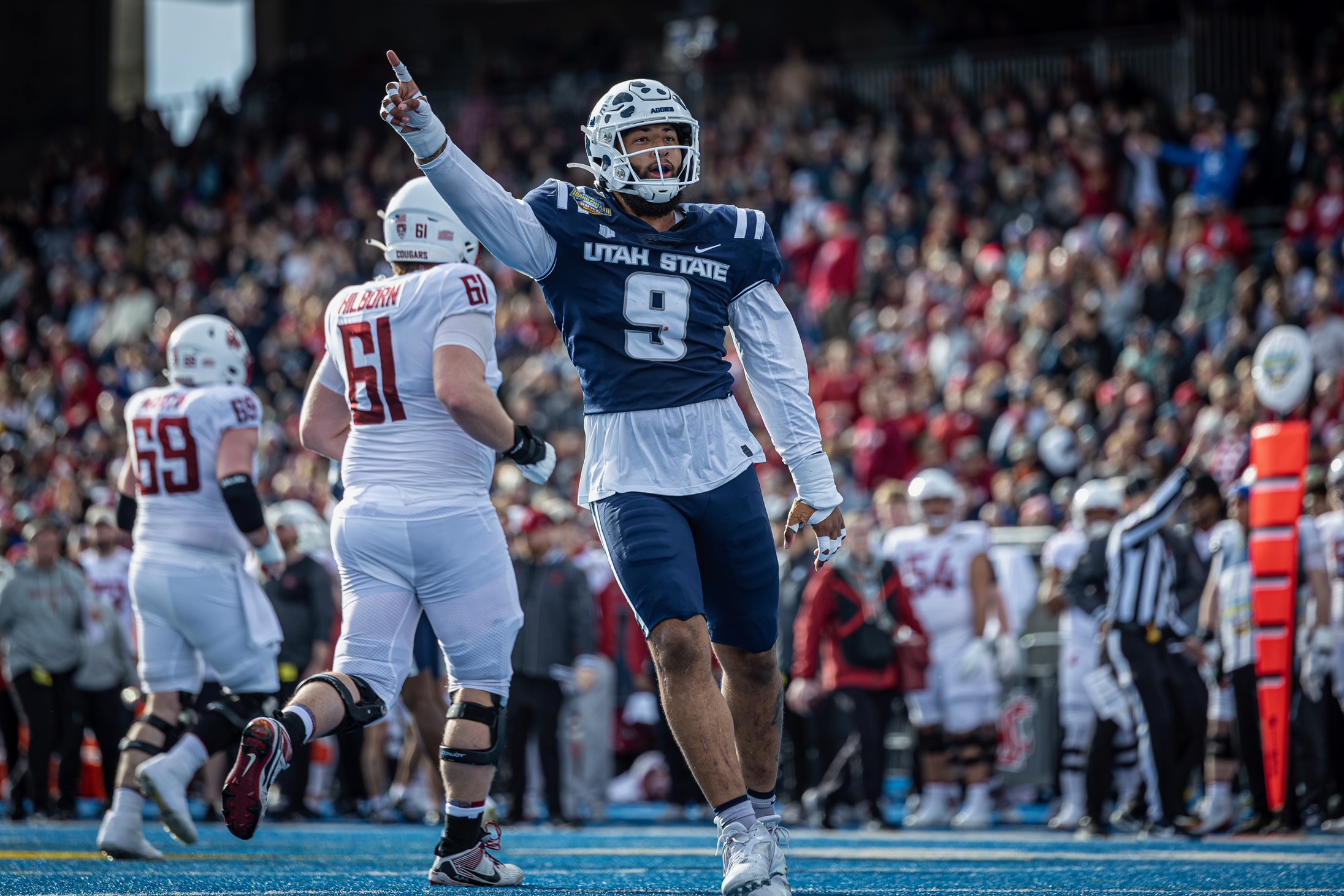
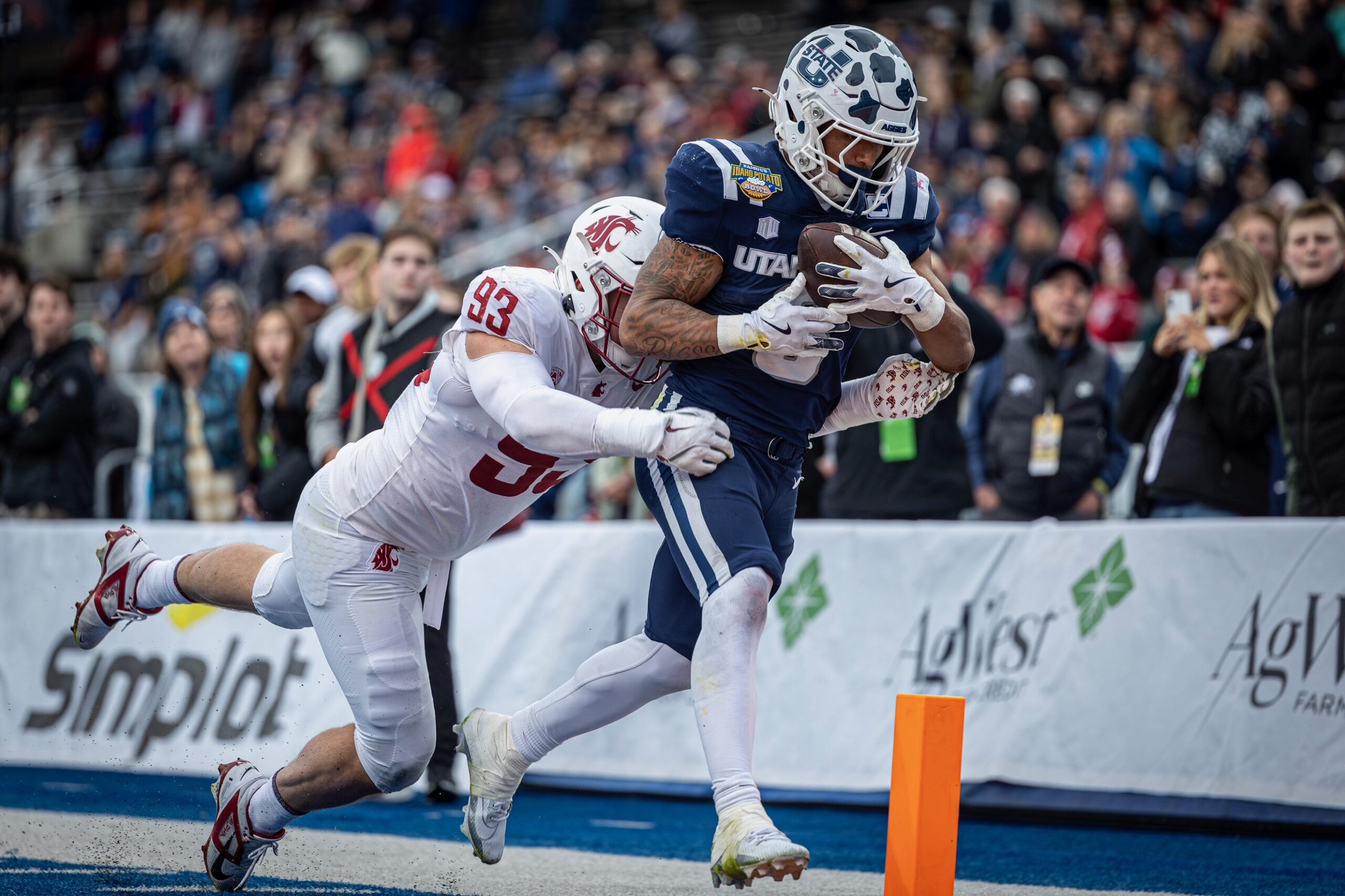
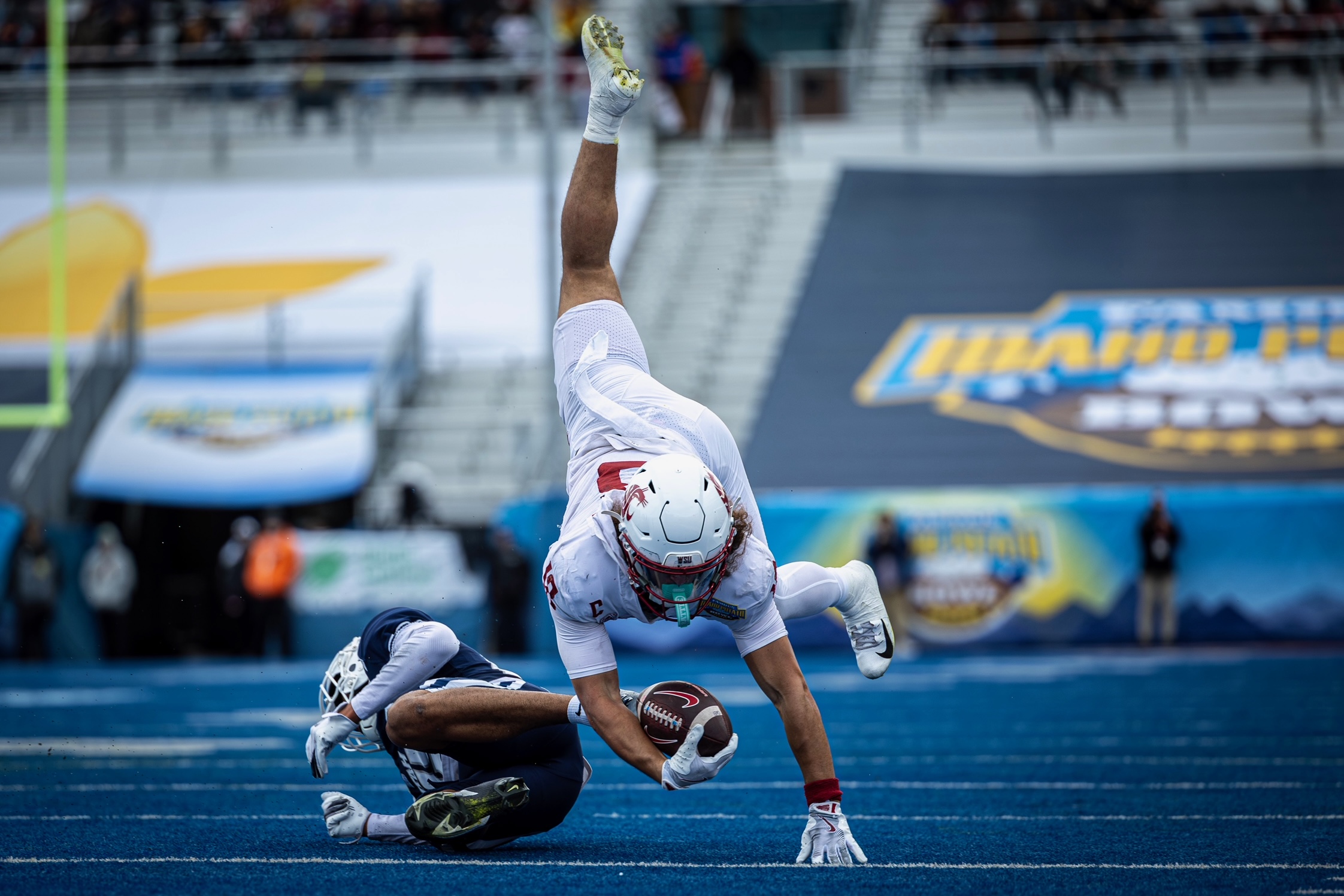
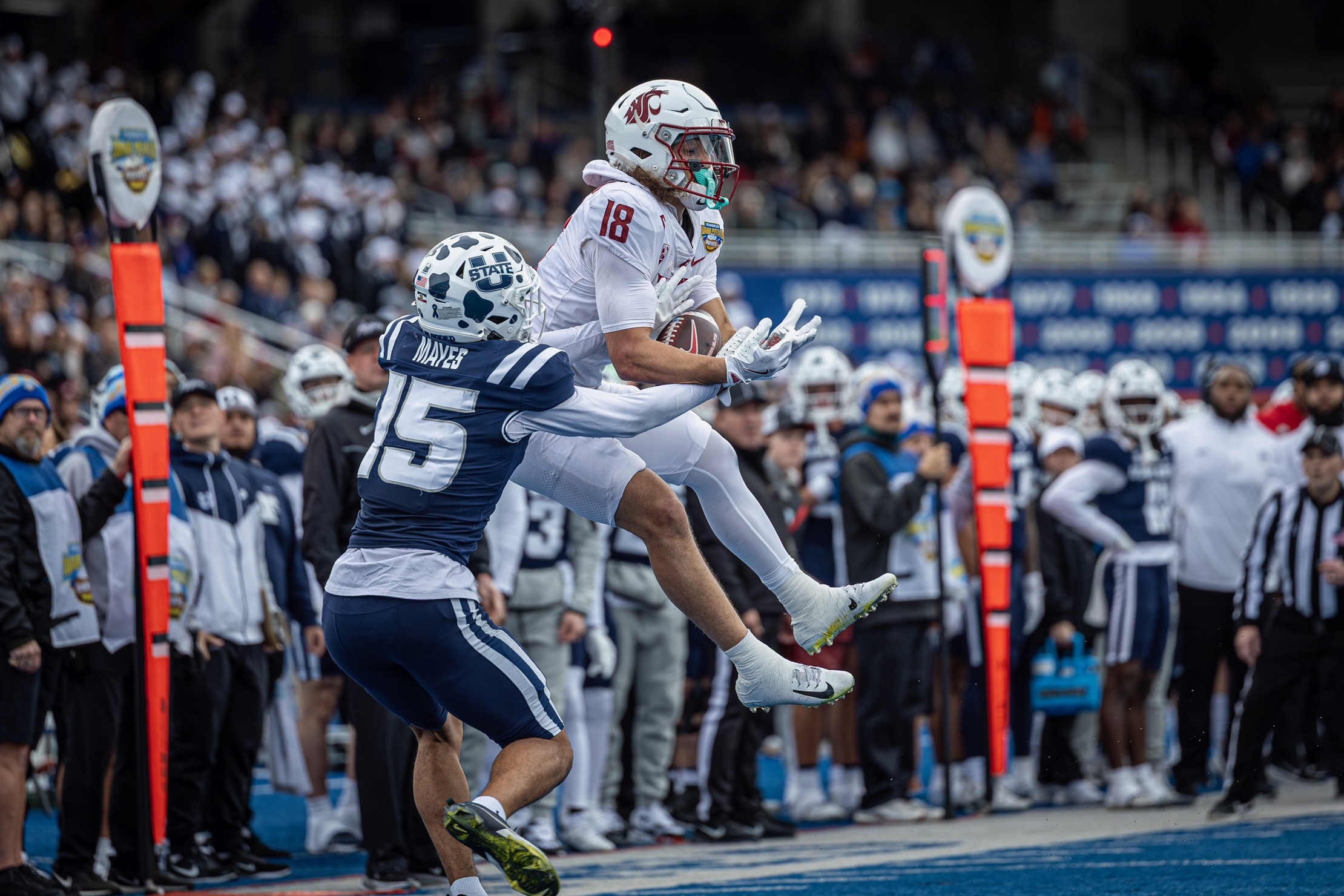
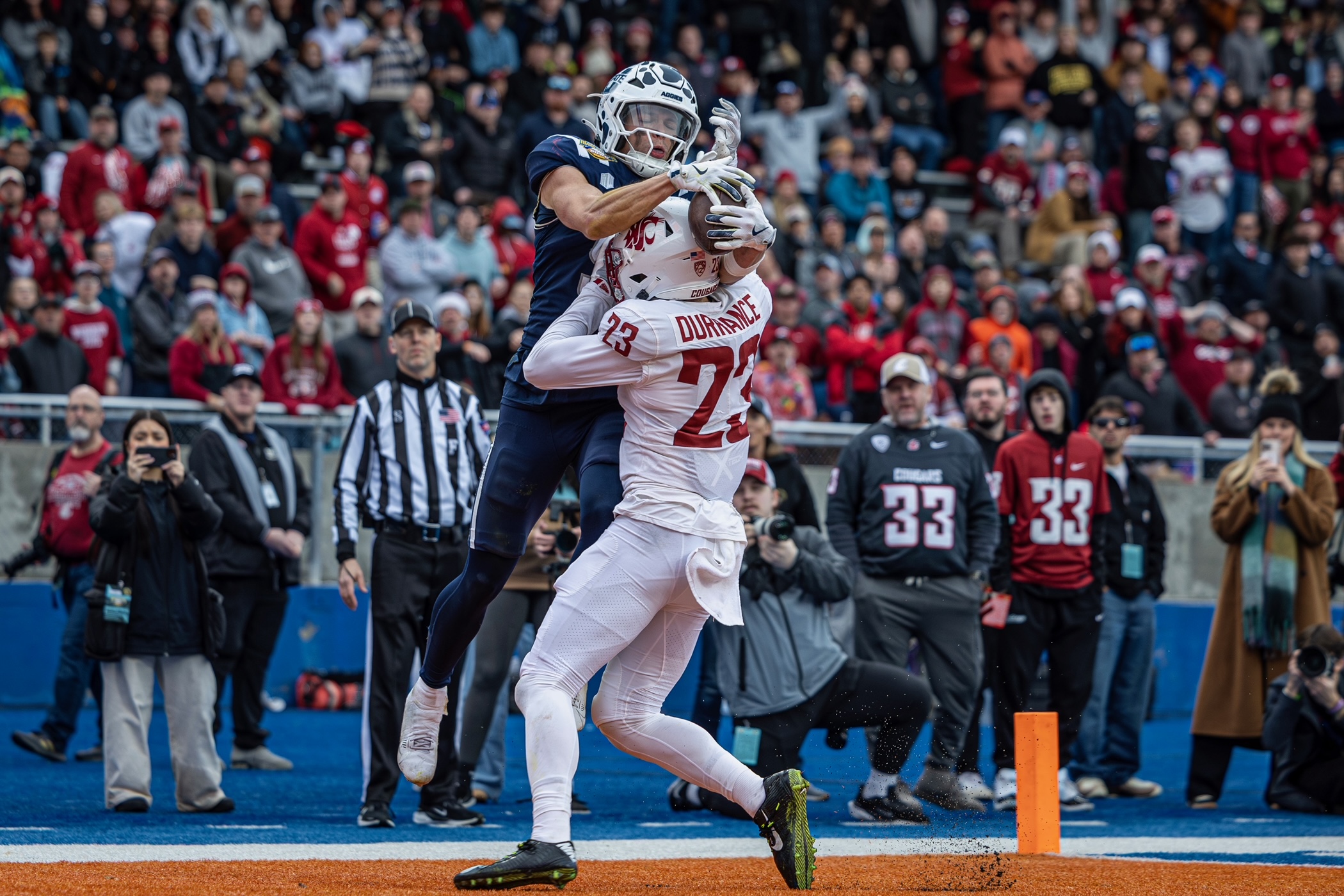
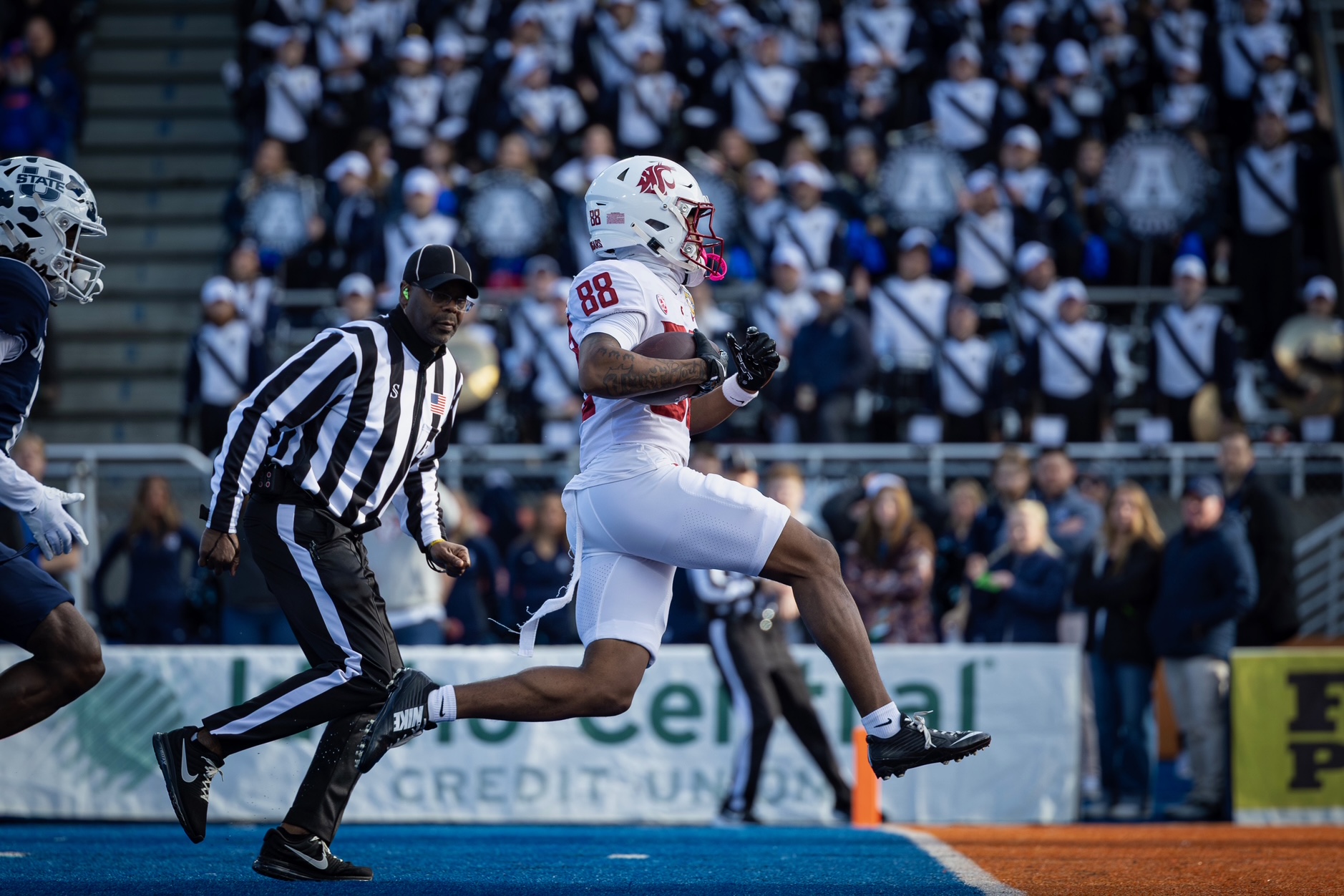
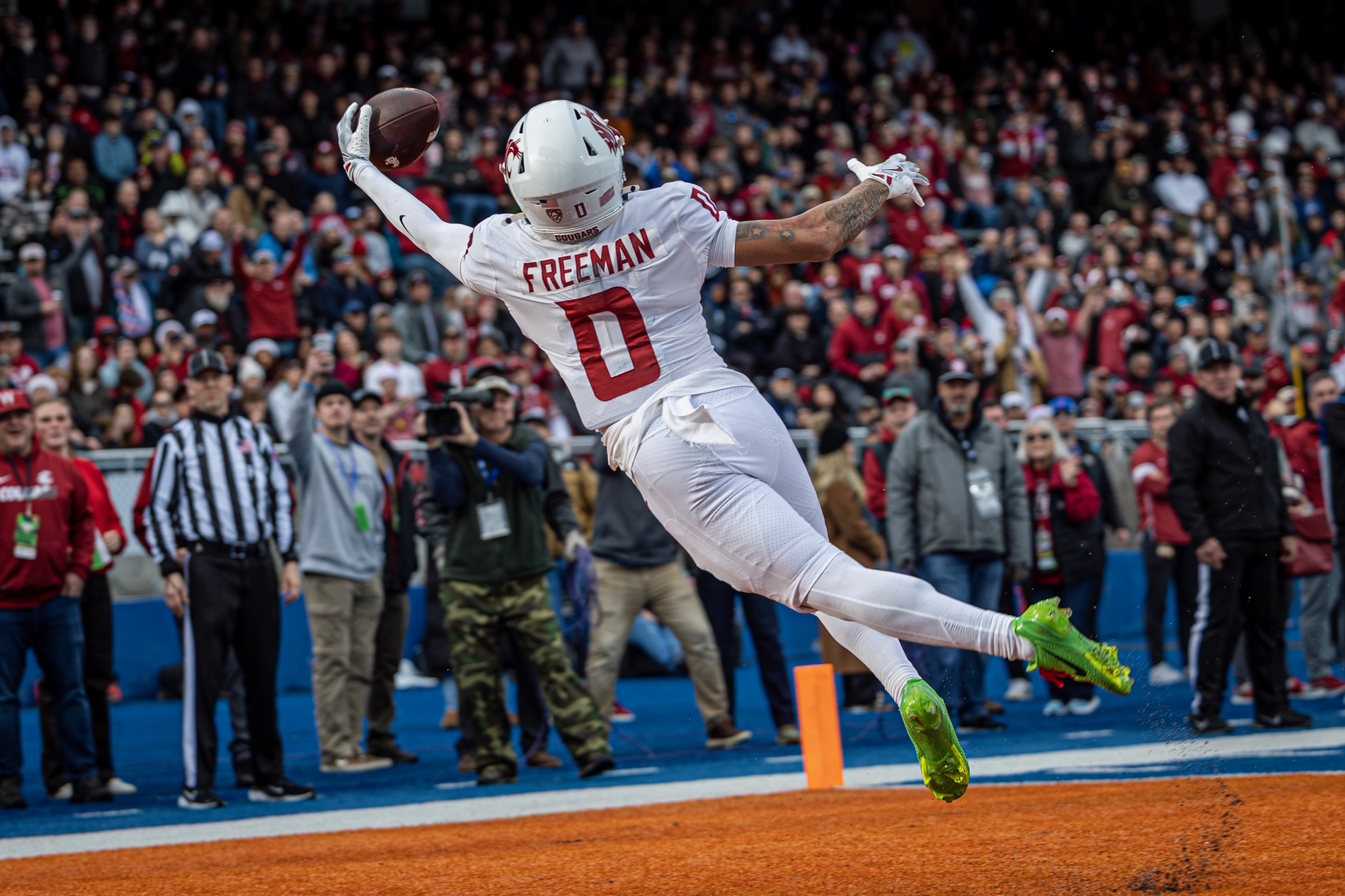
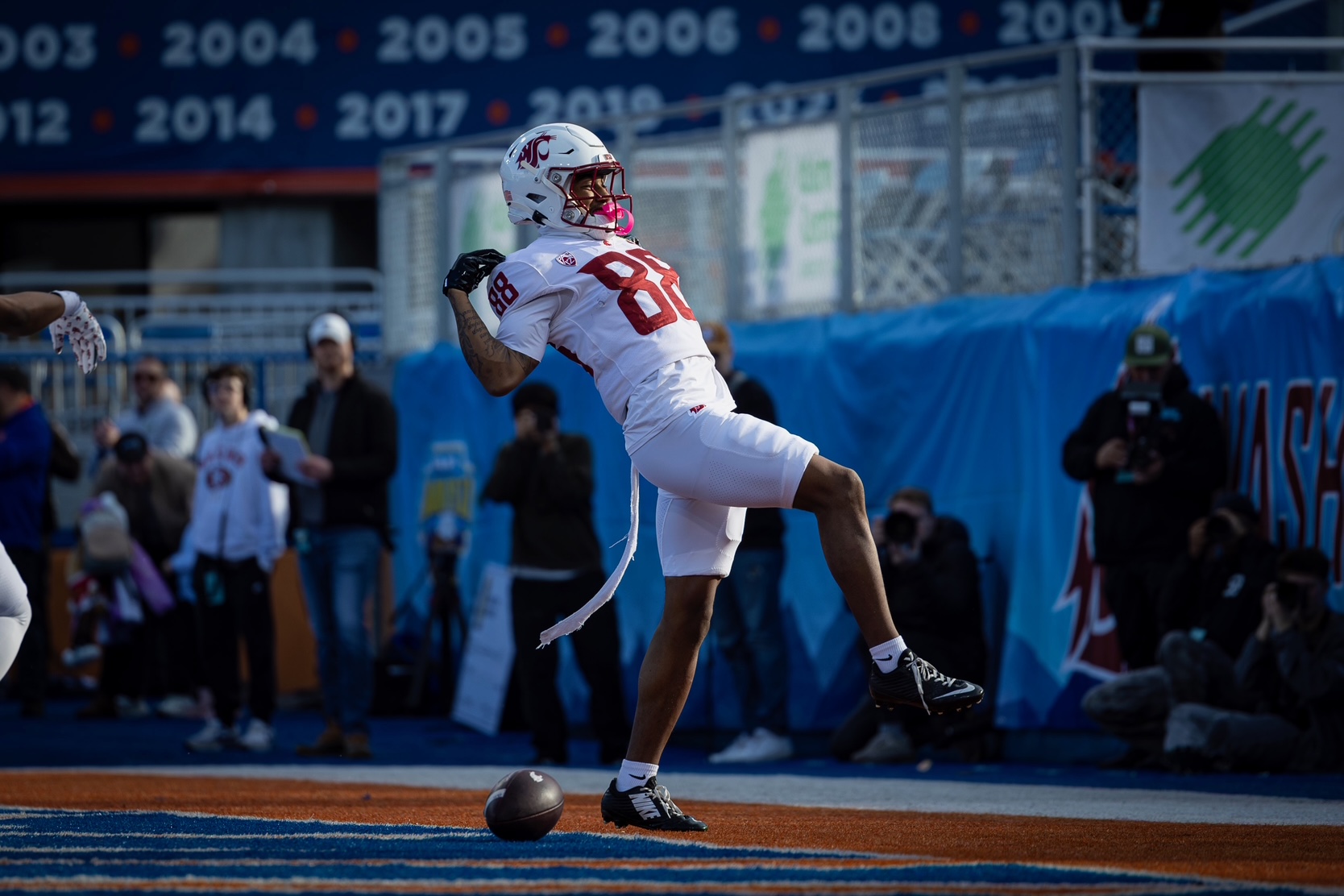
Few bowl games in college football carry a visual identity as instantly recognizable as the Famous Idaho Potato Bowl. On Monday, December 22, 2025, that identity once again took center stage at Albertsons Stadium in Boise, Idaho, where the iconic blue turf framed a postseason matchup rich in contrast and context. Under cold December skies, the Washington State Cougars defeated the Utah State Aggies 34–21, closing their season with authority and adding another chapter to the bowl’s distinctive legacy.
As the bowl season progressed deeper into its December rhythm, the Famous Idaho Potato Bowl served as a reminder of why these games endure. Beyond the branding and tradition, they are about matchups, motivation, and the chance for programs to define how a season is remembered. On Boise’s blue field, Washington State did exactly that.
The Famous Idaho Potato Bowl has long occupied a unique space in the postseason landscape. Played on one of the sport’s most unconventional surfaces, it blends humor and sincerity, as well as quirky pageantry paired with meaningful opportunity. For teams outside the playoff spotlight, it offers a national stage and a final test of resilience.
For Washington State, the bowl represented a chance to punctuate a season marked by transition and resolve. Navigating the evolving realities of college football, the Cougars arrived in Boise seeking validation that their progress was tangible, not theoretical. Utah State, meanwhile, entered the game aiming to reaffirm its standing as a program capable of contending beyond conference lines, even when facing a Power Four quality opponent.
The setting heightened the stakes. Albertsons Stadium, even when not filled to capacity, exerts a psychological presence. The blue turf disrupts rhythm, alters perception, and reinforces the sense that anything played there exists slightly outside the norm. Bowl games thrive in such spaces.
The opening quarter reflected the game’s central tension. Utah State showed early intent, moving the ball with tempo and testing Washington State’s defensive discipline. The Aggies sought to establish balance, mixing short passes with interior runs to prevent the Cougars from settling into a comfortable rhythm.
Washington State responded with composure. Rather than forcing the issue, the Cougars leaned on structure and patience, methodically working through possessions and capitalizing on field position. The first scoring drives hinted at a theme that would define the night: efficiency over explosiveness.
As the first half unfolded, Washington State began to separate itself not through highlight plays, but through consistency. Drives were sustained, mistakes were minimized, and the Cougars gradually imposed control. Utah State remained competitive, but the margin for error narrowed with each possession.
The turning point came in the second quarter, when Washington State’s offense found its rhythm and its defense tightened. The Cougars exploited matchups in the secondary, extending drives and converting critical third downs. Each successful possession applied pressure, forcing Utah State to chase points rather than dictate terms.
Defensively, Washington State adjusted effectively, limiting Utah State’s ability to generate chunk plays. The Aggies, often dangerous when able to stretch the field, were held to shorter gains that required near-perfect execution to sustain. When that execution faltered, the Cougars were quick to capitalize.
By halftime, Washington State had built a lead that reflected not dominance, but control. The game was still within reach for Utah State, but the momentum had shifted decisively.
If the first half established Washington State’s advantage, the second half confirmed it. The Cougars emerged from the break with renewed focus, extending their lead through balanced offense and disciplined defense. The running game became increasingly effective, wearing down Utah State’s front and shortening the game.
Utah State fought back, finding moments of success and briefly narrowing the margin. But each time the Aggies appeared poised to swing momentum, Washington State responded with poise. A timely scoring drive here, a defensive stand there; the Cougars consistently answered pressure with execution.
The 34 points Washington State scored were the product of sustained effort rather than explosive chaos. On a field known for unpredictability, the Cougars embraced structure. That approach proved decisive.
As the fourth quarter progressed, the outcome became clearer. Utah State continued to compete, but the path back narrowed with every passing minute. When the final whistle sounded, Washington State’s 34–21 victory felt earned, measured, and definitive.
For Washington State, the Famous Idaho Potato Bowl victory served as affirmation. Bowl games often function as emotional bookends, shaping how players and fans remember a season. This win allowed the Cougars to close the year with momentum and clarity.
The performance reflected growth, particularly in situational football. Washington State protected the ball, managed the clock, and executed in high-leverage moments. These are traits that extend beyond a single game, offering a foundation for the offseason and the seasons to come.
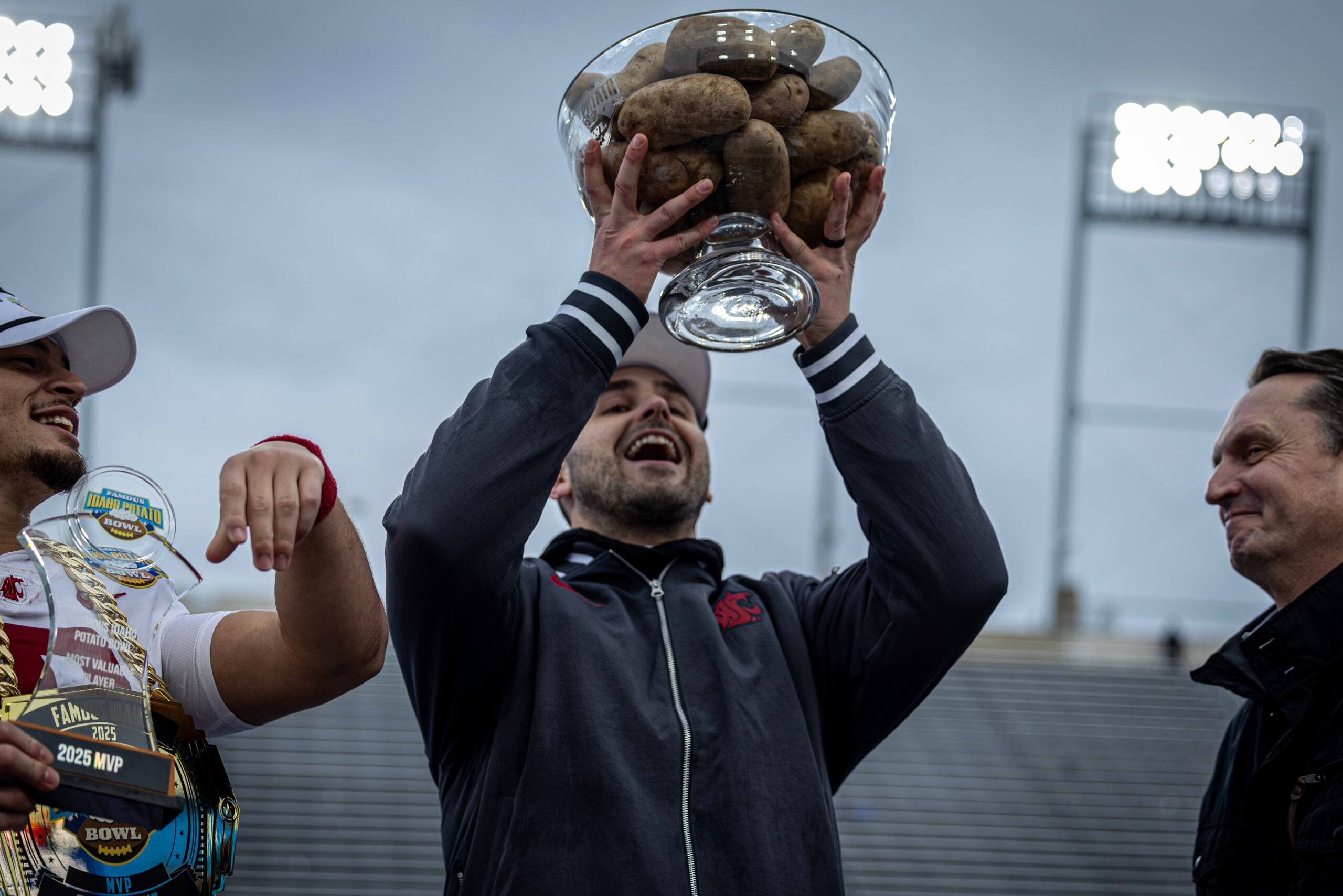
Winning on the blue turf also carries symbolic weight. Albertsons Stadium has humbled many teams, and leaving Boise with a bowl trophy reinforces confidence within a program navigating broader changes in the college football landscape.
For Utah State, the loss did not erase the season’s achievements, but it underscored areas for growth. Competing against Washington State revealed both strengths and limitations. The Aggies showed resilience and flashes of offensive capability, but consistency proved elusive.
Bowl games are often mirrors, reflecting a team’s identity with uncomfortable clarity. For Utah State, the mirror suggested a program capable of competing, but still seeking the depth and execution required to finish games against physical, disciplined opponents.
As part of the broader 2025–2026 bowl season, the Famous Idaho Potato Bowl reinforced the enduring appeal of these games. Played far from playoff brackets and championship debates, it nonetheless delivered meaning: players competing for pride, programs shaping narratives, and fans embracing tradition.
Under the lights and atop the blue turf, Washington State seized that meaning. The Cougars left Idaho with a 34–21 victory, a bowl trophy, and a sense of direction. In a postseason defined by variety and volume, the Famous Idaho Potato Bowl once again stood out not just for how it looked, but for what it represented. It was college football in December: distinctive, determined, and decided on the field.
Ahsan Awan has been covering sports for over two decades, and has been covering NCAA football, including various Big Ten, Big 12, ACC, SEC, Mountain West, Pacific-12, and Big Sky conference member institutions, since 2007. Images taken by Robert Longan are ©2025 Robert Longan and have been made available to American Presswire subject to unlimited use under license unless otherwise noted. Editorial use by American Presswire is unrestricted. Robert Longan can be found on X as @robbielphoto and on Instagram as @lngn_media. Ahsan Awan can be found on X as @quackarazzi and on Instagram as @quackarazzi. American Presswire can be found on X as @ampresswire and on Instagram as @ampresswire.