

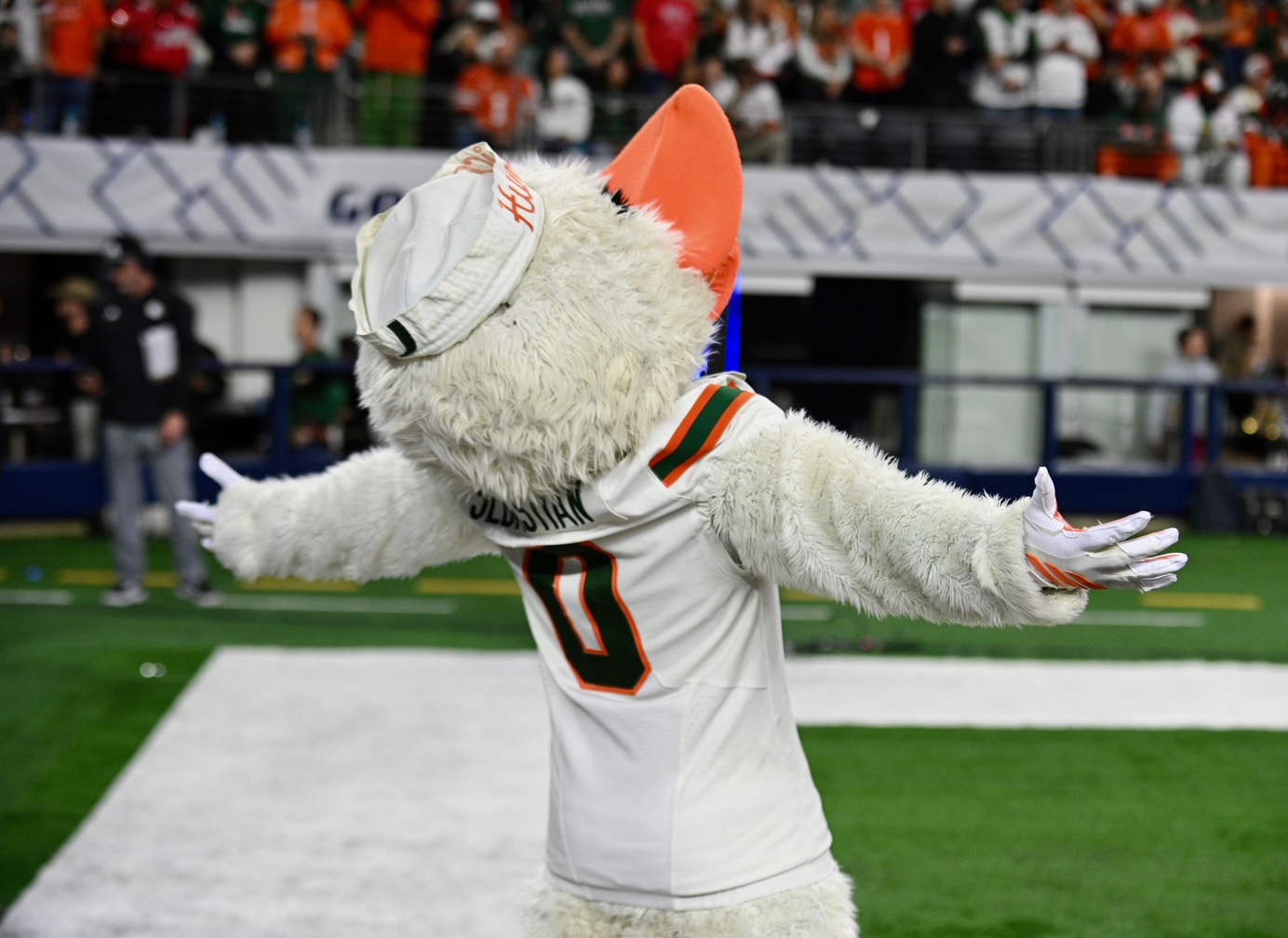
Destiny in the Desert: Miami Outlasts Ole Miss in the Fiesta Bowl
The 2026 College Football Playoff semifinal Vrbo Fiesta Bowl delivered everything a national semifinal is meant to be: tension, momentum swings, star-making moments, and a finish that lingered well after the clock expired. On January 8, 2026, inside State Farm Stadium in Glendale, Arizona, the Miami Hurricanes survived and advanced, defeating the Ole Miss Rebels 31–27 in a game that tested resolve as much as talent.
With the victory, Miami earned something both historic and symbolic: a trip to the College Football Playoff National Championship Game, set for January 19 on the Hurricanes’ own home field at Hard Rock Stadium in Miami Gardens, Florida. The road to that moment, however, required navigating one of the most competitive and unpredictable matchups of the postseason.
The Fiesta Bowl matchup represented a collision of styles and narratives. Miami arrived with a season defined by defensive toughness and timely offense, having already established itself as one of the most resilient teams in the playoff field. Ole Miss countered with speed, aggression, and an offense capable of stretching defenses in every direction.
Neutral-site games often present a dull atmosphere, but this one never lacked energy. The crowd was split, loud, and fully invested from kickoff, turning the desert setting into a cauldron worthy of the playoff stage. From the opening possession, it was clear that neither team intended to ease into the night.
Miami struck first, setting an early tone with an efficient opening drive that blended tempo and balance. The Hurricanes moved the ball with confidence, converting early opportunities into points and signaling their intent to play aggressively rather than conservatively.
Ole Miss responded immediately. The Rebels’ offense showcased its explosiveness, answering Miami’s opening score with a drive that highlighted speed on the perimeter and decisiveness in execution. The early exchange foreshadowed a night where momentum would be fleeting and every possession would carry weight.
By the end of the first quarter, the score reflected parity. Both teams had landed punches, and neither defense had found a way to fully dictate terms.
The second quarter belonged to adjustments. Miami’s defense began to tighten, limiting Ole Miss’s explosive plays and forcing longer drives. While the Rebels continued to move the ball, sustaining success became more difficult as Miami closed gaps and pressured decision-making.
Offensively, the Hurricanes leaned into composure. Rather than chasing big plays, Miami focused on efficiency, extending drives and keeping Ole Miss’s offense on the sideline. The approach paid dividends, allowing Miami to build a modest lead heading into halftime. However, the score line did little to suggest comfort. Ole Miss remained dangerous, and the four-point margin felt more like a pause than a separation.
The third quarter unfolded as the Rebels’ best stretch of the game. Ole Miss emerged from halftime with urgency, attacking early and reclaiming momentum with a scoring drive that flipped the scoreboard and reignited belief. For a moment, the Hurricanes faced their stiffest test. Ole Miss’s confidence surged, and the game threatened to tilt. Miami, however, responded with the calm of a team seasoned by adversity.
The Hurricanes answered with a critical drive that steadied the contest. Mixing tempo and physicality, Miami reclaimed the lead and forced Ole Miss back into chase mode. The back-and-forth underscored the narrow margin separating the teams and set the stage for a dramatic final quarter.
The final quarter was defined by urgency on both sides. Miami extended its lead to 31 points with a scoring drive that showcased execution under pressure, but Ole Miss refused to fade. The Rebels answered with a touchdown of their own, cutting the deficit and ensuring that the game would be decided possession by possession.
As the clock wound down, Ole Miss pushed relentlessly, threatening to steal the game in its final moments. Miami’s defense bent but did not break, forcing difficult throws and contested plays. Each stop drew roars from Hurricanes supporters scattered throughout the stadium.
In the final minutes, Miami’s ability to manage the clock proved decisive. The Hurricanes drained precious seconds, limiting Ole Miss’s remaining opportunities. When the Rebels’ last-ditch effort fell short, the scoreboard read 31–27, and Miami’s sideline erupted.
The Fiesta Bowl victory was more than a semifinal win, it was a defining moment for the program. Miami demonstrated balance, resilience, and the ability to close under immense pressure. In a game where momentum shifted repeatedly, the Hurricanes consistently found answers.
Perhaps most significant was the context of what lay ahead. By winning, Miami secured a berth in the national championship game on its own home field, an almost unprecedented convergence of opportunity and pressure. The chance to compete for a title in Miami Gardens adds a layer of meaning that few programs ever experience.
For Ole Miss, the loss was heartbreaking but validating. The Rebels proved they belonged on the playoff stage, pushing Miami to the brink and showcasing the explosiveness that defined their season. Falling four points short in a semifinal did little to diminish the progress of the program, even if the immediate disappointment lingered. Ole Miss exited Glendale having left everything on the field, a fact reflected in the game’s narrow margin and relentless pace.
As the Hurricanes left State Farm Stadium, the implications of the win settled in. Miami was heading to the national championship game; not just any championship game, but one to be played on familiar turf, in front of a home crowd, with history waiting.
The 31–27 victory over Ole Miss will be remembered as the night Miami earned that chance. In the desert and under playoff lights, the Hurricanes navigated chaos, embraced pressure, and emerged one win away from a national title with destiny pointing directly back home.
Ahsan Awan has been covering sports for over two decades, and has been covering NCAA football, including various Big Ten, Big 12, ACC, SEC, Mountain West, Pacific-12, and Big Sky conference member institutions, since 2007. Images taken by Andrew Giesemann are ©2025 Andrew Giesemann and have been made available to American Presswire subject to unlimited use under license unless otherwise noted. Editorial use by American Presswire is unrestricted. Images taken by Chris Arjoon are ©2025 Chris Arjoon and have been made available to American Presswire subject to unlimited use under license unless otherwise noted. Editorial use by American Presswire is unrestricted. Chris Arjoon can be found on X as @PicsBrit and on Instagram as @brit__pics. Andrew Giesemann can be found on X as @DrewGiesemann and on Instagram as @useedrew. Ahsan Awan can be found on X as @quackarazzi and on Instagram as @quackarazzi. American Presswire can be found on X as @ampresswire and on Instagram as @ampresswire.

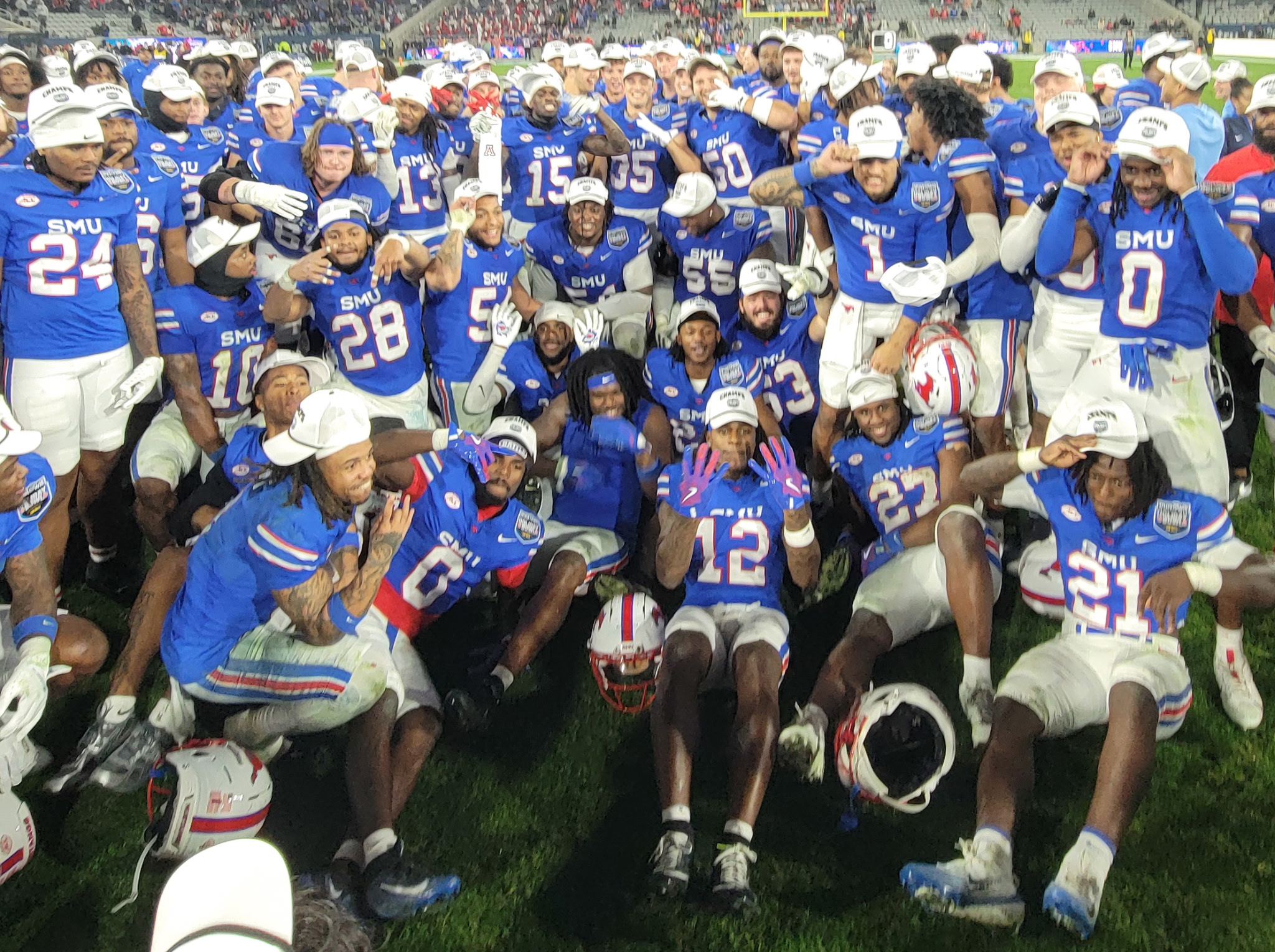
Diego Dramatics: SMU Outlasts Arizona in Exciting 2026 Holiday Bowl Game
The 2026 Trust & Will Holiday Bowl delivered exactly what its long history promises: tension, momentum swings, and a finish that demanded attention until the final whistle. On January 2, 2026, at Snapdragon Stadium in San Diego, California, the Southern Methodist Mustangs held off the Arizona Wildcats, earning a 24–19 victory in a game defined by resilience and late-game composure.
Played under clear skies in one of college football’s most scenic postseason settings, the Holiday Bowl once again affirmed its reputation as a showcase for competitive, evenly matched teams. For SMU, the win represented validation of a season built on consistency and belief. For Arizona, the narrow loss was a painful reminder of how thin the margins can be when bowl games reach their closing moments.
Few non-playoff bowls carry the credibility of the Holiday Bowl. Long positioned as a destination game that pairs quality programs with national relevance, the contest has built a legacy of memorable finishes and high-level football. The move to Snapdragon Stadium added a modern edge without diminishing the bowl’s identity.
Arizona and SMU arrived in San Diego with different narratives but similar ambitions. Arizona sought to cap a season of growth and rediscovered competitiveness, while SMU aimed to confirm its status as one of the most consistent programs outside the traditional power structure. The matchup promised contrast and delivered balance.
The opening quarter unfolded cautiously, with both teams probing rather than pressing. Arizona relied on physicality and controlled pacing, attempting to establish rhythm through measured drives. SMU countered with speed and discipline, spreading the field and testing Arizona’s defensive spacing.
It was SMU that struck first, capitalizing on early momentum with a scoring drive that set the tone. The Mustangs’ offense showed its characteristic efficiency, converting opportunities without forcing the issue. Arizona responded with patience, methodically moving the ball and keeping the game within reach.
The first half evolved into a chess match. Neither team dominated, but both demonstrated the preparedness expected of bowl-season opponents. By halftime, the scoreboard reflected the game’s balance, and the outcome remained very much undecided.
The third quarter introduced a sharper edge. Arizona emerged intent on asserting control, leaning on sustained drives and physical play to challenge SMU’s defensive endurance. The Wildcats’ efforts paid off, narrowing the gap and briefly shifting momentum.
SMU, however, refused to yield. The Mustangs adjusted quickly, responding with a composed offensive series that reclaimed the lead. The exchange of scores underscored the game’s central theme: neither team could afford a lapse.
Defensively, SMU tightened coverage in key moments, forcing Arizona to settle for shorter gains rather than explosive plays. Meanwhile, Arizona’s defense responded with pressure of its own, ensuring that no lead felt safe.
As the fourth quarter approached, the game carried the unmistakable tension of a Holiday Bowl classic.
The final quarter delivered the drama the setting demanded. SMU extended its advantage with a critical scoring drive, blending balance and tempo to produce points when they mattered most. The 24 points the Mustangs scored were not overwhelming, but they were timely.
Arizona answered with urgency. The Wildcats moved the ball efficiently, refusing to let the game slip away quietly. A late touchdown brought the score to 24–19, reigniting belief and putting pressure squarely on SMU to finish.
The closing minutes tested composure. Arizona pushed for one final opportunity, but SMU’s defense held firm, denying the Wildcats the decisive breakthrough. When the final seconds expired, the Mustangs emerged with a hard-earned five-point victory.
For SMU, the Holiday Bowl victory was a statement of maturity. The Mustangs did not rely on a single dominant phase; instead, they won through balance and situational execution. In a game defined by narrow margins, SMU made fewer mistakes and capitalized on critical moments.
The win reinforced the program’s trajectory, validating a season built on consistency and competitive resolve. Finishing the year with a bowl victory in a respected postseason setting added credibility and momentum heading into the next chapter.
For Arizona, the loss was difficult but instructive. The Wildcats demonstrated resilience and competitiveness throughout, but the inability to convert late opportunities proved decisive. Bowl games often hinge on moments rather than stretches of play, and Arizona came up just short in those moments.
Still, the performance reflected progress. Competing toe-to-toe with SMU on a national stage suggested a foundation upon which Arizona can build, even if the immediate result was disappointing.
As the 2026 bowl season moved deeper into January, the Holiday Bowl once again delivered a game worthy of its reputation. Set against the backdrop of San Diego’s coastline, Arizona and SMU provided a contest defined by balance, tension, and late drama.
When the night ended at Snapdragon Stadium, the Southern Methodist Mustangs stood victorious, 24–19, having navigated pressure and preserved their lead. The result added another memorable chapter to the Holiday Bowl’s history, one shaped not by spectacle alone, but by execution when it mattered most.
In the end, it was a reminder of what makes bowl season endure: meaningful games, narrow margins, and moments that linger long after the final whistle.
Ahsan Awan has been covering sports for over two decades, and has been covering NCAA football, including various Big Ten, Big 12, ACC, SEC, Mountain West, Pacific-12, and Big Sky conference member institutions, since 2007. Images taken by Jason Reed and Noel Danseco are ©2025 Jason Reed and Noel Danseco, separately and respectively, and have been made available to American Presswire subject to unlimited use under license unless otherwise noted. Editorial use by American Presswire is unrestricted. Jason Reed can be found on X as @fieldofdd and on Instagram as @fieldofdaydreams. Noel Danseco can be found on Instagram as @drive_x_strike. Ahsan Awan can be found on X as @quackarazzi and on Instagram as @quackarazzi. American Presswire can be found on X as @ampresswire and on Instagram as @ampresswire.
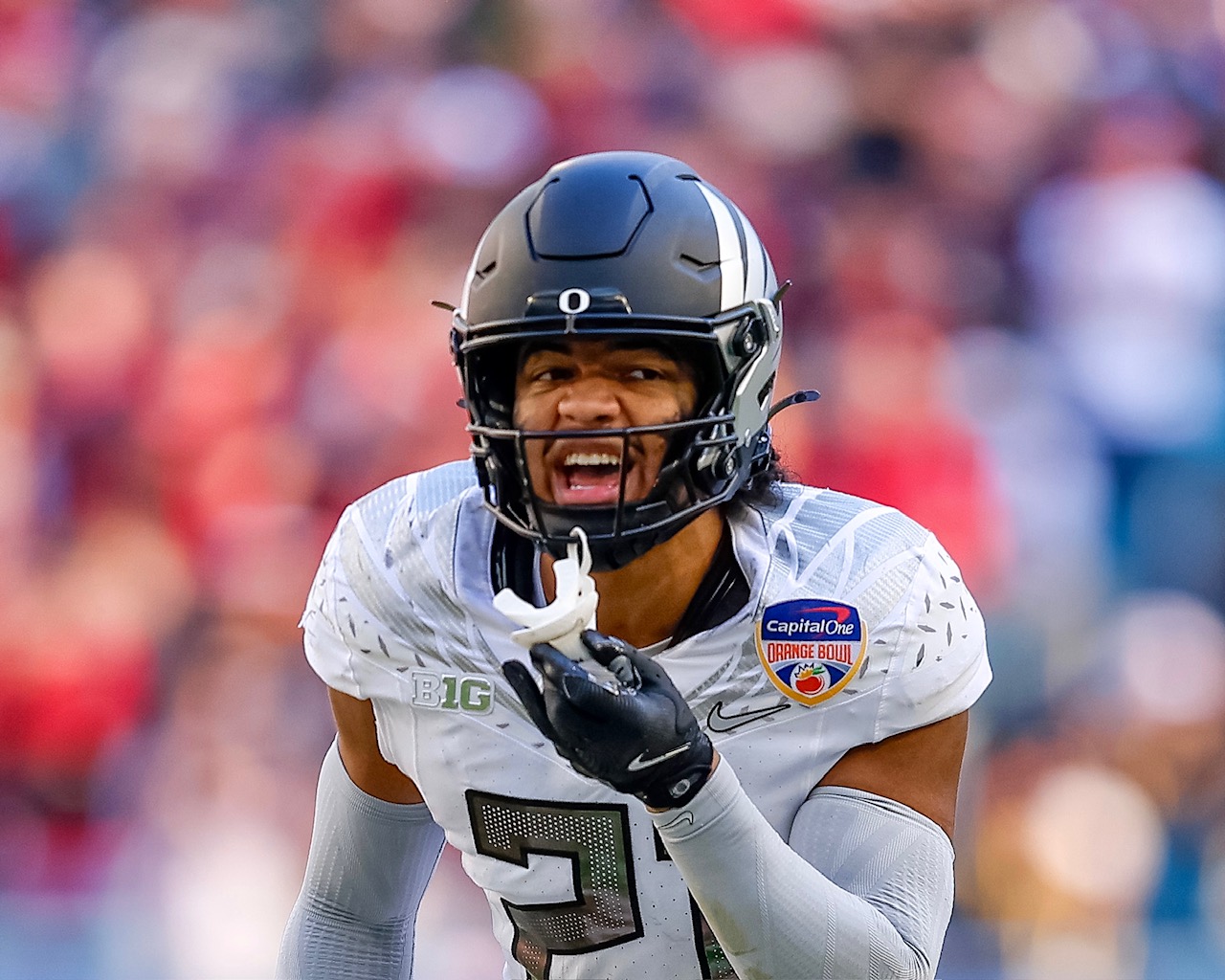
New Year’s Shutout: Oregon Overwhelms Texas Tech in the 2026 Orange Bowl
The first day of 2026 delivered a reminder of how unforgiving the College Football Playoff can be when preparation meets precision. At Hard Rock Stadium in Miami Gardens, Florida, the Oregon Ducks closed the door emphatically on the Texas Tech Red Raiders, earning a 23–0 victory in the Capital One Orange Bowl quarterfinal on January 1, 2026. In a postseason defined by tension and upsets, Oregon’s performance stood apart for its clarity and control.
This was not a game decided by drama or late heroics. It was decided by authority. From the opening series to the final whistle, Oregon dictated tempo, field position, and physicality, producing the playoff’s first shutout of the expanded era and sending a message that the Ducks’ ambitions extended well beyond simply advancing.
Few bowl games carry the historical weight of the Orange Bowl. Long a centerpiece of college football’s postseason, its role as a playoff quarterfinal elevated the stakes even further. The setting in South Florida provided a neutral yet symbolic stage: sunshine, tradition, and national attention converging on a game that promised contrast.
Texas Tech arrived with momentum and confidence, having navigated a challenging path to the playoff. The Red Raiders’ season was defined by offensive creativity and resilience, a team capable of striking quickly and unsettling opponents. Oregon, by contrast, entered with the reputation of balance and depth, a roster built to absorb pressure and apply it in return.
What followed was not a clash of equals, but a demonstration of separation.
From the opening kickoff, Oregon made its intentions clear. The Ducks’ defense set the tone immediately, swarming Texas Tech ball carriers and closing passing windows with speed and discipline. The Red Raiders’ early possessions ended without rhythm, disrupted by pressure and tight coverage.
Offensively, Oregon adopted a measured approach. Rather than forcing explosive plays, the Ducks emphasized efficiency in the form of short completions, patient runs, and careful management of down and distance. The strategy paid dividends quickly, as Oregon converted early opportunities into points and seized a lead that felt heavier than the scoreboard suggested.
Texas Tech attempted to respond with tempo, but Oregon’s defensive structure refused to bend. Each stalled drive reinforced the sense that this game would be played on Oregon’s terms.
If there was a defining element of the Orange Bowl, it was Oregon’s defense. The Ducks executed a near-flawless game plan, neutralizing Texas Tech’s strengths and exposing its vulnerabilities. The Red Raiders, accustomed to finding space through motion and misdirection, found lanes closed and reads complicated.
Third downs became a recurring obstacle. Oregon’s ability to apply pressure without sacrificing coverage forced hurried decisions and limited gains. Tackling in space, a perennial postseason challenge, was executed with precision, preventing the kind of explosive plays Texas Tech relies upon to build momentum.
By halftime, the shutout was intact, and the tone was unmistakable. Texas Tech was not being overwhelmed by flash, but by structure. Oregon’s discipline was the difference.
The third quarter provided Texas Tech with its final opportunity to change the narrative. Any early score could have shifted momentum, injected belief, and tested Oregon’s composure. Instead, the Ducks doubled down.
Oregon extended its lead through sustained drives that drained time and energy. Each possession ended with points or pinned Texas Tech deep, compounding frustration and urgency. The Ducks’ offense may not have dazzled, but it executed, and that’s a hallmark of teams built for postseason success.
As the game progressed, the Red Raiders’ margin for error disappeared entirely. Forced to chase points against a defense that refused to yield space, Texas Tech pressed. Mistakes followed, and Oregon capitalized by maintaining control rather than gambling unnecessarily.
By the fourth quarter, the outcome was clear. The question was no longer whether Oregon would win, but whether Texas Tech could break the shutout. The Ducks answered that question emphatically, closing the game with the same defensive intensity that opened it.
A 23–0 victory in a playoff quarterfinal is more than a win, it is a declaration. Oregon demonstrated that it could dominate without spectacle, relying on fundamentals, discipline, and depth. In a postseason where volatility often reigns, the Ducks offered certainty.
The shutout, in particular, resonated. In an era of high-powered offenses and expanded playoffs, holding a postseason opponent scoreless is a rarity. Doing so on January 1, on a national stage, underscored Oregon’s readiness for the sport’s final rounds.
This performance positioned the Ducks not merely as survivors of the quarterfinals, but as contenders capable of dictating outcomes against elite competition.
For Texas Tech, the Orange Bowl was a harsh conclusion to a season defined by progress. Reaching the playoff represented a significant achievement, but the quarterfinal exposed the gap that still exists between arrival and ascension.
The Red Raiders competed, but they could not solve Oregon’s defensive puzzle. In playoff football, adaptability is essential, and Texas Tech struggled to find alternatives once its primary options were neutralized. The shutout was not a reflection of effort, but of execution against a superior opponent on that day.
As the sun set on January 1 and the playoff bracket narrowed, the Orange Bowl left a lasting impression. While other quarterfinals were defined by tension and late drama, Oregon’s win stood out for its decisiveness.
In Miami Gardens, the Ducks delivered a performance that embodied postseason football at its most ruthless: control the game, eliminate risk, and leave no doubt. The 23–0 result reshaped perceptions and raised expectations.
The College Football Playoff marched on, but after the Orange Bowl, one truth was clear. Oregon was not simply advancing. The Ducks arrived, methodically and with authority.
Ahsan Awan has been covering sports for over two decades, and has been covering NCAA football, including various Big Ten, Big 12, ACC, SEC, Mountain West, Pacific-12, and Big Sky conference member institutions, since 2007. Images taken by Chris Arjoon are ©2025 Chris Arjoon and have been made available to American Presswire subject to unlimited use under license unless otherwise noted. Editorial use by American Presswire is unrestricted. Chris Arjoon can be found on X as @PicsBrit and on Instagram as @brit__pics. Ahsan Awan can be found on X as @quackarazzi and on Instagram as @quackarazzi. American Presswire can be found on X as @ampresswire and on Instagram as @ampresswire.
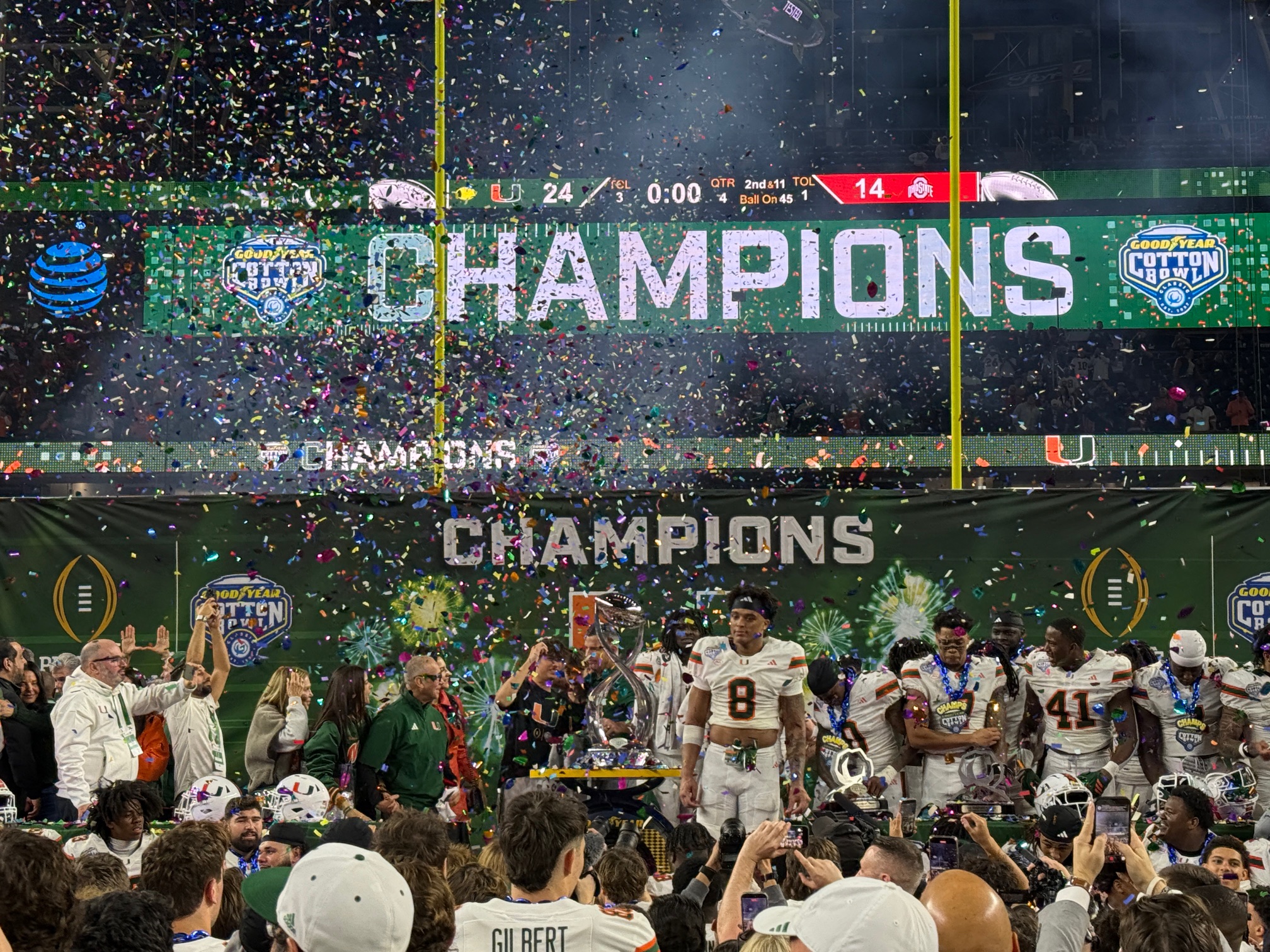
Fireworks: Miami Topples Ohio State on NYE in the Cotton Bowl
The College Football Playoff has always thrived on moments that recalibrate expectations, but on December 31, 2025, the Goodyear Cotton Bowl Classic delivered something more profound: a reminder that momentum, belief, and timing can outweigh seeding and reputation. Under the closed roof of AT&T Stadium in Arlington, Texas, the #10 Miami Hurricanes continued their improbable postseason run, upsetting the #2 Ohio State Buckeyes 24–14 and punching their ticket to the playoff semifinals.
On a night designed for celebration and spectacle, Miami authored one of the defining results of the 2025–2026 postseason. What began as a Cinderella narrative in the first round had now hardened into something unmistakably real. This was no longer a fluke. This was a team imposing its will on the sport’s elite.
The Cotton Bowl has long been synonymous with prestige, but its role as a College Football Playoff quarterfinal elevated the stakes dramatically. For Ohio State, the game represented expectation. The Buckeyes arrived as the #2 seed, armed with depth, star power, and the quiet confidence of a program accustomed to deep postseason runs.
Miami arrived carrying something different: momentum and freedom. After silencing Kyle Field and eliminating Texas A&M in the first round, the Hurricanes entered the Cotton Bowl with nothing to lose and everything to prove. The narrative framed them as underdogs again, but within the Miami locker room, belief had replaced novelty.
AT&T Stadium, cavernous and neutral, stripped away the advantages of home crowd and familiarity. What remained was execution, and the Hurricanes were prepared to test Ohio State at every level.
The opening quarter reflected a clash of styles. Ohio State attempted to establish its trademark physicality, leaning on its offensive line and seeking balance between run and pass. Miami countered with speed and discipline, flying to the ball and closing space quickly.
Neither team struck immediately. Possessions were contested, punts carried weight, and field position became a subtle battleground. The Buckeyes moved the ball in flashes but struggled to sustain drives as Miami’s defense disrupted timing and limited explosive plays.
When Miami finally broke through with the game’s first points, the effect was immediate. The Hurricanes’ scoring drive was composed and deliberate, mixing short passes with timely runs. In a playoff setting, that kind of efficiency resonates. It signaled that Miami was not overwhelmed and that Ohio State would not simply roll forward on reputation.
To their credit, the Buckeyes answered. Ohio State’s response drive showcased its talent, converting pressure moments into points and briefly restoring balance to the contest. At that stage, the game felt poised on a knife’s edge, exactly where playoff football so often lives.
What followed, however, defined the night.
Miami adjusted. Defensively, the Hurricanes began disguising coverages more aggressively, baiting Ohio State into contested throws and compressing running lanes. The Buckeyes’ margin for error shrank with every series, and frustration became visible as drives stalled.
Offensively, Miami showed patience. Rather than chasing explosive plays, the Hurricanes trusted their system. They took what Ohio State conceded, extended drives, and gradually tilted time of possession. Each completed pass and each first down carried psychological weight.
By halftime, Miami had seized control, not decisively, but meaningfully.
If there was a moment when the upset crystallized, it came in the third quarter. Miami emerged from the break sharper, faster, and more assertive. A sustained scoring drive resulted in a touchdown that pushed the Hurricanes ahead and shifted the burden squarely onto Ohio State.
The Buckeyes attempted to respond with urgency, but Miami’s defense held firm. Tackles were made in space. Passing lanes closed quickly. Third downs became increasingly difficult. What had once looked like a manageable deficit for Ohio State began to feel heavier.
Miami’s second touchdown of the half extended the lead and altered the game’s emotional geometry. For the first time, Ohio State appeared to be chasing not just points, but answers.
Entering the fourth quarter, Miami led 24–14, and the question was no longer whether the Hurricanes could score again, but whether they could finish. The answer came through composure rather than fireworks.
Miami’s offense focused on clock management and ball security, forcing Ohio State to expend energy and time on each possession. Defensively, the Hurricanes tightened further, refusing to allow a momentum-shifting play.
Ohio State had opportunities, but Miami’s discipline prevailed. When the Buckeyes needed precision, they encountered pressure. When they needed rhythm, they found disruption. As the final minutes expired, the outcome settled in. The Hurricanes had done it again.
The 24–14 victory over Ohio State transformed Miami’s postseason from surprise to statement. Two playoff games, two upsets, both earned through defense, patience, and belief.
This was not the high-octane Miami of highlight reels past. This was a modern, pragmatic Hurricanes team built for December football. They tackled well. They avoided mistakes. They trusted their plan.
Beating Ohio State in a New Year’s Eve quarterfinal elevated the program’s credibility and reintroduced Miami as a national force capable of winning on the biggest stages, against the deepest rosters, under the brightest lights.
For Ohio State, the loss was sobering. The Buckeyes were not overwhelmed, but they were out-executed in critical moments. In a playoff environment where possessions are precious, missed opportunities proved costly.
The defeat underscored the unforgiving nature of the expanded playoff. High seeding provides opportunity, not immunity. Against a disciplined opponent playing with clarity, even the most talented teams can be undone.
As the calendar turned toward 2026, the Cotton Bowl left an indelible mark on the playoff story. Miami’s win did more than advance a team, it reshaped expectations. The Hurricanes were no longer guests in the playoff conversation; they were authors of it.
On New Year’s Eve in Arlington, amid fireworks and anticipation, Miami delivered a result that will be remembered not for spectacle, but for substance. The Hurricanes didn’t just upset Ohio State, they announced themselves as contenders.
And with that, the College Football Playoff became something far more unpredictable and far more compelling.
Ahsan Awan has been covering sports for over two decades, and has been covering NCAA football, including various Big Ten, Big 12, ACC, SEC, Mountain West, Pacific-12, and Big Sky conference member institutions, since 2007. Images taken by Andrew Giesemann are ©2025 Andrew Giesemann and have been made available to American Presswire subject to unlimited use under license unless otherwise noted. Editorial use by American Presswire is unrestricted. Andrew Giesemann can be found on X as @DrewGiesemann and on Instagram as @useedrew. Ahsan Awan can be found on X as @quackarazzi and on Instagram as @quackarazzi. American Presswire can be found on X as @ampresswire and on Instagram as @ampresswire.
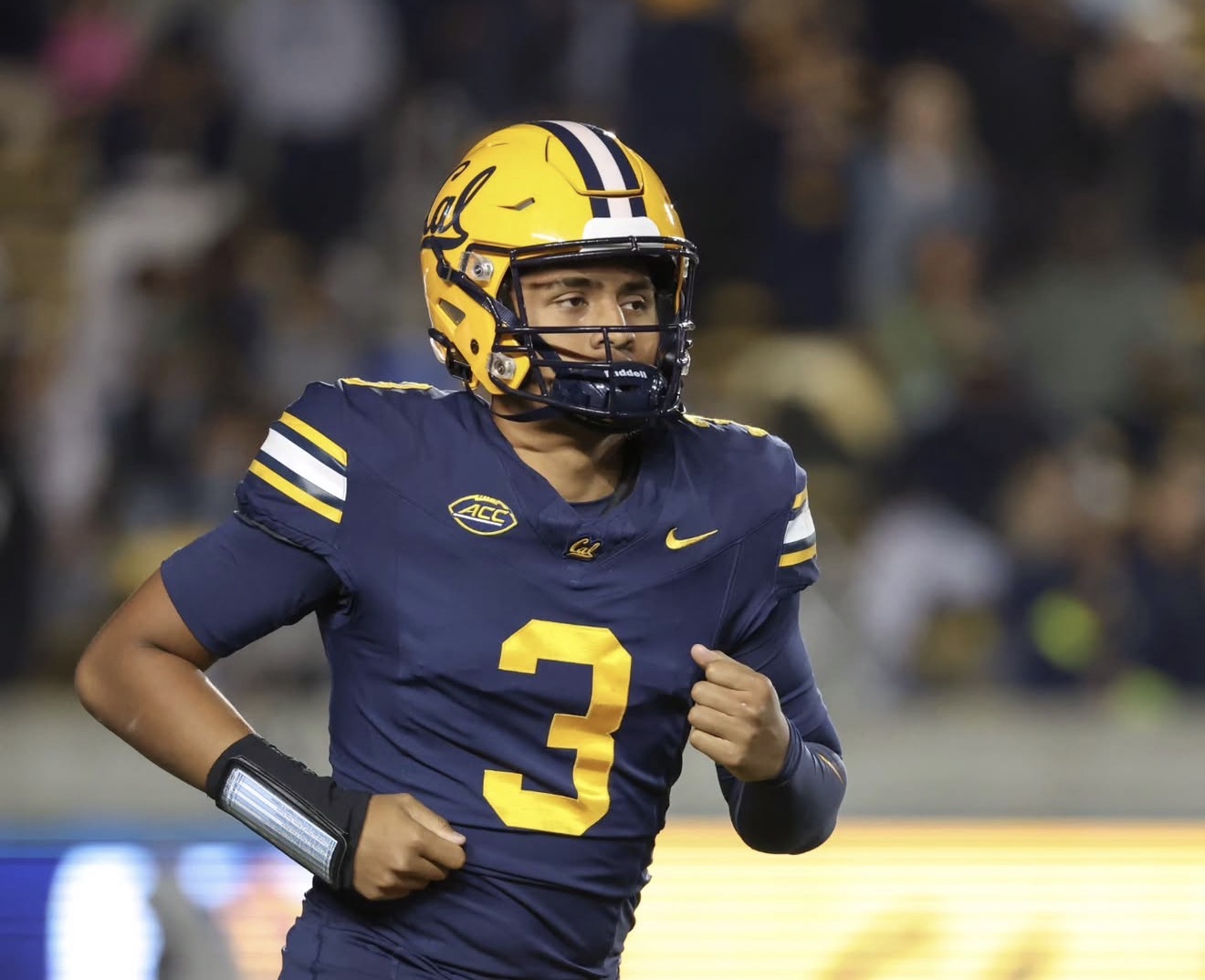
Island Heartbreak: Cal Falls Late to Hawai‘i in a Christmas Eve Classic
College football on Christmas Eve carries a different kind of resonance. There’s less pageantry, more intimacy, and a sense that the game belongs as much to the moment as to the season itself. On December 24, 2025, at the Ching Athletic Complex on the University of Hawai‘i at Mānoa campus in Honolulu, the California Golden Bears and the mighty Rainbow Warriors of Hawai’i delivered a game that fit the occasion perfectly. When the night ended, it was Hawai‘i celebrating, edging Cal 35–31 in a contest defined by momentum swings, emotional energy, and a final, decisive push that turned the island venue into a cauldron of sound.
For Cal, the loss was a bitter conclusion to a long journey both geographically and emotionally. For Hawai‘i, it was a statement win on home soil, fueled by belief, pride, and the unique power of playing under the island lights.
The Ching Athletic Complex has quickly established itself as one of the sport’s most intimate and distinctive settings. With fans close to the field and the Pacific air hanging heavy, the venue amplifies emotion. On Christmas Eve, it became something more, a gathering point for community and competition.
Cal arrived in Honolulu carrying expectations of finishing the season on a high note. The Golden Bears had shown flashes of consistency and resilience throughout the year, and this matchup offered an opportunity to validate that progress. Hawai‘i, meanwhile, embraced the role of host with unmistakable purpose. The Warriors entered determined to defend their home turf and deliver a performance worthy of the occasion.
From the opening kickoff, it was clear that neither team intended to ease into the evening.
Hawai‘i struck first, using tempo and creativity to catch Cal off balance. The Warriors moved the ball efficiently, testing Cal’s defensive discipline and capitalizing on early opportunities. The crowd responded in kind, each successful play amplifying the energy within the compact stadium.
Cal answered with poise. The Golden Bears adjusted quickly, finding rhythm on offense and responding with a scoring drive of their own. Rather than unravel, Cal settled into the game, trading blows and matching Hawai‘i’s intensity.
The first half unfolded as a back-and-forth affair. Hawai‘i leaned on speed and space, while Cal emphasized balance and physicality. Each team found success, and neither could create meaningful separation. By halftime, the scoreboard reflected the game’s tone: close, competitive, and unresolved.
The third quarter introduced sharper edges. Cal emerged intent on seizing control, stringing together sustained drives and briefly pushing ahead. The Golden Bears’ offense showed its best form of the night, mixing effective runs with timely passes to stress Hawai‘i’s defense.
But Hawai‘i refused to fade. The Warriors responded with urgency, leaning into their home-field advantage. Quick strikes and assertive play-calling swung momentum back toward the home sideline. Each exchange tightened the tension, and the game settled into a pattern of response and counter-response.
As the fourth quarter began, the outcome hung in the balance. Both teams had landed punches. Neither had delivered a knockout.
The decisive stretch arrived late. With the score tight and time slipping away, Hawai‘i found another gear. A sustained drive showcased the Warriors’ composure, blending precision and pace to move into scoring position. When the drive ended in a touchdown, the Ching Athletic Complex erupted.
Cal answered with resolve, refusing to let the game end quietly. The Golden Bears drove the field, scoring to narrow the gap to 35–31 and setting up a dramatic final sequence. With minutes remaining, the possibility of a late Cal comeback felt real.
But Hawai‘i’s defense held. The Warriors closed ranks, forcing Cal into difficult situations and denying the Golden Bears the decisive play they sought. When the final whistle sounded, Hawai‘i had preserved the four-point victory, and the island celebration began.
For Hawai‘i, the victory was more than a win, it was affirmation. Defeating a former Pac-12 opponent, now in the ACC, on Christmas Eve, at home, carried symbolic weight. It validated the program’s resilience and reinforced the significance of home-field advantage in Honolulu.
The Warriors’ performance reflected belief and execution under pressure. In the game’s most critical moments, Hawai‘i delivered, feeding off the crowd and the occasion. The win added a defining chapter to the season and strengthened the program’s identity as one capable of rising in big moments.
For Cal, the loss was painful in its closeness. The Golden Bears competed with intensity and skill, but a handful of moments, in particular missed opportunities and late defensive lapses, proved decisive. In games like this, the margin is unforgiving.
Yet the performance was not without positives. Cal showed adaptability and fight, responding repeatedly to Hawai‘i’s surges. While the result will linger, the effort suggested a team capable of growth, even as it grappled with the disappointment of coming up just short.
As the calendar inched toward Christmas Day, the game in Honolulu stood as a reminder of college football’s emotional range. Away from championship implications and playoff brackets, Cal and Hawai‘i delivered something equally meaningful: a competitive, passionate contest rooted in place and moment.
Ahsan Awan has been covering sports for over two decades, and has been covering NCAA football, including various Big Ten, Big 12, ACC, SEC, Mountain West, Pacific-12, and Big Sky conference member institutions, since 2007. Images taken by Jason Reed, Robert Longan, and Ahsan Awan and ©2025 Jason Reed, Robert Longan, and Ahsan Awan, separately and respectively, and have been made available to American Presswire subject to unlimited use under license unless otherwise noted. Editorial use by American Presswire is unrestricted. Jason Reed can be found on X as @fieldofdd and on Instagram as @fieldofdaydreams. Robert Longan can be found on X as @robbielphoto and on Instagram as @lngn_media. Ahsan Awan can be found on X as @quackarazzi and on Instagram as @quackarazzi. American Presswire can be found on X as @ampresswire and on Instagram as @ampresswire.
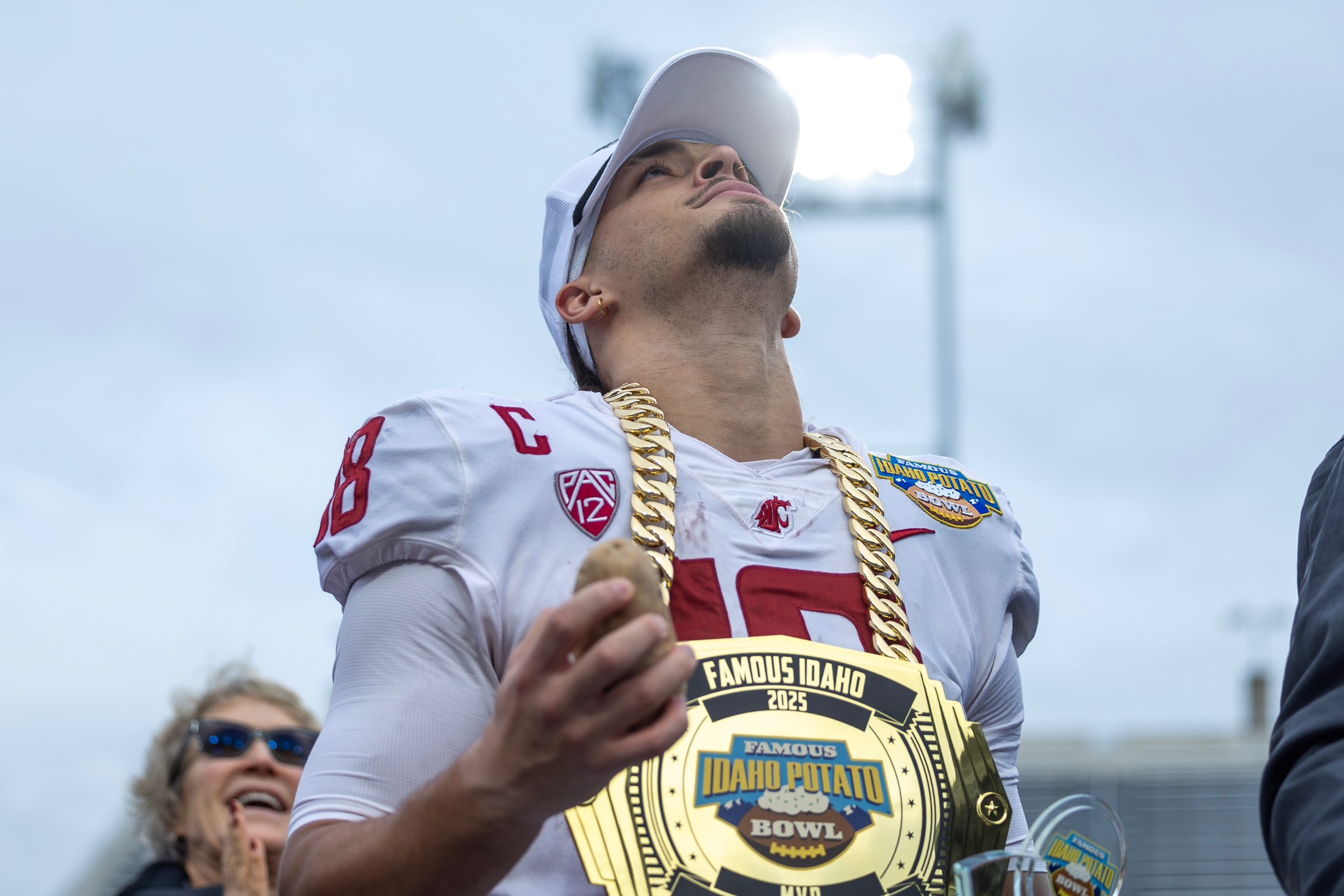
Cougars Claim Victory in 2025 Famous Idaho Potato Bowl
Few bowl games in college football carry a visual identity as instantly recognizable as the Famous Idaho Potato Bowl. On Monday, December 22, 2025, that identity once again took center stage at Albertsons Stadium in Boise, Idaho, where the iconic blue turf framed a postseason matchup rich in contrast and context. Under cold December skies, the Washington State Cougars defeated the Utah State Aggies 34–21, closing their season with authority and adding another chapter to the bowl’s distinctive legacy.
As the bowl season progressed deeper into its December rhythm, the Famous Idaho Potato Bowl served as a reminder of why these games endure. Beyond the branding and tradition, they are about matchups, motivation, and the chance for programs to define how a season is remembered. On Boise’s blue field, Washington State did exactly that.
The Famous Idaho Potato Bowl has long occupied a unique space in the postseason landscape. Played on one of the sport’s most unconventional surfaces, it blends humor and sincerity, as well as quirky pageantry paired with meaningful opportunity. For teams outside the playoff spotlight, it offers a national stage and a final test of resilience.
For Washington State, the bowl represented a chance to punctuate a season marked by transition and resolve. Navigating the evolving realities of college football, the Cougars arrived in Boise seeking validation that their progress was tangible, not theoretical. Utah State, meanwhile, entered the game aiming to reaffirm its standing as a program capable of contending beyond conference lines, even when facing a Power Four quality opponent.
The setting heightened the stakes. Albertsons Stadium, even when not filled to capacity, exerts a psychological presence. The blue turf disrupts rhythm, alters perception, and reinforces the sense that anything played there exists slightly outside the norm. Bowl games thrive in such spaces.
The opening quarter reflected the game’s central tension. Utah State showed early intent, moving the ball with tempo and testing Washington State’s defensive discipline. The Aggies sought to establish balance, mixing short passes with interior runs to prevent the Cougars from settling into a comfortable rhythm.
Washington State responded with composure. Rather than forcing the issue, the Cougars leaned on structure and patience, methodically working through possessions and capitalizing on field position. The first scoring drives hinted at a theme that would define the night: efficiency over explosiveness.
As the first half unfolded, Washington State began to separate itself not through highlight plays, but through consistency. Drives were sustained, mistakes were minimized, and the Cougars gradually imposed control. Utah State remained competitive, but the margin for error narrowed with each possession.
The turning point came in the second quarter, when Washington State’s offense found its rhythm and its defense tightened. The Cougars exploited matchups in the secondary, extending drives and converting critical third downs. Each successful possession applied pressure, forcing Utah State to chase points rather than dictate terms.
Defensively, Washington State adjusted effectively, limiting Utah State’s ability to generate chunk plays. The Aggies, often dangerous when able to stretch the field, were held to shorter gains that required near-perfect execution to sustain. When that execution faltered, the Cougars were quick to capitalize.
By halftime, Washington State had built a lead that reflected not dominance, but control. The game was still within reach for Utah State, but the momentum had shifted decisively.
If the first half established Washington State’s advantage, the second half confirmed it. The Cougars emerged from the break with renewed focus, extending their lead through balanced offense and disciplined defense. The running game became increasingly effective, wearing down Utah State’s front and shortening the game.
Utah State fought back, finding moments of success and briefly narrowing the margin. But each time the Aggies appeared poised to swing momentum, Washington State responded with poise. A timely scoring drive here, a defensive stand there; the Cougars consistently answered pressure with execution.
The 34 points Washington State scored were the product of sustained effort rather than explosive chaos. On a field known for unpredictability, the Cougars embraced structure. That approach proved decisive.
As the fourth quarter progressed, the outcome became clearer. Utah State continued to compete, but the path back narrowed with every passing minute. When the final whistle sounded, Washington State’s 34–21 victory felt earned, measured, and definitive.
For Washington State, the Famous Idaho Potato Bowl victory served as affirmation. Bowl games often function as emotional bookends, shaping how players and fans remember a season. This win allowed the Cougars to close the year with momentum and clarity.
The performance reflected growth, particularly in situational football. Washington State protected the ball, managed the clock, and executed in high-leverage moments. These are traits that extend beyond a single game, offering a foundation for the offseason and the seasons to come.
Winning on the blue turf also carries symbolic weight. Albertsons Stadium has humbled many teams, and leaving Boise with a bowl trophy reinforces confidence within a program navigating broader changes in the college football landscape.
For Utah State, the loss did not erase the season’s achievements, but it underscored areas for growth. Competing against Washington State revealed both strengths and limitations. The Aggies showed resilience and flashes of offensive capability, but consistency proved elusive.
Bowl games are often mirrors, reflecting a team’s identity with uncomfortable clarity. For Utah State, the mirror suggested a program capable of competing, but still seeking the depth and execution required to finish games against physical, disciplined opponents.
As part of the broader 2025–2026 bowl season, the Famous Idaho Potato Bowl reinforced the enduring appeal of these games. Played far from playoff brackets and championship debates, it nonetheless delivered meaning: players competing for pride, programs shaping narratives, and fans embracing tradition.
Under the lights and atop the blue turf, Washington State seized that meaning. The Cougars left Idaho with a 34–21 victory, a bowl trophy, and a sense of direction. In a postseason defined by variety and volume, the Famous Idaho Potato Bowl once again stood out not just for how it looked, but for what it represented. It was college football in December: distinctive, determined, and decided on the field.
Ahsan Awan has been covering sports for over two decades, and has been covering NCAA football, including various Big Ten, Big 12, ACC, SEC, Mountain West, Pacific-12, and Big Sky conference member institutions, since 2007. Images taken by Robert Longan are ©2025 Robert Longan and have been made available to American Presswire subject to unlimited use under license unless otherwise noted. Editorial use by American Presswire is unrestricted. Robert Longan can be found on X as @robbielphoto and on Instagram as @lngn_media. Ahsan Awan can be found on X as @quackarazzi and on Instagram as @quackarazzi. American Presswire can be found on X as @ampresswire and on Instagram as @ampresswire.
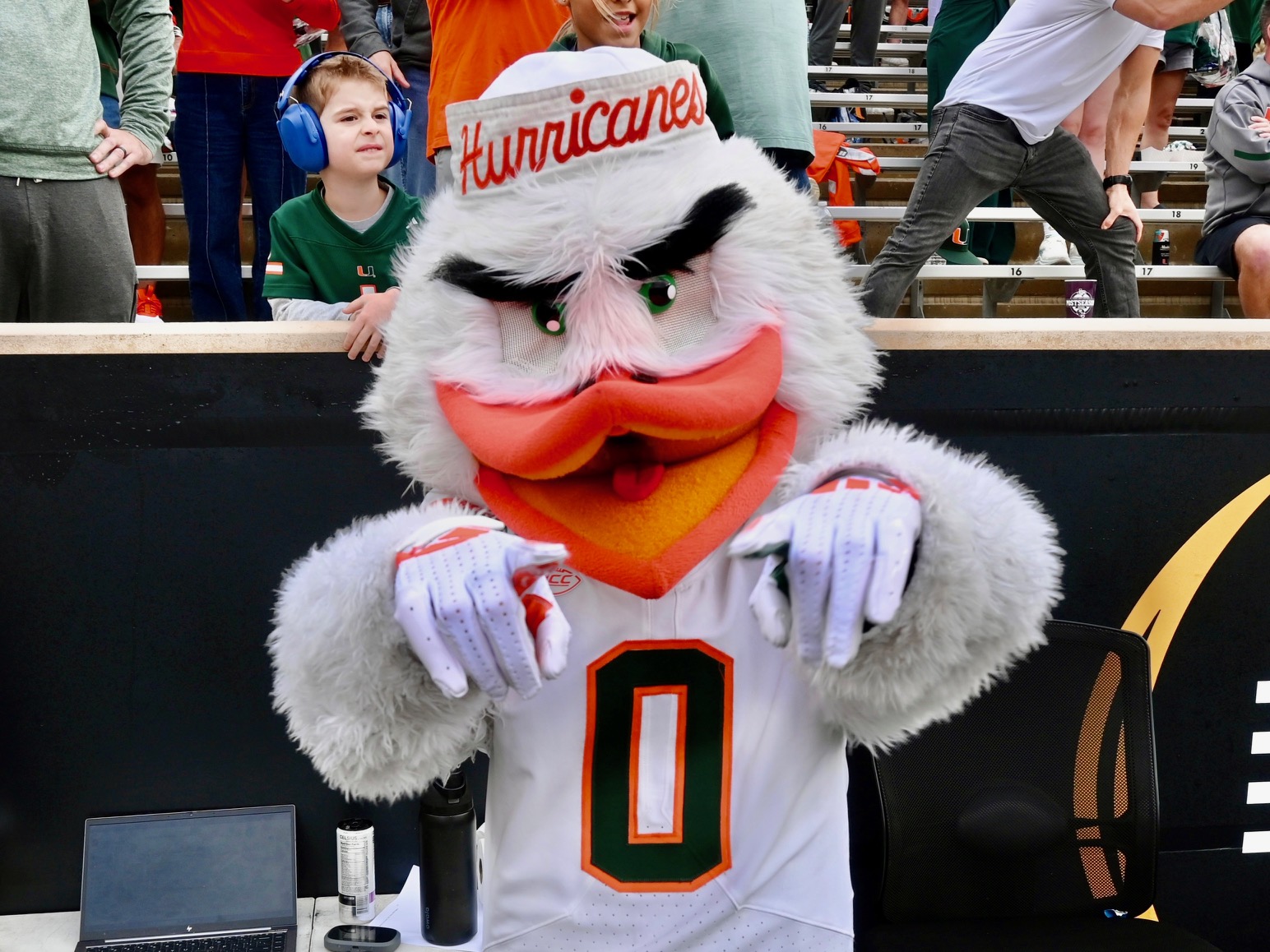
Silence at Kyle Field: Miami Stuns Texas A&M in a Gritty Playoff Opener
The expanded College Football Playoff promised unpredictability, regional tension, and the possibility that traditional hierarchies would be challenged on campus fields steeped in history. On December 20, 2025, that promise materialized in stark fashion at Kyle Field in College Station, Texas, where the #10 Miami Hurricanes delivered one of the defining moments of the 2025–2026 postseason. In a game shaped by defense, discipline, and nerve, Miami upset the #7 Texas A&M Aggies, 10–3, turning one of the loudest venues in college football into a study in stunned quiet.
The scoreline was modest, even austere by modern standards, but the result was seismic. Miami’s victory was not just an upset, it was a statement about identity, preparation, and the unforgiving nature of playoff football.
The first round of the expanded playoff brought postseason football back to campus in a way the sport had rarely seen. Home-field advantage, long discussed and debated, became tangible at Kyle Field, a venue synonymous with intensity and atmosphere. Texas A&M entered the game confident that its physical style and home crowd would tilt the balance.
Miami arrived with a different narrative. The Hurricanes, seeded tenth, had spent much of the season fighting for respect as much as wins. Their inclusion in the playoff validated their body of work, but their path forward demanded proof. Winning on the road, in December, against a higher-seeded SEC opponent was the ultimate test.
What unfolded was a reminder that playoff football strips the game to its essentials.
From the opening kickoff, it was clear this would not be a shootout. Both teams played with the caution and intensity that define elimination games. Field position mattered. Mistakes were magnified. Every first down felt consequential.
Texas A&M sought to establish its running game early, hoping to wear down Miami’s front and unleash its play-action attack. Miami responded with discipline and speed, clogging interior lanes and forcing the Aggies into uncomfortable third-down situations. The Hurricanes’ defensive front held firm, while the secondary kept plays in front, prioritizing containment over risk.
Offensively, Miami adopted a patient approach. Rather than forcing tempo, the Hurricanes focused on ball control, accepting modest gains and trusting their defense to keep the game within reach. The first half unfolded as a tense stalemate, with scoring opportunities rare and hard-earned.
The game’s defining sequence came not from a single explosive play, but from accumulation. Miami struck first with a methodical scoring drive that ended in points and shifted pressure squarely onto Texas A&M. In a low-scoring contest, the opening score carried outsized weight.
Texas A&M responded with urgency, but not clarity. Drives stalled under Miami’s defensive pressure, and the Aggies found themselves settling for limited gains rather than sustained momentum. A field goal narrowed the gap, but it did little to alter the underlying dynamic: Miami was dictating terms.
As the second half unfolded, the Hurricanes grew more confident. Defensively, they tightened further, closing passing windows and swarming ball carriers. Texas A&M’s offense, accustomed to imposing itself physically, struggled to find rhythm against Miami’s speed and discipline.
The decisive blow came late. Miami capitalized on field position and execution, adding a touchdown that stretched the lead to 10–3. In a game where points were precious, it felt insurmountable.
Perhaps the most striking element of the night was the transformation of Kyle Field itself. Known for relentless noise and emotional swings, the stadium gradually quieted as Miami asserted control. Each defensive stand drained energy from the crowd; each stalled Aggie drive compounded the tension.
When the final minutes ticked away, the silence was unmistakable. The Hurricanes had done more than win, they had imposed their will in one of the most hostile environments in college football. The upset was complete, and the playoff bracket had been reshaped.
For Miami, the victory was emblematic of a program rediscovering its edge. The Hurricanes did not rely on flash or volume; they relied on toughness, preparation, and belief. Winning 10–3 in a playoff game required trust in the game plan, in teammates, and in the idea that defense still wins championships.
The result validated Miami’s season-long identity as a team capable of winning ugly when necessary. It also reinforced the Hurricanes’ legitimacy in the expanded playoff field, silencing doubts about whether they belonged on the same stage as higher-seeded power conference teams.
For Texas A&M, the loss was abrupt and sobering. Playing at home, with expectation and advantage, the Aggies were unable to translate opportunity into production. The defensive effort was commendable, but playoff football leaves little margin for offensive stagnation.
The game underscored the reality that postseason success demands adaptability. When the original plan falters, teams must adjust quickly or risk elimination. Texas A&M could not find that adjustment in time.
As one of the first completed matchups of the 2025–2026 College Football Playoff, Miami’s win over Texas A&M sent a clear message. Seeding matters less than execution. Atmosphere matters less than composure. And in December, defense and discipline can outweigh reputation.
The Hurricanes’ 10–3 victory was not glamorous, but it was definitive. It embodied the essence of playoff football and affirmed why expansion brought not dilution, but drama.
On a cold December night in College Station, Miami didn’t just advance, they reminded the sport that in the playoff era, certainty is an illusion and every game begins at zero.
Ahsan Awan has been covering sports for over two decades, and has been covering NCAA football, including various Big Ten, Big 12, ACC, SEC, Mountain West, Pacific-12, and Big Sky conference member institutions, since 2007. Images taken by Andrew Giesemann are ©2025 Andrew Giesemann and have been made available to American Presswire subject to unlimited use under license unless otherwise noted. Editorial use by American Presswire is unrestricted. Andrew Giesemann can be found on X as @DrewGiesemann and on Instagram as @useedrew. Ahsan Awan can be found on X as @quackarazzi and on Instagram as @quackarazzi. American Presswire can be found on X as @ampresswire and on Instagram as @ampresswire.

Bowl Season Begins in LA as Huskies Maul Broncos
The 2025–2026 NCAA college football bowl season opened not with subtlety, but with spectacle. On December 13, 2025, the postseason officially kicked off in Los Angeles with the Bucked Up LA Bowl Hosted by Gronk, staged at SoFi Stadium in Inglewood. The setting, the branding, and the personalities involved underscored how the modern bowl season has evolved. It has become part competition, part celebration, and part entertainment showcase. Yet amid the lights, celebrity presence, and national attention, the football itself delivered a clear and emphatic message.
The Washington Huskies announced their postseason intentions early, defeating the Boise State Broncos 38–10 in a game that was competitive only briefly before tilting decisively in Washington’s favor. As the first bowl game of the season, the LA Bowl set both a tone and a standard. It was one defined by physical dominance, execution, and a reminder that bowl season, for all its pageantry, is still about matchups and preparation.
The bowl season has grown into a sprawling, multi-week event that bridges the gap between the regular season and the College Football Playoff. While the playoff captures the ultimate championship stakes, the bowl games remain essential to the sport’s ecosystem. They reward teams for successful seasons, provide extra practices and development opportunities, and create one final national stage for players and coaches alike.
Opening the bowl calendar carries symbolic weight. The first game often sets the emotional temperature for what follows: chaos, parity, or the reinforcement of hierarchy. In 2025, the LA Bowl filled that role, blending the spectacle of Southern California with a matchup between two programs accustomed to postseason appearances but arriving with different trajectories.
SoFi Stadium proved an ideal stage. Already known as one of the premier venues in global sports, the stadium brought NFL-level production value to a college bowl environment. The LA Bowl’s identity has always leaned into that crossover appeal, and the “Hosted by Gronk” branding further emphasized its embrace of modern sports culture.
For Washington, the game represented an opportunity to cap the season with momentum and reaffirm its standing among the nation’s upper tier. For Boise State, it was a chance to measure itself against a Power Four opponent and reinforce its long-standing reputation as a program capable of challenging anyone, anywhere.
The stakes were not championship-level, but they were meaningful. Bowl games often function as narrative punctuation marks, shaping how a season is remembered. For players with NFL aspirations, they are auditions. For teams, they are statements.
From the outset, Washington played with clarity and confidence. The Huskies established control early, leveraging speed on the perimeter and discipline in the trenches. Offensively, they mixed tempo and balance, forcing Boise State to defend the entire field rather than keying on any single threat.
The game’s turning point came quickly. After an initial exchange of possessions, Washington capitalized on field position and converted early opportunities into points. As the first quarter progressed, it became evident that the Huskies’ physicality, particularly along the offensive and defensive lines, was going to define the contest.
Boise State struggled to find rhythm. While the Broncos have historically thrived on creativity and resilience, Washington’s defensive structure limited explosive plays and forced long, methodical drives that stalled under pressure. Missed opportunities compounded the problem, and as the deficit grew, Boise State was pushed further out of its comfort zone.
If the first half hinted at Washington’s advantage, the second half confirmed it. The Huskies adjusted seamlessly, tightening defensively while continuing to apply offensive pressure. Sustained drives drained time and energy, and each score widened the gap not just on the scoreboard, but in momentum.
Washington’s 38 points came through a combination of efficient passing, timely rushing, and capitalization on Boise State mistakes. The Huskies did not rely on trickery or fluke plays; instead, they imposed structure and discipline, hallmarks of a team well-prepared for postseason football.
By the fourth quarter, the outcome was no longer in doubt. Boise State continued to compete, but the game had shifted from a contest to a conclusion. Washington’s dominance was comprehensive, leaving little ambiguity about the difference between the two teams on that night.
As the opening act of the 2025–2026 bowl season, the LA Bowl delivered a clear narrative: preparation matters, depth matters, and motivation matters. Washington approached the game as an extension of its season, not an exhibition. Boise State, while competitive in spirit, could not overcome mismatches that were exposed early and repeatedly.
The game also highlighted the evolving role of bowl games themselves. While some critics question their relevance in the era of expanded playoffs, contests like the LA Bowl demonstrate their enduring value. For Washington, the victory provided a platform to reinforce its identity and build momentum into the offseason. For Boise State, the loss offered a measuring stick and a reminder of the adjustments required to compete consistently at the highest level.
The 38–10 result resonated beyond Los Angeles. It signaled that the 2025–2026 bowl season would not merely be about novelty or branding, but about execution and seriousness of approach. Teams willing to treat bowl games as meaningful opportunities would be rewarded; those unable to match that intensity would be exposed.
As the bowl calendar unfolded across December and into January, the LA Bowl remained a reference point. It was the moment the postseason officially began. Under the lights of SoFi Stadium, with celebrity hosts and national attention, Washington delivered a performance that reminded everyone why bowl season still matters.
Ahsan Awan has been covering sports for over two decades, and has been covering NCAA football, including various Big Ten, Big 12, ACC, SEC, Mountain West, Pacific-12, and Big Sky conference member institutions, since 2007. Images taken by Robert Longan are ©2025 Robert Longan and have been made available to American Presswire subject to unlimited use under license unless otherwise noted. Editorial use by American Presswire is unrestricted. Robert Longan can be found on X as @robbielphoto and on Instagram as @lngn_media. Ahsan Awan can be found on X as @quackarazzi and on Instagram as @quackarazzi. American Presswire can be found on X as @ampresswire and on Instagram as @ampresswire.
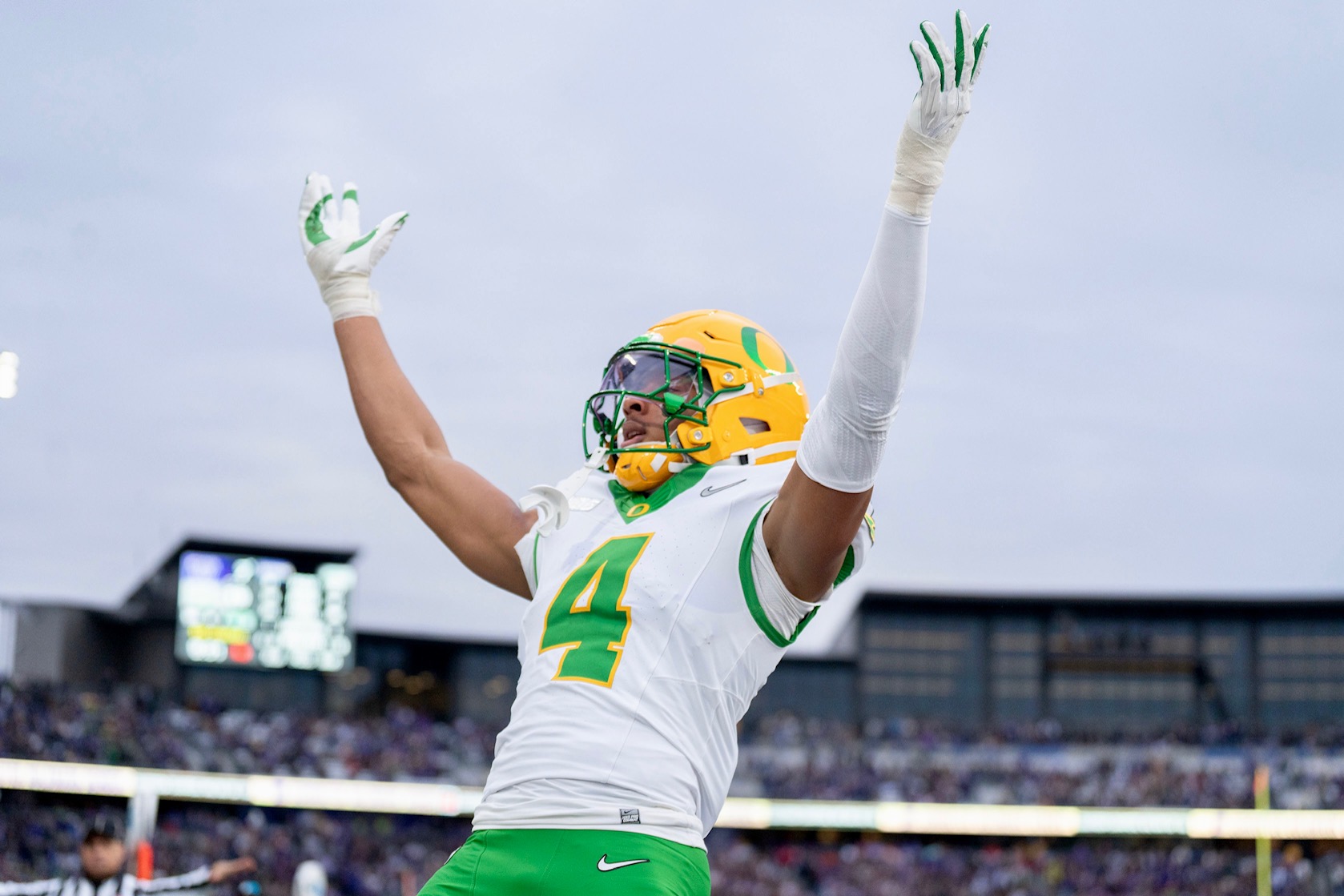
Rivalry Clash: Ducks Defeat Huskies in Seattle
Rivalry games rarely need additional stakes, but on November 29, 2025, the meeting between the Oregon Ducks and the Washington Huskies carried weight that extended well beyond tradition. Under gray skies at Husky Stadium in Seattle, Oregon delivered one of its most composed performances of the season, defeating Washington 26–14 and reasserting control in one of college football’s most emotionally charged series.
The score reflected separation, but the significance ran deeper. Winning in Seattle has never been routine, and doing so late in the season against a Washington team eager to defend its home turf served as both a statement and a checkpoint for an Oregon program with larger ambitions.
The Oregon–Washington rivalry has always been defined by tension, geography, and timing. Often played midway through or late in the regular season, it often functions as a referendum on momentum and identity. In 2025, both teams entered the game with something to prove.
Washington, playing at home, sought to protect Husky Stadium’s reputation as one of the sport’s most difficult venues and to close its season with a defining victory. Oregon arrived with urgency of its own, knowing that late-November games shape postseason narratives perhaps more than any matchup on the calendar.
From the opening kickoff, the environment matched the moment. Husky Stadium pulsed with energy, and the tone suggested a game that would demand discipline as much as talent.
Oregon wasted little time establishing control. Rather than being drawn into the emotion of the rivalry, the Ducks played with restraint, emphasizing field position and efficiency. Early offensive possessions prioritized balance, mixing short passes with deliberate runs to test Washington’s defensive structure.
The Ducks struck first, capitalizing on a sustained drive that demonstrated patience and execution. That opening score mattered not just on the scoreboard, but psychologically as well. It signaled that Oregon intended to dictate tempo rather than react.
Washington responded with intensity, attempting to generate momentum through tempo and crowd energy. The Huskies found success in flashes, but Oregon’s defense absorbed the early surge and limited damage, preventing Washington from fully capitalizing on its home-field advantage.
As the game settled into rhythm, Oregon’s defense emerged as the defining unit. The Ducks applied consistent pressure, forcing Washington into difficult third-down situations and disrupting timing in the passing game. Tackling in space, a critical factor against Washington’s skill players, was crisp and decisive.
The Ducks’ defensive discipline translated into field position, giving the offense shorter fields and additional opportunities to extend the lead. By halftime, Oregon had built a cushion that reflected not dominance, but control. The Huskies remained within reach, but the game was being played on Oregon’s terms.
The third quarter brought Washington’s best stretch of the night. The Huskies opened the half with renewed urgency, stringing together a scoring drive that narrowed the gap and reenergized the crowd. For a moment, the rivalry’s volatility threatened to swing momentum.
Oregon’s response defined the game. Rather than pressing, the Ducks returned to structure. A composed offensive series reclaimed breathing room, while the defense answered Washington’s score with renewed focus. The back-and-forth underscored the thin margin that often defines rivalry games, but Oregon consistently made the more disciplined choice.
Each Washington surge was met with resistance. The Ducks did not allow the game to unravel into chaos, a testament to preparation and maturity.
Entering the final quarter with a 26–14 lead, Oregon shifted into management mode. The offense emphasized clock control, sustaining drives and limiting Washington’s opportunities. While the Ducks did not add to their total, they denied the Huskies the possessions needed to mount a comeback.
Defensively, Oregon closed gaps and refused to yield explosive plays. Washington pressed, but the urgency led to inefficiency rather than breakthroughs. Each incomplete pass and stopped run drained both time and belief.
When the final whistle sounded, the Ducks had secured a 12-point victory that felt definitive, if not overwhelming.
Winning at Husky Stadium is never just another result. For Oregon, the 26–14 victory represented validation of a team capable of handling rivalry intensity without sacrificing identity. The Ducks demonstrated balance, discipline, and the ability to respond under pressure, traits that resonate far beyond one game.
The performance reinforced Oregon’s late-season momentum and strengthened its postseason positioning. More importantly, it showed a team comfortable winning in hostile environments, a prerequisite for success in December and beyond.
For Washington, the loss was a frustrating conclusion to a game that offered moments of promise. The Huskies competed with effort and emotion, but they struggled to sustain success against a disciplined opponent. Missed opportunities and stalled drives proved costly in a rivalry where margins are unforgiving. Still, the game reflected a program capable of challenging elite teams, even if the result fell short.
As the calendar turned toward postseason play, Oregon’s win in Seattle stood as one of the Ducks’ most complete efforts of the season. It was not defined by explosive highlights or dramatic swings, but by control. Oregon had control of tempo, of emotion, and of outcome. Oregon claimed the rivalry with authority. The Ducks left Husky Stadium not just with a victory, but with momentum that carried meaning well beyond Seattle.
Ahsan Awan has been covering sports for over two decades, and has been covering NCAA football, including various Big Ten, Big 12, ACC, SEC, Mountain West, Pacific-12, and Big Sky conference member institutions, since 2007. Images taken by Ahsan Awan are ©2025 Ahsan Awan. Images taken by Davonn Abaga are ©2025 Davonn Abaga and have been made available to American Presswire subject to unlimited use under license unless otherwise noted. Editorial use by American Presswire is unrestricted. Ahsan Awan can be found on X as @quackarazzi and on Instagram as @quackarazzi. Davonn Abaga can be found on Instagram as @devos.media. American Presswire can be found on X as @ampresswire and on Instagram as @ampresswire.
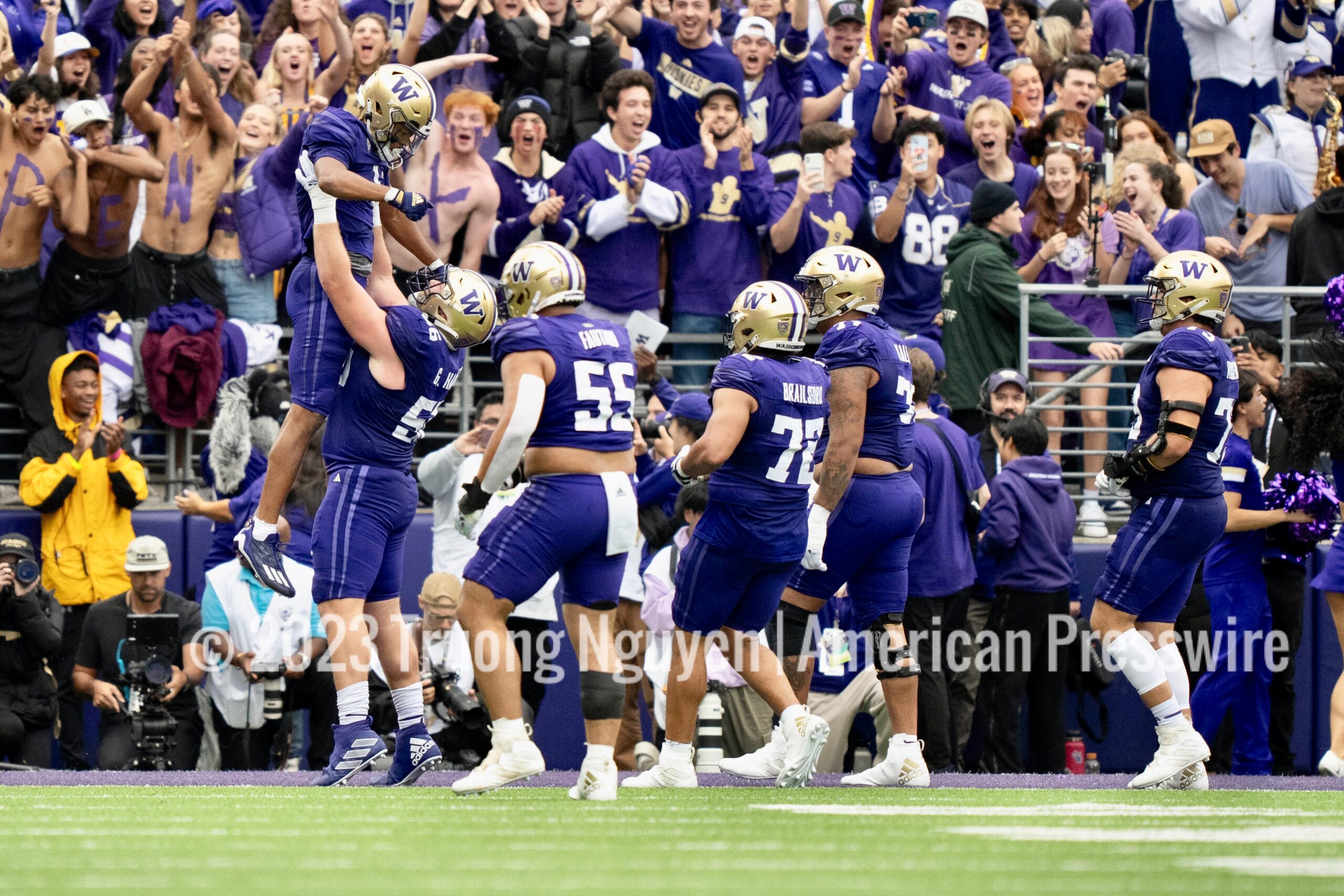
Huskies Win! Failed Fourth-Down Gambles Lead to Loss for Ducks
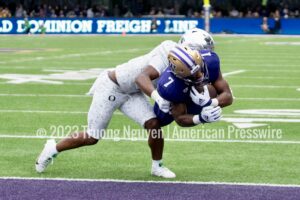
Seattle, WA – In a highly anticipated matchup, the Oregon Ducks faced off against their long-time rivals, the Washington Huskies, in what was the final game for both teams within the Pac-12 Conference. The game was a rollercoaster of emotions for both teams and their passionate fan bases. Despite having several opportunities to put points on the board, the Ducks' decision to go for it on fourth down not once, but twice, ultimately proved costly. These gambles left the team and its supporters in shock as they watched a hard-fought game slip away.
The game started with high expectations for the Ducks, who entered the contest as underdogs by 3.5 points. They displayed flashes of brilliance, with their dynamic offense showcasing their talents, and they demonstrated strong offensive line strength and a powerful running game led by Bucky Irving and Jordan James. However, what looked like a promising day quickly turned into a nail-biting affair. The Ducks found themselves in crucial fourth-down situations, and it's the decisions they made in those moments that will be dissected and analyzed for days, weeks, and months to come.
The Huskies opened strong with a 26-yard touchdown pass from Michael Penix, Jr. to Giles Jackson. The extra point by Grady Gross would make it 7-0 Huskies. Oregon would follow with a rushing TD by Irving from 12 yards out. Rather than tie the game at 7, the Ducks chose to go for 2 and converted, going up 8-7, after tight end Patrick Herbert ran the ball in.
The game would go back and forth from there until Oregon, down 18-22 with under a minute remaining in the first half, put together a brilliant drive all the way down to the Washington 3-yard line. However, rather than kick a field goal, take 3 points, and make the score 21-22 at the half, the Ducks tried to go for it on fourth down and failed.
Washington would extend their lead in the third quarter, making the score 29-18. Oregon would march back strong, but once again face a fourth down in the red zone. This time at the Washington 8-yard line, the Ducks would again choose not to kick a field goal for 3 points and would fail to convert.
On the drives that followed, the Ducks defense would stop the Huskies, and the offense would score. They would again go for 2, and they were successful. Washington’s lead was narrowed to 26-29, but Oregon should have been up 32-29 at this point. They would stop the Huskies again on the next drive, and they would score on their own offensive possession. The lead changed, and it was 33-29 Oregon, but it should have been 39-29.
Now late in the fourth quarter, the Huskies needed only one score to regain the lead and win. Oregon should have had a 10-point lead and breathing room. Penix did his job and led the Huskies to a late score despite wincing in pain and reaching for his ribs and abdomen after multiple hits. The score went to 36-33 Washington as the lead changed back to the home team.
At this point, the Ducks were scrambling. They did manage to get downfield. They had a chance once more, but failed to convert for what would have surely been a game-winning touchdown. Instead, they settled for a last-second field goal attempt, one that would have sent the game into overtime. This time, however, the attempt was missed. The game was over. The Huskies won. Final score: 36-33.
Conventional wisdom in football would typically dictate a field goal attempt in situations where a team faces fourth down in the red zone. Unfortunately, Head Coach Dan Lanning, and his Offensive Coordinator, Will Stein, chose to roll the dice and go for it – twice! The Oregon offense, filled with confidence, lined up to execute the plays each time. The result, on both occasions, was heartbreaking for the Ducks.
The loss left the Oregon Ducks and their fans in a state of shock and disappointment. While fourth-down gambles can sometimes be the right call, the decision to forgo field goal attempts in two critical situations cost them the game. Hindsight is often 20/20, and the debate surrounding these decisions will likely linger for a very long time.
This loss serves as a reminder of the fine line between bold and reckless decisions in football. The Ducks showed immense confidence in their ability to convert on fourth down, but it came at the expense of crucial points. As the season continues, they must learn from this experience and strive to make more calculated decisions in critical moments.
In the world of college football, there's always another game, another opportunity for redemption. For the Oregon Ducks, this loss will sting for a long while, but on the field, they must regroup, learn from their mistakes, and come back even stronger. The rivalry with the Washington Huskies remains as intense as ever, and Ducks fans can rest assured that their team will be back, hungrier than ever, in the battles to come.
Next up for the Ducks is a return home to face the Washington State Cougars. That game will be televised on ABC and will begin at 12:30 PM Pacific on October 21. The Huskies, meanwhile, will face the Arizona State Sundevils. That game will be televised on Fox Sports 1, and it will begin at 7:30 PM Pacific on October 21.
Ahsan Awan has been covering sports for nearly two decades, and has been covering NCAA football, including various Pacific-12 Conference member institutions, since 2007. Images taken by Truong Nguyen are ©2023 Truong Nguyen made available to American Presswire subject to unlimited use under license unless otherwise noted. Ahsan Awan can be found on X as @quackarazzi and on Instagram as @quackarazzi. Truong Nguyen can be found on X as @TruongWin and on Instagram as @truongwin_.