


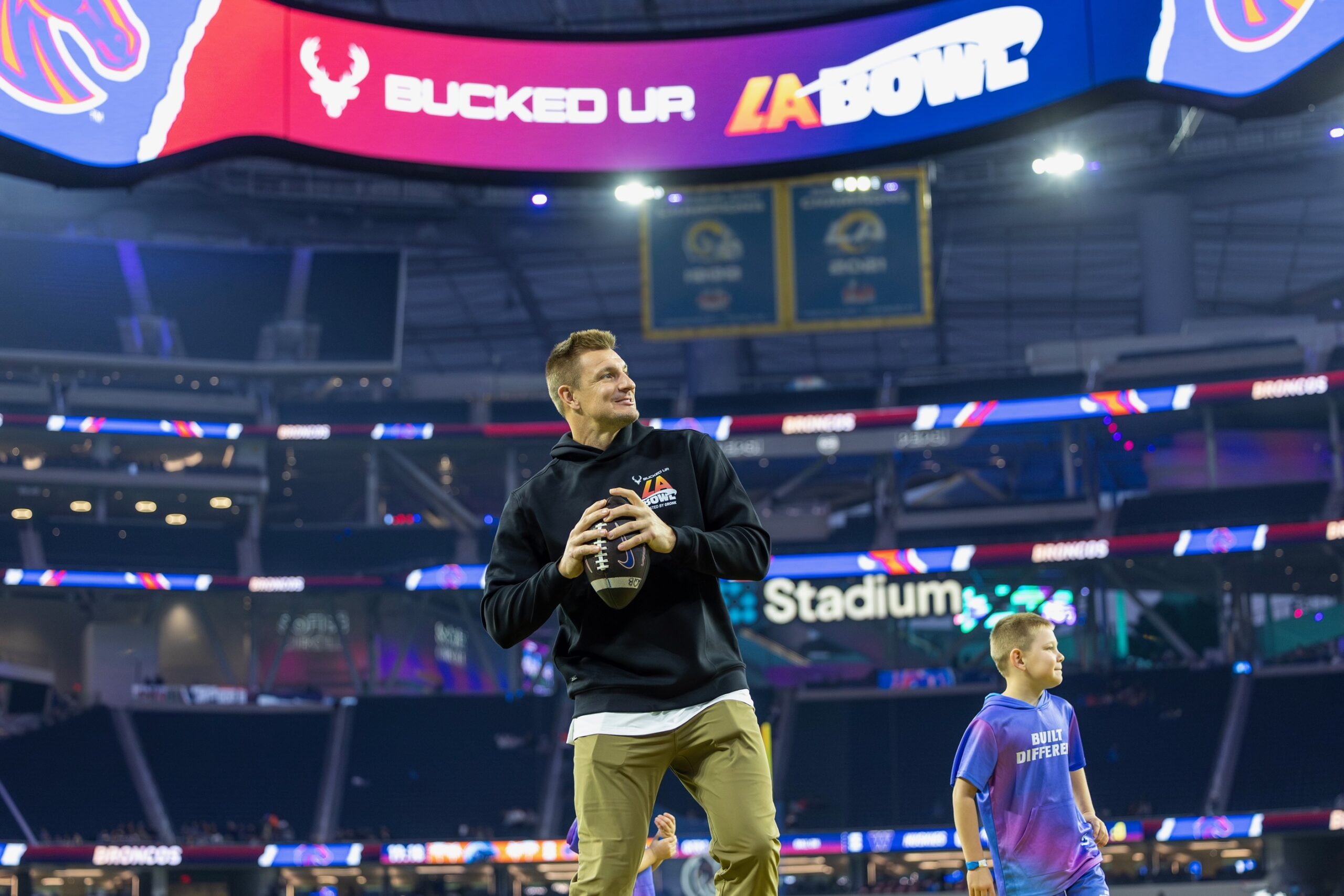

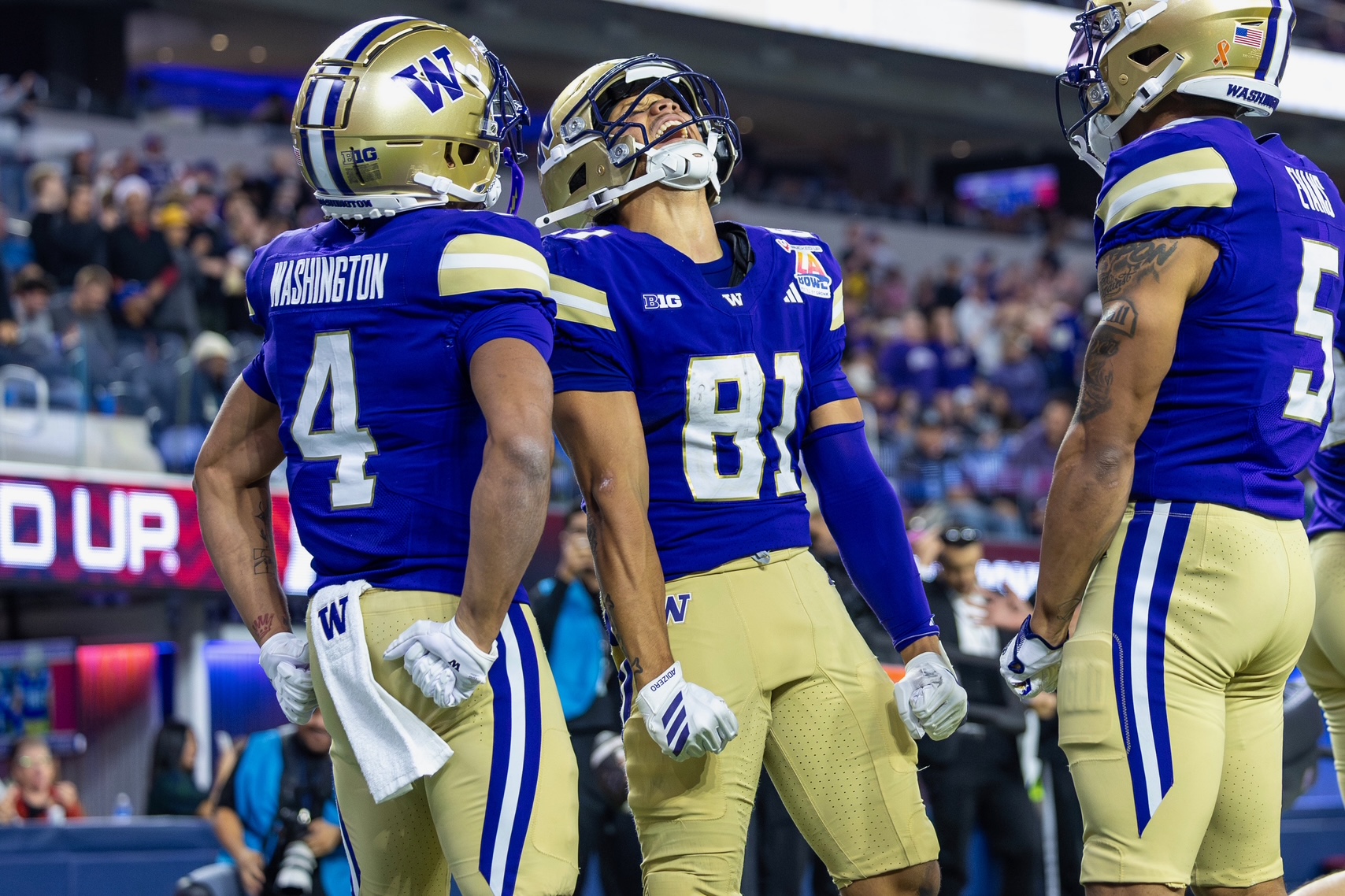
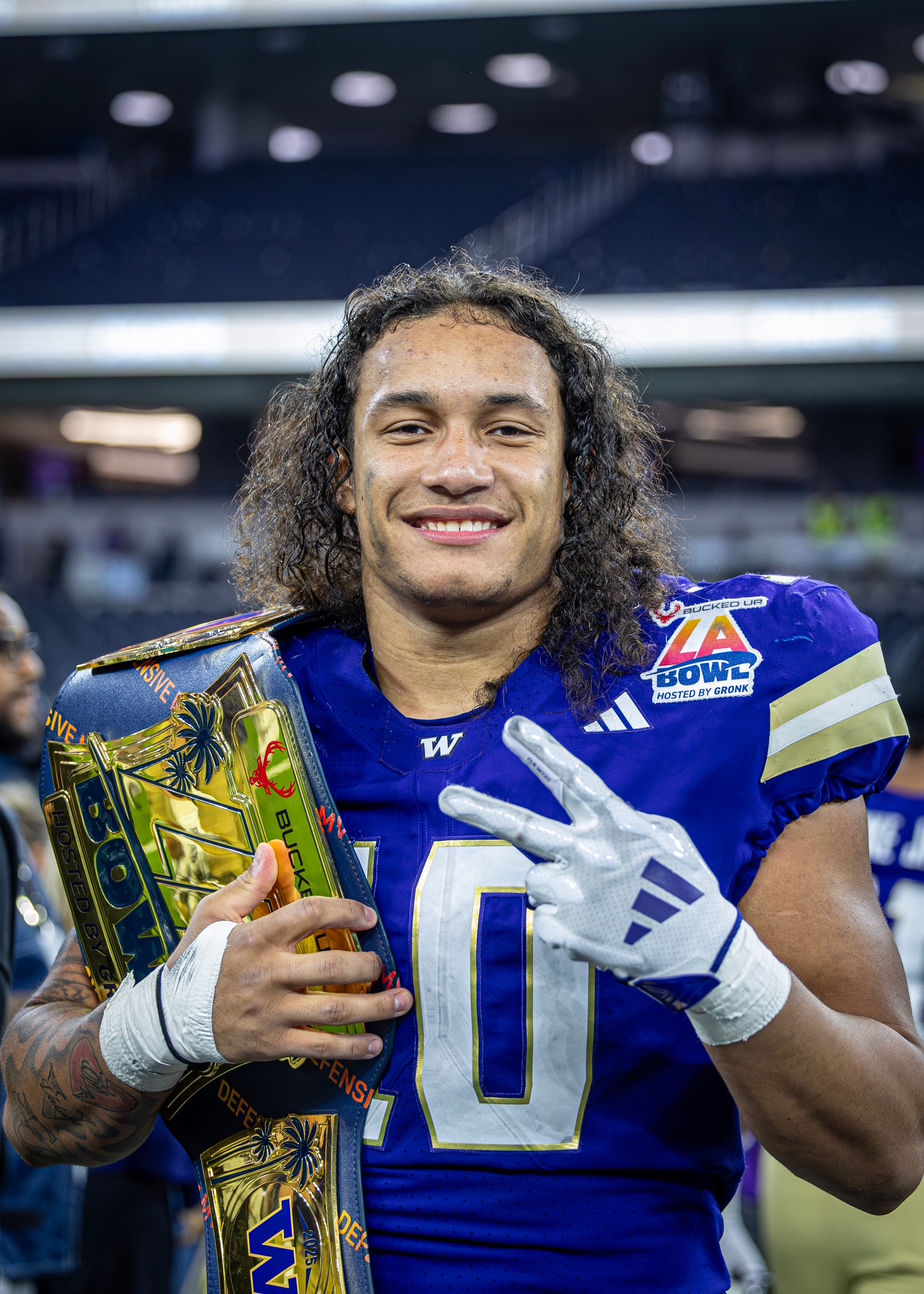
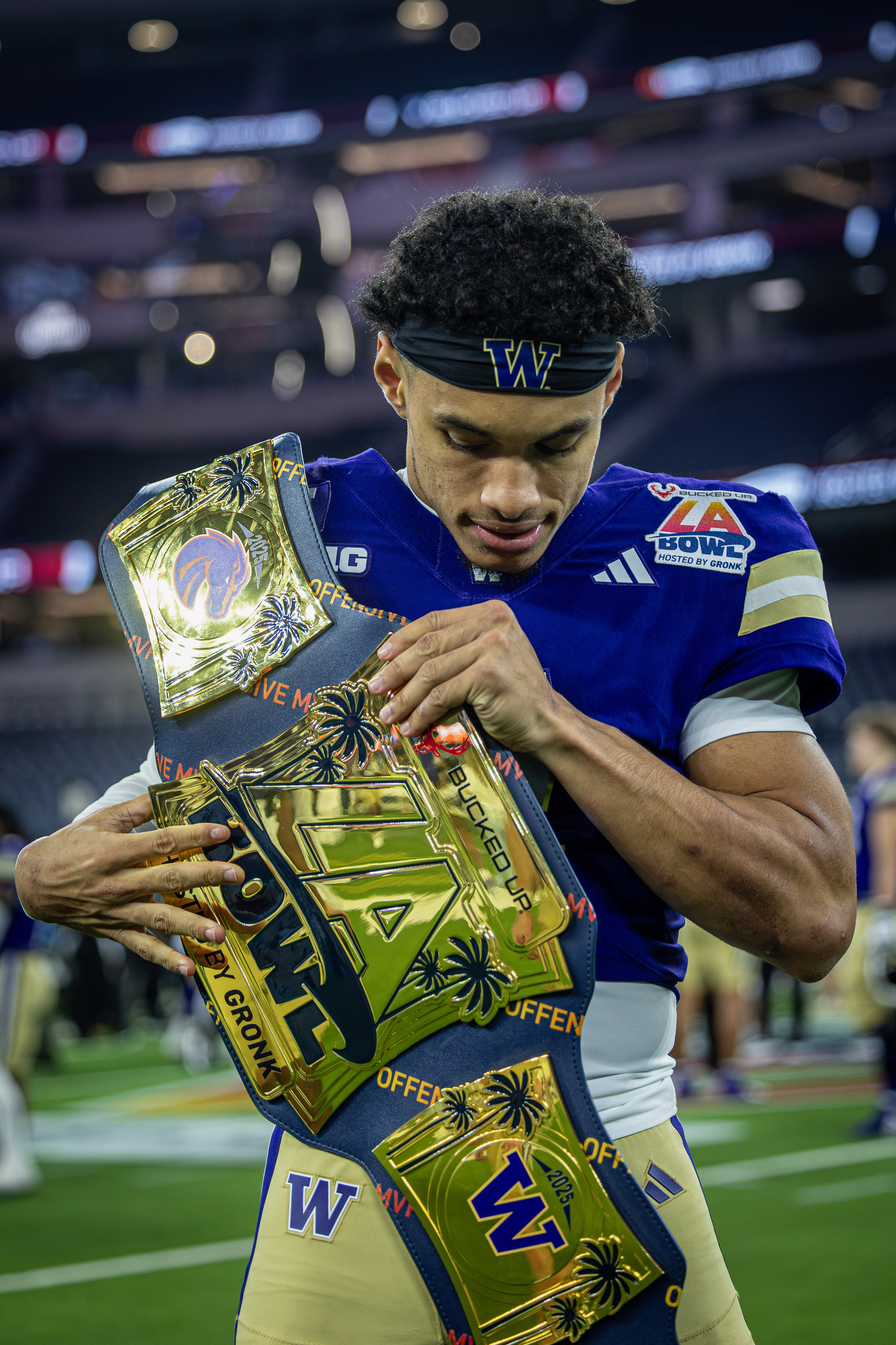
The 2025–2026 NCAA college football bowl season opened not with subtlety, but with spectacle. On December 13, 2025, the postseason officially kicked off in Los Angeles with the Bucked Up LA Bowl Hosted by Gronk, staged at SoFi Stadium in Inglewood. The setting, the branding, and the personalities involved underscored how the modern bowl season has evolved. It has become part competition, part celebration, and part entertainment showcase. Yet amid the lights, celebrity presence, and national attention, the football itself delivered a clear and emphatic message.
The Washington Huskies announced their postseason intentions early, defeating the Boise State Broncos 38–10 in a game that was competitive only briefly before tilting decisively in Washington’s favor. As the first bowl game of the season, the LA Bowl set both a tone and a standard. It was one defined by physical dominance, execution, and a reminder that bowl season, for all its pageantry, is still about matchups and preparation.
The bowl season has grown into a sprawling, multi-week event that bridges the gap between the regular season and the College Football Playoff. While the playoff captures the ultimate championship stakes, the bowl games remain essential to the sport’s ecosystem. They reward teams for successful seasons, provide extra practices and development opportunities, and create one final national stage for players and coaches alike.
Opening the bowl calendar carries symbolic weight. The first game often sets the emotional temperature for what follows: chaos, parity, or the reinforcement of hierarchy. In 2025, the LA Bowl filled that role, blending the spectacle of Southern California with a matchup between two programs accustomed to postseason appearances but arriving with different trajectories.
SoFi Stadium proved an ideal stage. Already known as one of the premier venues in global sports, the stadium brought NFL-level production value to a college bowl environment. The LA Bowl’s identity has always leaned into that crossover appeal, and the “Hosted by Gronk” branding further emphasized its embrace of modern sports culture.
For Washington, the game represented an opportunity to cap the season with momentum and reaffirm its standing among the nation’s upper tier. For Boise State, it was a chance to measure itself against a Power Four opponent and reinforce its long-standing reputation as a program capable of challenging anyone, anywhere.
The stakes were not championship-level, but they were meaningful. Bowl games often function as narrative punctuation marks, shaping how a season is remembered. For players with NFL aspirations, they are auditions. For teams, they are statements.
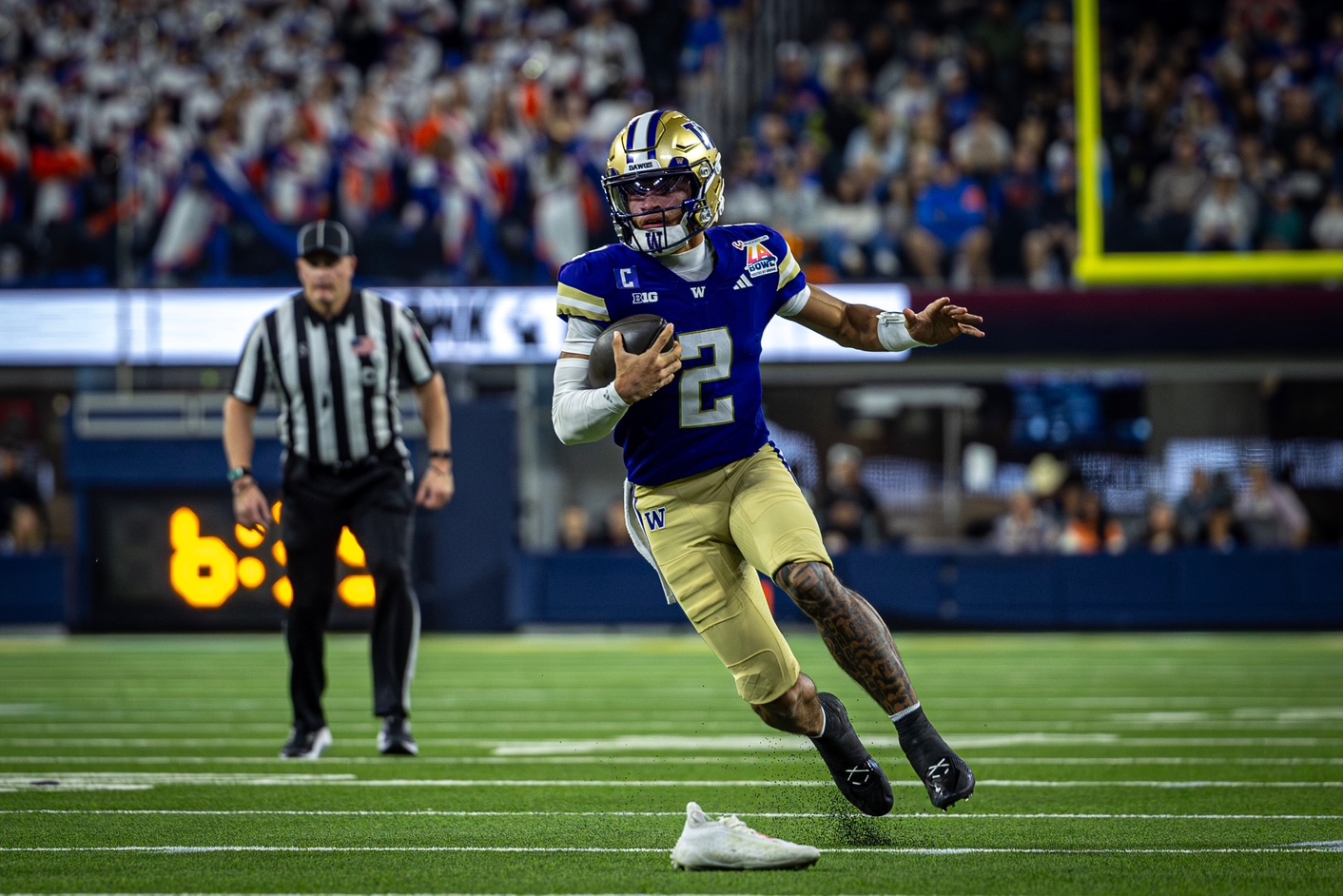
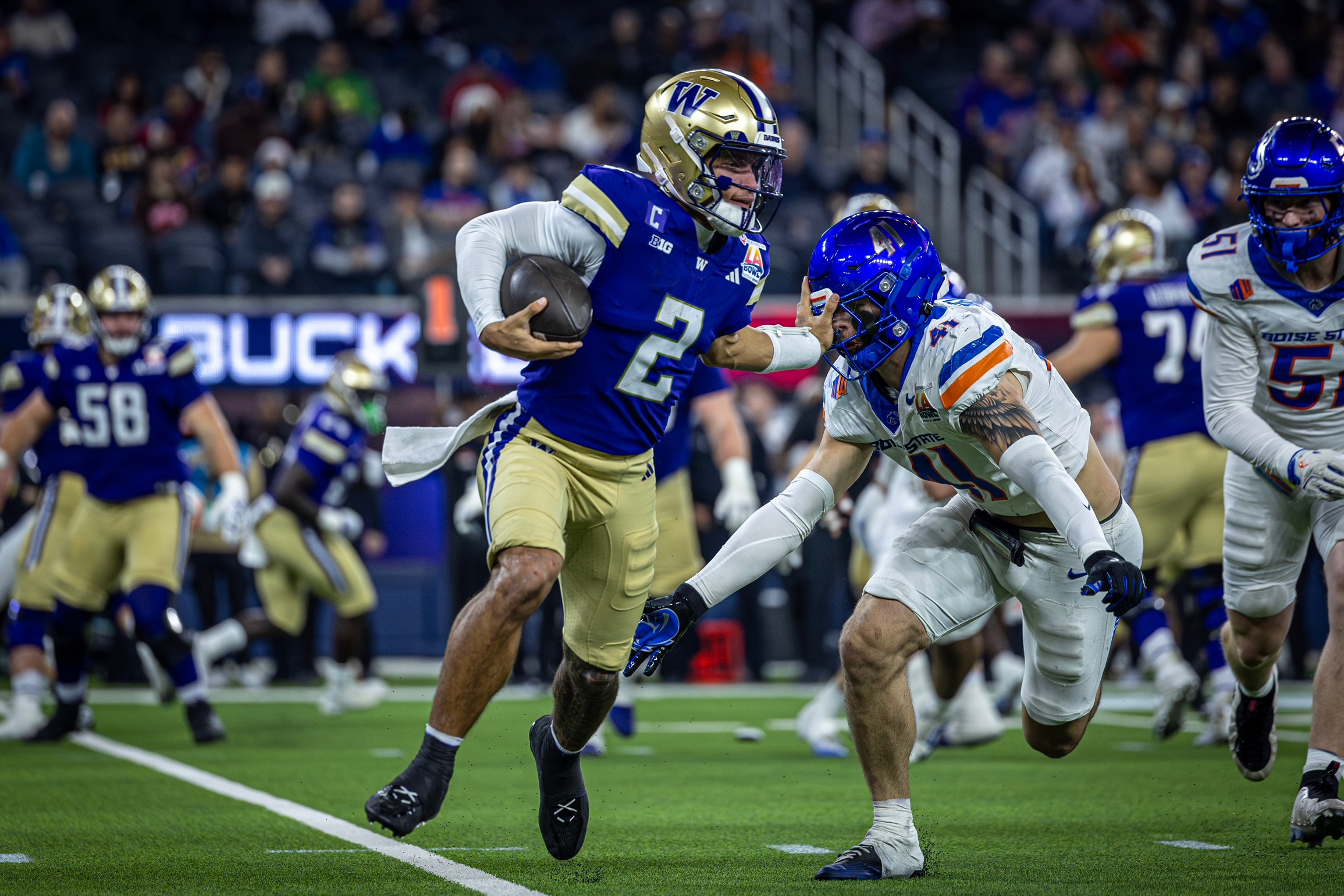
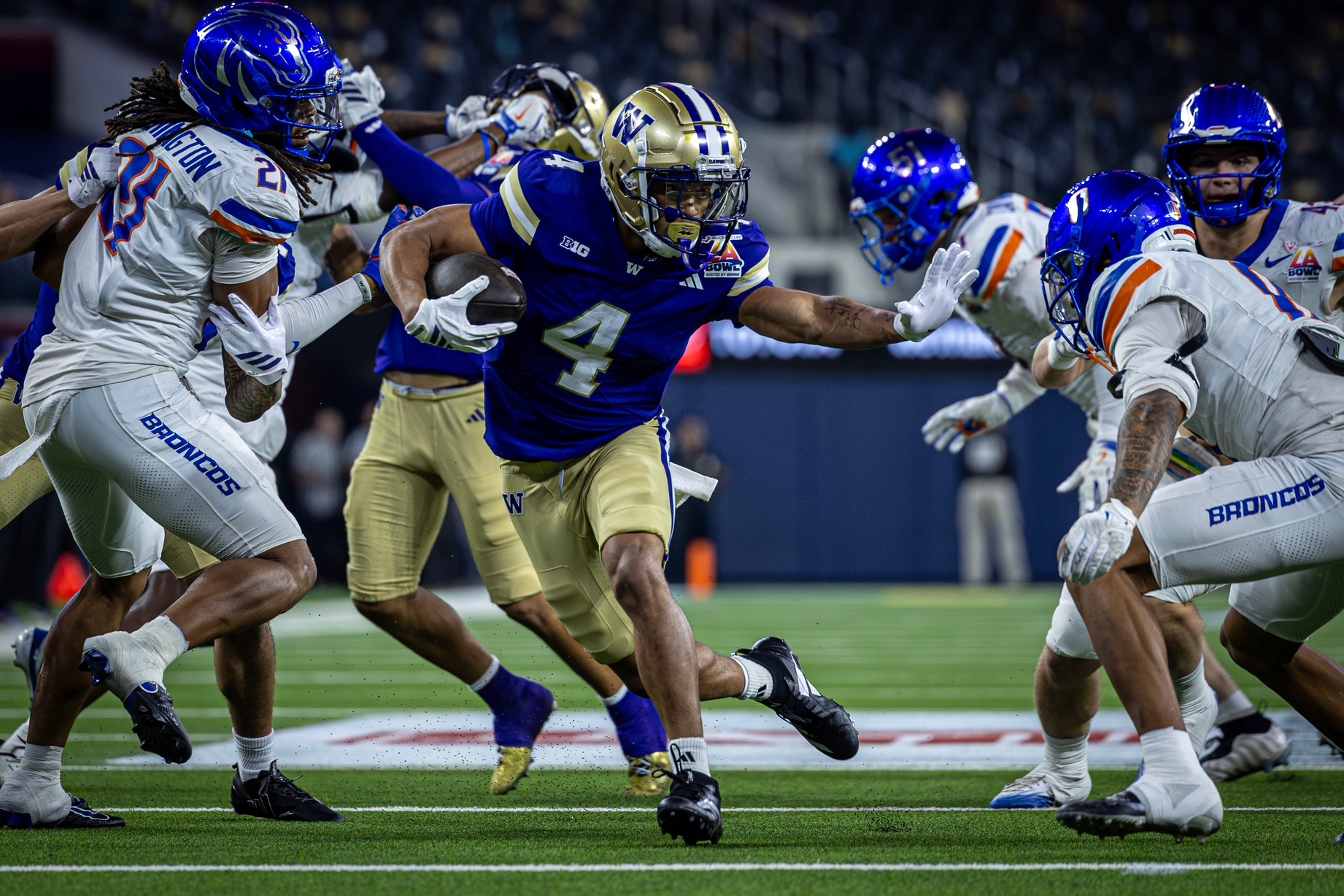
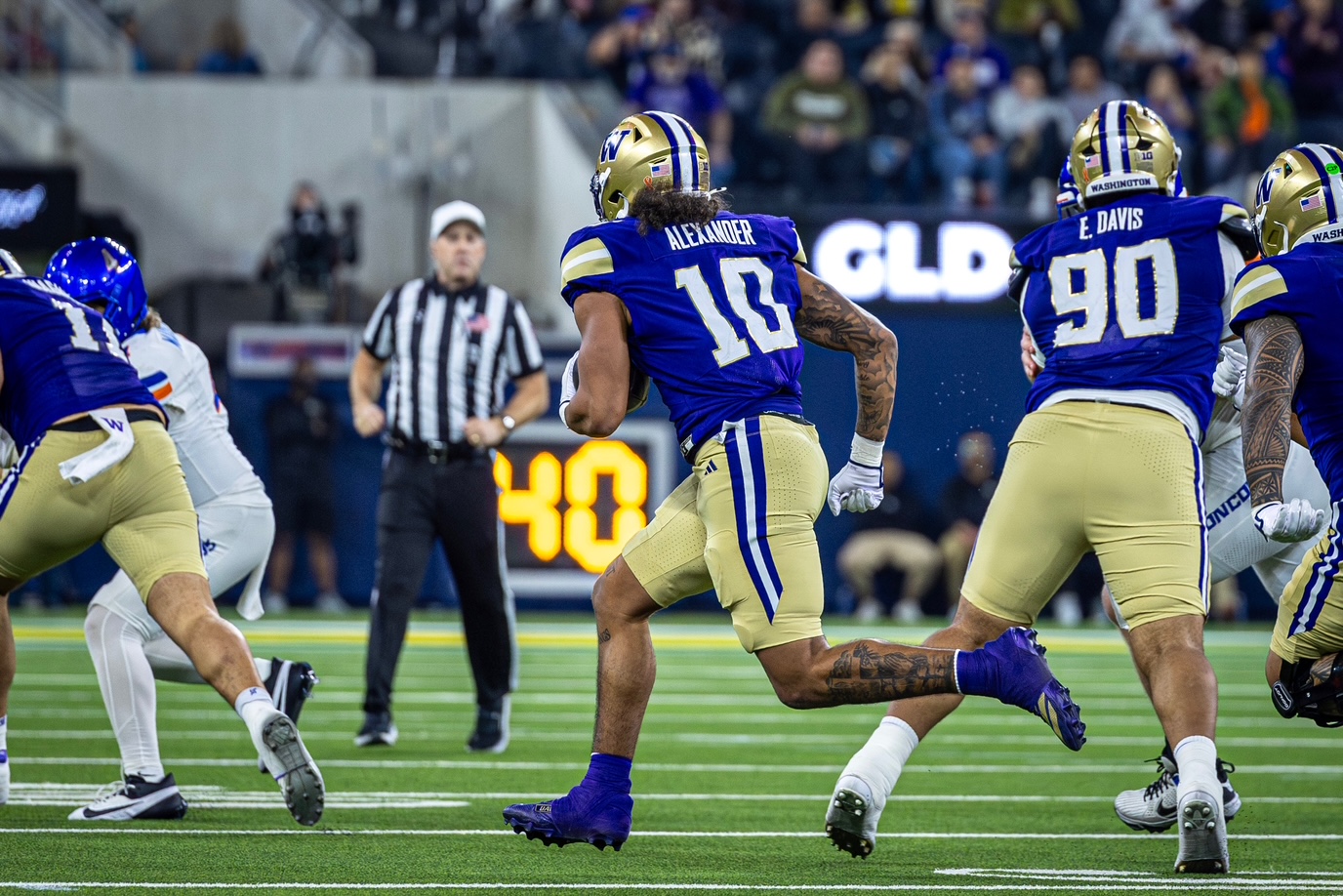
From the outset, Washington played with clarity and confidence. The Huskies established control early, leveraging speed on the perimeter and discipline in the trenches. Offensively, they mixed tempo and balance, forcing Boise State to defend the entire field rather than keying on any single threat.
The game’s turning point came quickly. After an initial exchange of possessions, Washington capitalized on field position and converted early opportunities into points. As the first quarter progressed, it became evident that the Huskies’ physicality, particularly along the offensive and defensive lines, was going to define the contest.
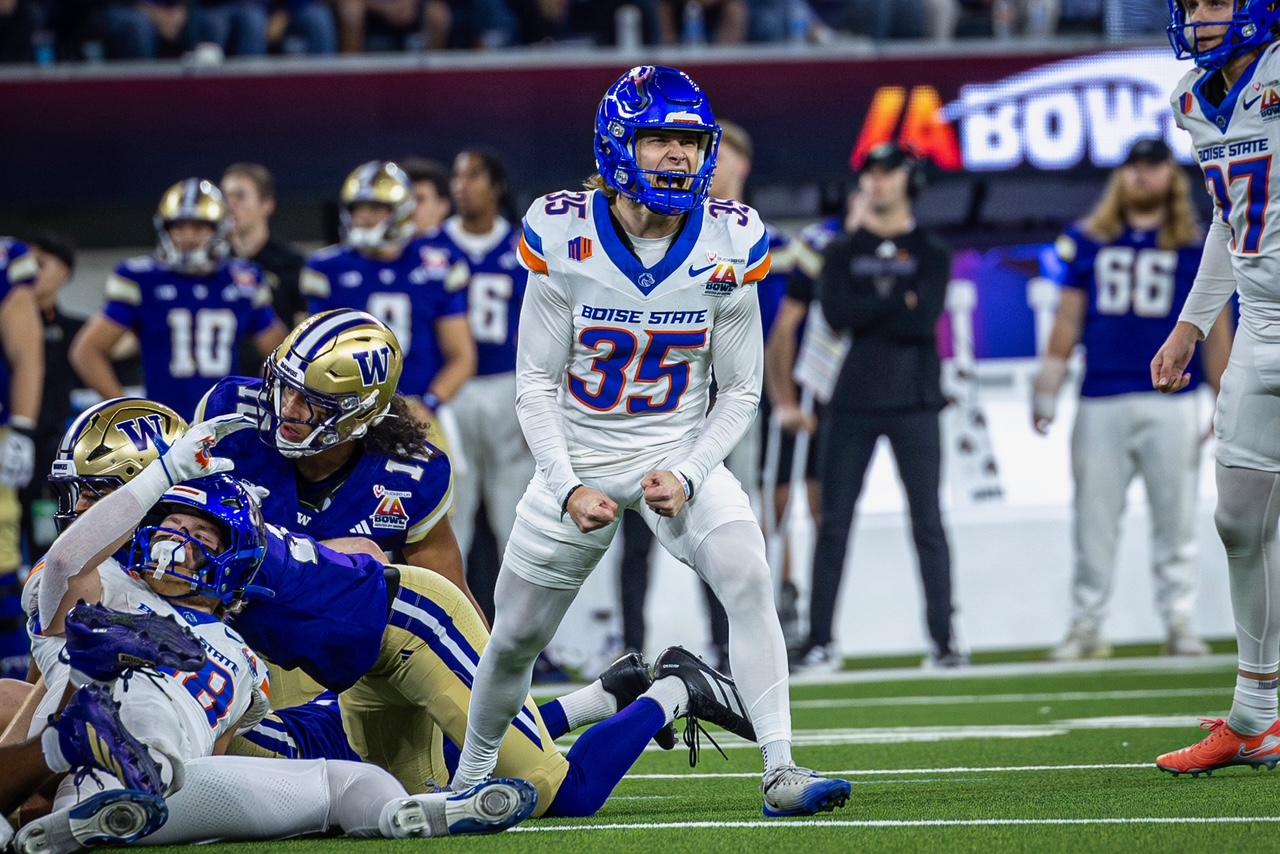
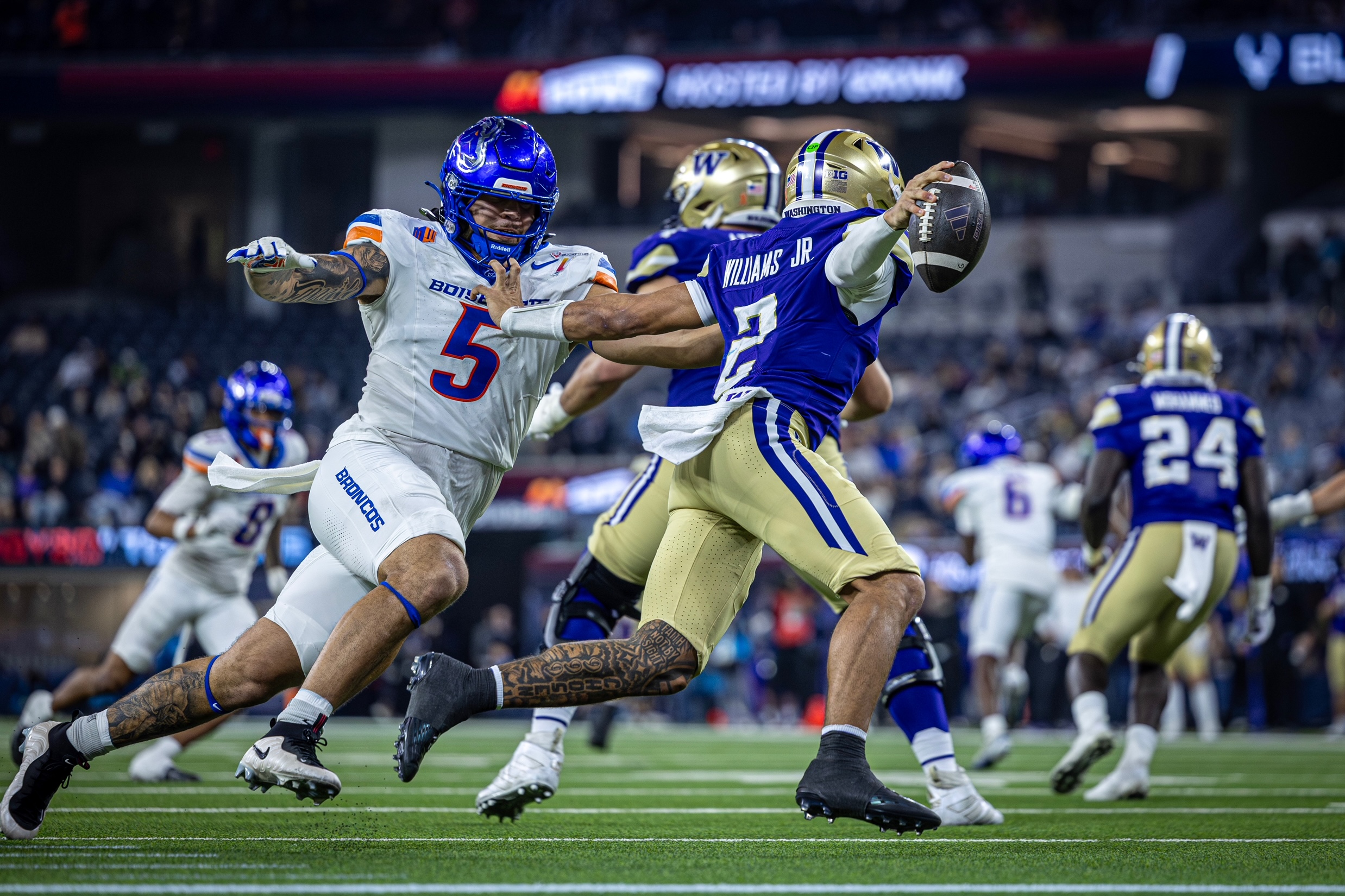
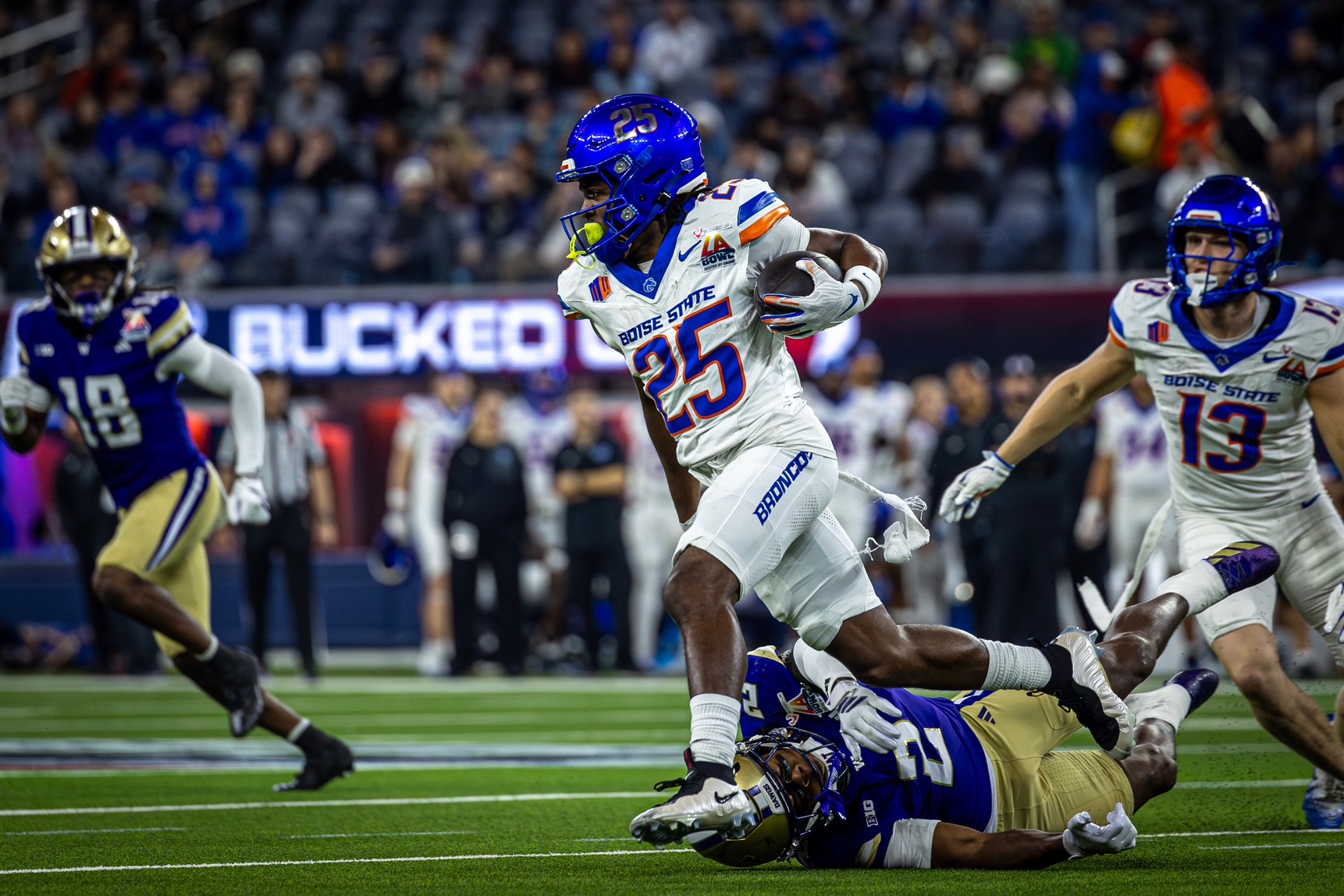
Boise State struggled to find rhythm. While the Broncos have historically thrived on creativity and resilience, Washington’s defensive structure limited explosive plays and forced long, methodical drives that stalled under pressure. Missed opportunities compounded the problem, and as the deficit grew, Boise State was pushed further out of its comfort zone.
If the first half hinted at Washington’s advantage, the second half confirmed it. The Huskies adjusted seamlessly, tightening defensively while continuing to apply offensive pressure. Sustained drives drained time and energy, and each score widened the gap not just on the scoreboard, but in momentum.
Washington’s 38 points came through a combination of efficient passing, timely rushing, and capitalization on Boise State mistakes. The Huskies did not rely on trickery or fluke plays; instead, they imposed structure and discipline, hallmarks of a team well-prepared for postseason football.
By the fourth quarter, the outcome was no longer in doubt. Boise State continued to compete, but the game had shifted from a contest to a conclusion. Washington’s dominance was comprehensive, leaving little ambiguity about the difference between the two teams on that night.
As the opening act of the 2025–2026 bowl season, the LA Bowl delivered a clear narrative: preparation matters, depth matters, and motivation matters. Washington approached the game as an extension of its season, not an exhibition. Boise State, while competitive in spirit, could not overcome mismatches that were exposed early and repeatedly.
The game also highlighted the evolving role of bowl games themselves. While some critics question their relevance in the era of expanded playoffs, contests like the LA Bowl demonstrate their enduring value. For Washington, the victory provided a platform to reinforce its identity and build momentum into the offseason. For Boise State, the loss offered a measuring stick and a reminder of the adjustments required to compete consistently at the highest level.
The 38–10 result resonated beyond Los Angeles. It signaled that the 2025–2026 bowl season would not merely be about novelty or branding, but about execution and seriousness of approach. Teams willing to treat bowl games as meaningful opportunities would be rewarded; those unable to match that intensity would be exposed.
As the bowl calendar unfolded across December and into January, the LA Bowl remained a reference point. It was the moment the postseason officially began. Under the lights of SoFi Stadium, with celebrity hosts and national attention, Washington delivered a performance that reminded everyone why bowl season still matters.
Ahsan Awan has been covering sports for over two decades, and has been covering NCAA football, including various Big Ten, Big 12, ACC, SEC, Mountain West, Pacific-12, and Big Sky conference member institutions, since 2007. Images taken by Robert Longan are ©2025 Robert Longan and have been made available to American Presswire subject to unlimited use under license unless otherwise noted. Editorial use by American Presswire is unrestricted. Robert Longan can be found on X as @robbielphoto and on Instagram as @lngn_media. Ahsan Awan can be found on X as @quackarazzi and on Instagram as @quackarazzi. American Presswire can be found on X as @ampresswire and on Instagram as @ampresswire.